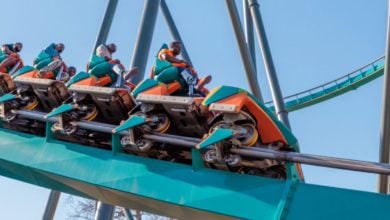

A recently resurfaced video is drawing attention across the theme park community after capturing a guest on Universal’s Jurassic World VelociCoaster at Islands of Adventure pretending to be unresponsive mid-ride. The footage, first highlighted by Orlando Theme Park Zone, shows the rider slumped in his seat, allowing the high-speed coaster to jostle him violently through twists, turns, and inversions.

Although the incident didn’t result in injury, it has renewed scrutiny over how guests interact with thrill rides—and what Universal can do to prevent dangerous stunts. The timing of the video is especially concerning, as it predates a far more serious incident at Epic Universe, where 32-year-old Kevin Rodriguez Zavala tragically lost his life on Stardust Racers.
From Prank to Tragedy: VelociCoaster and Stardust Racers
While the VelociCoaster stunt may have seemed like a prank, Zavala’s death at Epic Universe underscores the potential consequences of even brief lapses in judgment—or ride compliance. On September 17, 2025, Zavala was found unresponsive after riding Stardust Racers, one of Epic Universe’s headline attractions. The Orange County medical examiner later ruled the cause of death as “multiple blunt impact injuries.”
The incident forced a three-week closure of the ride while Universal coordinated technical inspections and independent engineering assessments. Investigators confirmed that all systems were functioning as intended, but questions remain regarding ride design and guest safety policies.
Universal’s Safety Reforms and New Policies
Upon reopening Stardust Racers, Universal implemented updated operational rules aimed at improving guest safety. One major change affects guests who rely on mobility devices: those visitors must now walk independently to access the ride, rather than transferring with assistance from companions or staff.
The company also revised warnings and signage for other high-thrill attractions, including Dragon Racer’s Rally and Monsters Unchained: The Frankenstein Experiment, emphasizing the importance of meeting all ride safety requirements. While Universal says the changes are intended to prevent another tragedy, some disability advocates argue the measures may unintentionally exclude visitors who previously could have safely experienced these rides.
Safety vs. Accessibility
The tension between ensuring rider safety and maintaining accessibility is now a central issue. Theme park experts note that adaptive solutions—like specialized transfer equipment or customized seating—are often used to safely accommodate guests without limiting participation. By tightening access requirements rather than redesigning restraints, Universal has sparked concern among inclusion advocates who fear a precedent may be set across the industry.
Zavala’s parents, Carlos Rodriguez Ortiz and Ana Zavala, publicly criticized the reopening, stating, “By rushing to reopen this ride as if nothing happened, Universal is showing great disregard for Kevin’s life, our family’s pain, and the safety of every rider.”
The Role of Guest Responsibility
The VelociCoaster video has reignited conversations about the responsibilities of guests on high-speed attractions. Pretending to pass out or slumping in a restraint may appear harmless but can create real hazards for both the individual and those around them. Legal experts emphasize that rides are designed with strict safety parameters in mind, and intentionally ignoring them can carry serious consequences.
Personal injury attorney Luis Toribio explains, “In these cases, notice or advice to the rider is important. The question is whether a reasonable person would have chosen to ride given the warnings and requirements in place at the time of the incident.”
Universal’s theme parks, including Islands of Adventure and Epic Universe, continue to push the limits of what thrill rides can offer. But incidents like VelociCoaster’s fake medical emergency and Stardust Racers’ tragic fatality illustrate the delicate balance between excitement, safety, and accessibility.
Universal’s new policies may reduce risk for high-thrill attractions, but they also highlight the challenges parks face when guests act unpredictably. With increased scrutiny from the public and advocacy groups, it’s clear that maintaining trust while offering adrenaline-pumping experiences will remain a central concern for the company.
For visitors, the takeaway is clear: theme park rides are engineered for maximum thrill—but safety is a shared responsibility. One stunt, one lapse in judgment, or one miscalculation can have consequences far beyond what anyone expects. As Universal continues to adapt, fans and guests alike will be watching closely to see how the company navigates this complicated intersection of innovation, excitement, and responsibility.