New construction permits filed by Walt Disney World reveal planned modifications to the ferryboat docking infrastructure along the Seven Seas Lagoon at Magic Kingdom. The documentation describes work scope as “minor hardscape improvements, dock expansion at the Seven Seas Lagoon and a floodplain compensation area,” suggesting operational enhancements rather than fundamental changes to how guests access the theme park. The project centers on the Magic Kingdom side of the lagoon where ferryboats deliver visitors from the Transportation and Ticket Center to the park entrance.
Transportation infrastructure at Walt Disney World serves as the invisible backbone enabling the resort to move massive volumes of guests efficiently between parking facilities and theme park entrances. The ferryboat system, operating since Magic Kingdom opened in 1971, functions as both nostalgic transportation experience and practical capacity solution when monorail service alone cannot handle arrival and departure surges. Unlike the monorail's fixed capacity determined by train frequency and size, ferryboat operations offer flexibility through variable deployment of vessels based on real-time demand.
Managing this flexibility requires infrastructure that supports staging boats during lower-demand periods while enabling rapid deployment when crowds build. Current dock configurations at Magic Kingdom require cast members to secure temporarily idle boats against the seawall near primary guest walkways, creating operational constraints and visual clutter along pathways designed primarily for guest circulation. The filed permits suggest Disney intends to address these limitations through dedicated boat management infrastructure that separates operational functions from guest-facing spaces.
The project's modest scale reflects Disney's ongoing approach to infrastructure maintenance rather than transformative expansion. Major capital investments typically focus on attractions, hotels, and experiences that directly generate revenue or enhance guest satisfaction in measurable ways. Infrastructure projects like dock modifications receive less public attention but prove essential for maintaining operational standards across decades of continuous use. Without periodic upgrades to transportation, utilities, and support facilities, even well-designed systems eventually develop inefficiencies that compound into serious operational challenges.

Analysis of permit documents alongside historical satellite imagery reveals how Disney currently manages boat staging and suggests how the planned improvements will enhance operational flexibility. The changes appear designed primarily to benefit cast member efficiency and vessel management rather than create noticeable differences for guests boarding ferryboats. However, improved operational efficiency typically translates into better service reliability and reduced congestion during peak periods, creating indirect guest benefits even from infrastructure guests never consciously notice.
Dedicated Boat Staging Infrastructure
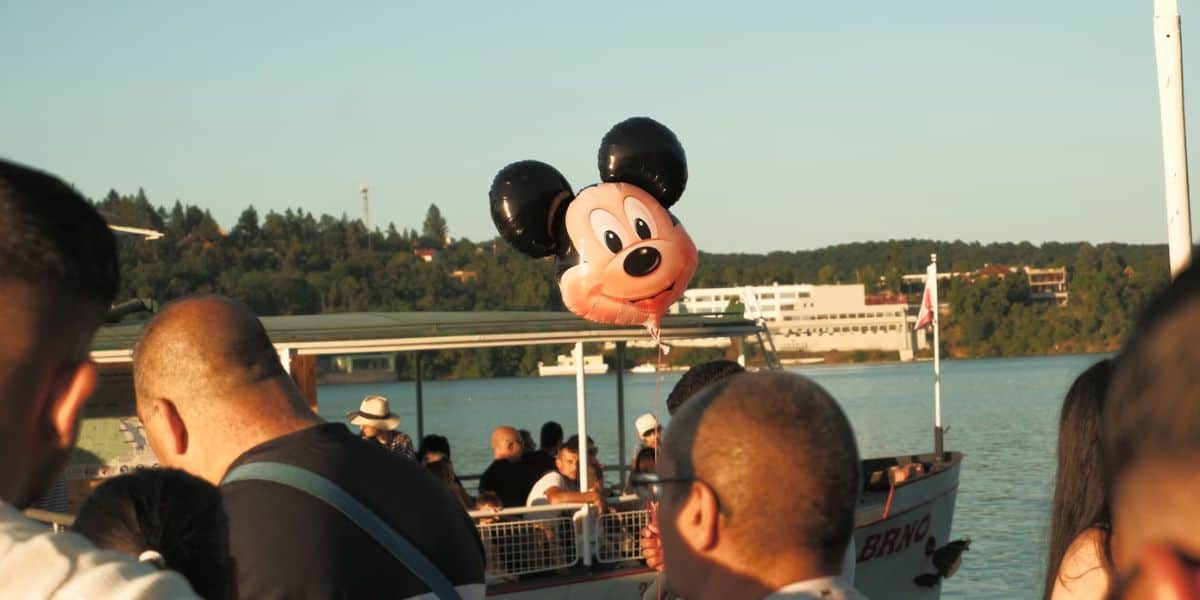
The primary component of this project involves constructing a wooden dock approximately six feet in width along a section of shoreline near the existing ferryboat landing area. Satellite imagery from recent years shows watercraft periodically moored against the seawall in this vicinity, suggesting Disney uses this location for staging boats that aren't actively loading passengers but remain ready for deployment when demand increases.
Current staging procedures require cast members to secure boats directly to the seawall and access them through openings in the railing system that otherwise guides guest foot traffic. This arrangement functions adequately but creates several inefficiencies. Cast members must navigate through or around guest circulation areas when checking on or preparing staged vessels. Boats moored against the seawall occupy space along pathways designed for guest use, potentially creating bottlenecks during peak traffic periods. And the ad hoc nature of tying boats wherever seawall space exists limits how many vessels can be efficiently staged in ready-deployment status.
The new six-foot-wide dock provides dedicated infrastructure specifically designed for boat staging operations. Cast members will access this dock via new hardscape connections that create stable pathways separate from primary guest walkways. This separation allows boat management activities to proceed without interrupting guest flow or requiring cast members to work around visitors moving between the dock and park entrance.
The dedicated dock also enables more systematic organization of staged vessels. Rather than positioning boats opportunistically along available seawall sections, operations teams can utilize the purpose-built dock to stage multiple vessels in configurations optimized for quick deployment. This organizational improvement becomes particularly valuable during transition periods when crowd levels shift rapidly, requiring swift adjustments to active ferryboat capacity.
New hardscape elements mentioned in permits will provide the stable surfaces and pathways necessary for cast members to reach the dock and perform vessel management tasks. While these improvements primarily serve operational purposes, they contribute to overall site organization and functionality in ways that indirectly enhance guest experience through improved service reliability.
Queue Area Modifications
Permit documentation suggests potential modifications to ferryboat queue areas, possibly incorporating space currently allocated to bus arrival security screening. This element appears less definitively specified than the dock infrastructure but could represent significant enhancement to guest waiting areas during peak demand periods.
Ferryboat queues during busy arrival times can extend beyond their designated footprint, requiring cast members to implement temporary crowd management measures using portable barriers and verbal direction. These improvised solutions work but create suboptimal guest experiences characterized by unclear queue boundaries and uncertainty about wait times. Dedicated queue expansion would provide organized waiting areas designed to accommodate demand fluctuations without requiring constant operational intervention.
The potential reallocation of bus security screening space reflects evolving guest arrival patterns at Magic Kingdom. Resort transportation options have diversified considerably since the bus screening area was initially configured. The Skyliner system, expanded boat networks, and enhanced pedestrian connections from nearby resorts have shifted how guests reach the Transportation and Ticket Center. If fewer guests now arrive via bus relative to other transportation modes, reallocating some screening capacity toward ferryboat queue space that serves all arriving guests regardless of arrival method makes operational sense.
Implementation of queue expansion would demonstrate Disney's willingness to adapt infrastructure to actual usage patterns rather than maintaining configurations based on historical assumptions about guest behavior. Transportation systems must evolve alongside changing resort layouts, hotel inventories, and guest preferences to maintain efficiency and service quality.
Environmental Compliance and Mitigation
The project includes wetlands offset areas along nearby shoreline to compensate for water area impacts from new dock construction. This environmental mitigation component addresses regulatory requirements governing development activities affecting Florida waterways and adjacent lands.
Wetlands compensation typically involves creating, restoring, or enhancing natural areas that provide ecological functions and values equivalent to or exceeding those affected by construction. For infrastructure projects of this scale, compensation areas are proportional to impacts, ensuring no net loss of ecological value even as development proceeds.
These requirements add planning complexity and implementation costs to construction projects regardless of size. However, they serve important purposes in maintaining environmental quality across resort properties that encompass thousands of acres including significant water bodies and natural areas. Cumulative impacts from numerous small projects could substantially degrade environmental systems without mitigation requirements that address each development individually.
Disney's compliance with environmental regulations for minor infrastructure projects reflects both legal obligations and corporate commitments to environmental stewardship. The Seven Seas Lagoon and surrounding shoreline ecosystems support wildlife and provide ecological services beyond their transportation and aesthetic functions, making thoughtful management of development impacts important for long-term sustainability.
Implementation Considerations
Permit documentation doesn't specify construction timelines, but infrastructure projects of this nature typically proceed on schedules measured in months rather than years. The limited physical scope and operational necessity of maintaining ferryboat service throughout construction suggest phased implementation that preserves transportation capacity.
Guest impacts during construction should remain minimal. Disney's experience managing infrastructure improvements in active operational areas enables work sequencing that maintains service levels while construction proceeds. The most visible evidence of the project will likely be construction barriers and equipment near the dock area rather than significant service disruptions or capacity reductions.
Ferryboat operations must continue throughout construction given their essential role in Magic Kingdom's transportation network. The dock's design and the project's focus on areas adjacent to rather than replacing existing guest facilities should allow work to proceed without major operational interruptions.
Operational Enhancement Context
This ferryboat dock project exemplifies infrastructure investment that maintains and incrementally improves existing systems rather than creating new capacity or capabilities. Disney's transportation network requires ongoing attention to sustain performance standards as facilities age and usage patterns evolve. Projects addressing these maintenance and optimization needs rarely generate public excitement but prove crucial for long-term operational success.
The Magic Kingdom ferryboat dock serves millions of guests annually as a critical node in the resort's transportation infrastructure. Ensuring this facility operates efficiently regardless of demand levels, weather conditions, or operational challenges requires periodic investment in infrastructure improvements that enhance flexibility and reduce operational constraints.
For visitors interested in understanding how major theme park resorts maintain complex operations, projects like this reveal the constant refinement happening throughout Disney properties. While new attractions capture attention and headlines, the less glamorous work of optimizing existing infrastructure enables everything else to function reliably year after year.
Share your observations about Magic Kingdom's transportation operations if you've noticed areas where improvements could enhance the arrival experience. Understanding how guests perceive and interact with infrastructure helps contextualize why projects like this dock expansion matter for overall resort functionality.