For Lucasfilm, change has become the rule rather than the exception, and the studio’s latest transition could determine how Star Wars evolves long after the Skywalker saga fades into history.
As rumors intensified throughout 2025 regarding Kathleen Kennedy’s future, the Lucasfilm President stepped forward to address the speculation head-on. While Kennedy clarified that she had no intention of abandoning filmmaking, her comments also confirmed that succession planning was well underway—quietly marking the beginning of the end of her tenure as studio chief.
Kennedy was quick to dismiss suggestions that she was retiring altogether. In a conversation with Deadline, she framed the moment not as an exit from the industry, but as a shift in responsibilities.
“What’s happening at Lucasfilm is I have been talking for quite some time with both Bob [Iger, Disney CEO] and Alan [Bergman, Disney Entertainment] about what eventual succession might look like,” Kennedy explained. “We have an amazing bench of people here, and we have every intention of making an announcement months or a year down the road.”
She reinforced “loud and clear” that she wasn’t done producing films, adding that she would “die” making movies.
That future is now taking shape. Lucasfilm has officially confirmed that Kennedy will step down as President, closing out one of the most debated leadership runs in Star Wars history.
Rather than handing control to a single executive, Lucasfilm is adopting a dual leadership model. Dave Filoni and Lynwen Brennan will jointly lead the studio, with Filoni guiding creative decisions and Brennan overseeing business operations. The approach reflects Disney’s broader emphasis on pairing creative stewardship with corporate stability, and it underscores a pivot toward long-term narrative planning.
Theatrical Star Wars, however, remains a work in progress. Despite announcing multiple films, Lucasfilm has struggled to move projects smoothly into production. At Star Wars Celebration 2023, Kennedy unveiled three theatrical releases, only for development challenges to quickly rearrange the lineup.
Jon Favreau’s The Mandalorian and Grogu is positioned as the franchise’s next big-screen event, currently set for 2026. Other projects have faced setbacks, including James Mangold’s “Dawn of the Jedi” which is “on hold”, Dave Filoni’s Mando-Verse crossover, and Sharmeen Obaid-Chinoy’s Rey Skywalker film.
Beyond that, Lucasfilm is preparing to explore new ground in the timeline. Shawn Levy’s Star Wars: Starfighter (2027), starring Academy Award nominee Ryan Gosling, is slated for a May 2027 release and represents the studio’s first standalone story set after the sequel trilogy.
Perhaps the most consequential development came in 2024, when Lucasfilm confirmed that Simon Kinberg would develop an entirely new trilogy. The announcement suggested a renewed sense of urgency behind the scenes. “We’re absolutely rolling fast and furiously,” Kennedy revealed. “That has gone exceptionally well, and he’s literally going to script as we speak. We’ll see something probably around June.”
Kinberg’s return to the franchise follows earlier collaborations with Lucasfilm animation and years spent shepherding the X-Men films. Now, he’s tasked with launching a fresh saga. “This is the next iteration, the new saga that moves us into the future,” Kennedy said, emphasizing that the trilogy would exist outside the Skywalker storyline.
Set roughly five or six years after Star Wars: Episode IX–The Rise of Skywalker (2019), Kinberg’s trilogy shares its timeframe with Levy’s film. “That’s also in the future. It’s all post-[the first] nine,” Kennedy explained. “It’s all pretty much new characters. We may bring some of the characters back from the sequel saga, but pretty much new characters.”
Progress on the scripts has been steady but iterative.
“He’s working right now. He wrote something that we read in August, and it was very good, but not there.” Kennedy said in her exit interview with Deadline. “We’ve pretty much upended the story, and then spent a great deal of time on the treatment, which he finished literally about four weeks ago. And it’s a very detailed treatment, like 70 pages. And so he is expected to give us something in March.”
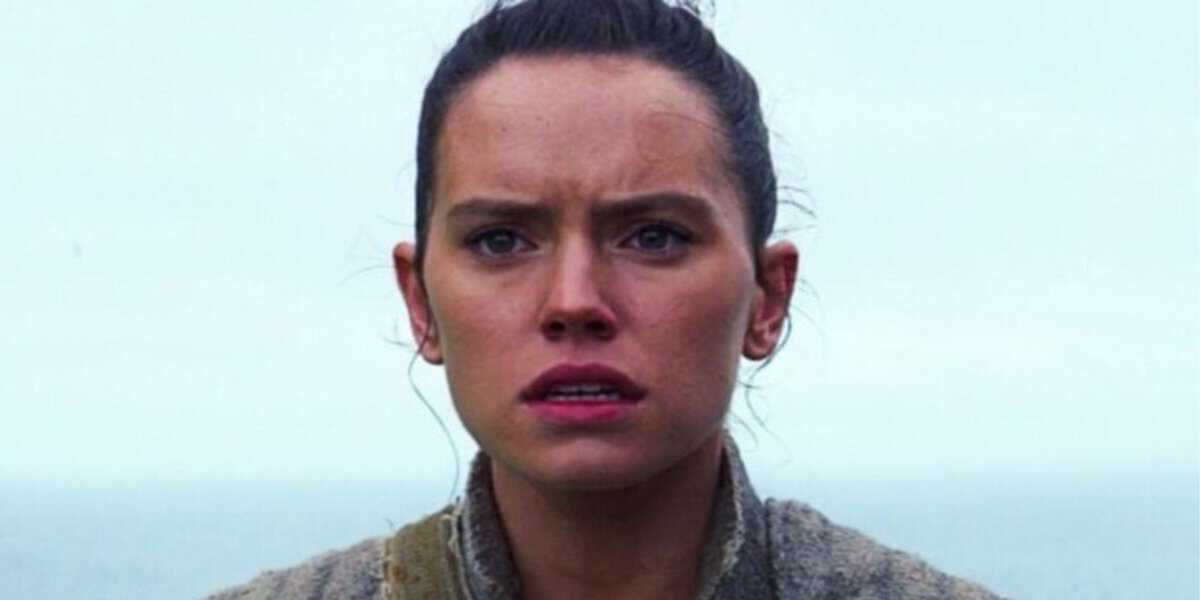
This development raises questions about the fate of Daisy Ridley’s Rey Skywalker film. With both projects set after 2019's The Rise of Skywalker, industry chatter suggests that the standalone movie may be folded into Kinberg’s trilogy.
“According to Daniel Richtman, Ridley's Rey Skywalker will have a major role in the planned trilogy,” Comic Book Movie writes. “However, the focus will be on new leads, indicating that while Rey is going to be placed front and centre, it won't be as the story's main protagonist.”
Adding weight to that theory, Kennedy did not reference the Rey film during her exit interview, despite mentioning numerous other projects. Meanwhile, Disney reassigned the December 2026 Star Wars release date—long believed to belong to the Rey movie—to 20th Century Studios' Ice Age 6 (2026).
Taken together, the evidence suggests Lucasfilm may be consolidating its post-sequel plans under a single creative umbrella.
Kennedy’s tenure saw Star Wars return to box-office dominance with Star Wars: Episode VII–The Force Awakens (2015), but disagreements over the sequel trilogy fractured the audience and complicated the franchise’s future. In response, Lucasfilm shifted its focus toward Disney+, where The Mandalorian and Andor found success while other projects failed to gain traction.
Now, as Filoni and Brennan assume control and Kinberg’s trilogy advances, Lucasfilm appears ready to redefine its cinematic identity. Whether that new vision brings audiences back together remains to be seen.
What do you think about the Star Wars changes? Let us know in the comments below.