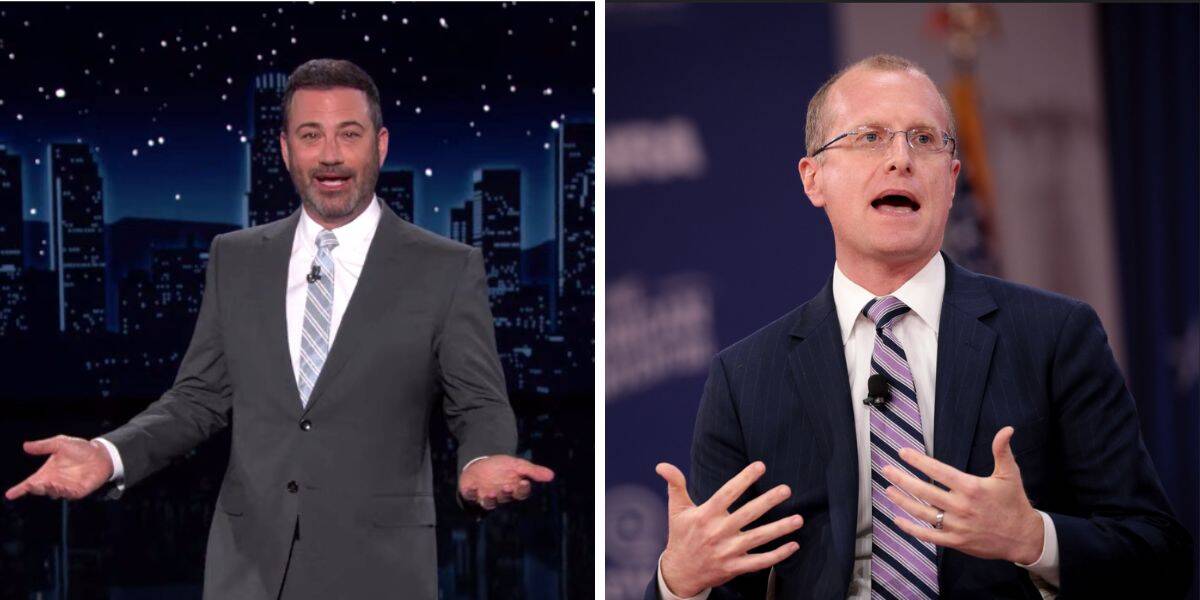
Jimmy Kimmel’s sudden suspension from ABC shocked fans and ignited a political and media firestorm. On September 17, Disney and ABC announced that Jimmy Kimmel Live! would be pulled from the air indefinitely. The move came after two of ABC’s largest affiliate groups, NexStar Media and Sinclair Broadcast Group, declared they would no longer carry the show on nearly 70 stations—citing controversial remarks Kimmel made about Donald Trump and the killing of conservative commentator Charlie Kirk.
The fallout was swift. Demonstrators gathered outside Disney’s Burbank headquarters, the company’s stock saw a noticeable dip, and nearly two million subscribers reportedly canceled their Disney+ memberships. Just five days after the initial suspension, Disney and ABC reversed course, announcing that they had come to an agreement with Kimmel.
Related: Jimmy Kimmel Breaks Silence on His Unexpected Suspension and What Followed
The show returned to air the next day. On September 26, both NexStar and Sinclair confirmed they would resume broadcasting Jimmy Kimmel Live! on their local stations.
But the controversy didn’t end there. Brendan Carr, a commissioner with the Federal Communications Commission (FCC), made headlines of his own after publicly commenting on the situation. Appearing on a conservative podcast hosted by Benny Johnson, Carr made statements that many interpreted as a threat toward Disney and ABC.
He suggested the companies could either “handle it the easy way or the hard way” in response to Kimmel’s comments, implying regulatory consequences could follow if no action was taken.

Related: Kimmel’s Comeback Fueled by Michael Eisner’s Surprising Attack on Iger
Carr said:
“Frankly, when you see stuff like this, I mean, we can do this the easy way, or the hard way. These companies can find ways to change conduct, to take action, frankly, on Kimmel, or there’s going to be additional work for the FCC ahead.”
Look, there’s calls for Kimmel to be fired. You could certainly see a path forward for suspension over this. Again, the FCC is going to have remedies that we can look at. We may ultimately be called to be a judge on that.”

Related: NexStar CEO Defends Decision to Pull ‘Jimmy Kimmel Live!’ After Divisive Remarks
Even after Kimmel was benched, Carr doubled down. On another podcast, he raised concerns about The View, another ABC show often critical of Donald Trump. He floated the possibility of launching an FCC investigation into whether the program violated the Equal Opportunity Rule regarding guest representation—a regulation typically reserved for news broadcasts but sometimes applied to talk shows under specific conditions.
What surprised many was the rare moment of bipartisan unity in response to Carr’s remarks. Lawmakers from both major parties condemned his statements, with some conservatives even arguing that punishing Kimmel for expressing political views undermines the principle of free speech.
Now, Carr may have to answer for his words.
The Senate Commerce Committee has reportedly called on Carr to testify about his comments regarding Disney, ABC, and the broader implications of the FCC’s role in regulating broadcast content. The committee is chaired by Texas Senator Ted Cruz, who was quick to criticize Carr's remarks.
“It’s extremely dangerous for a government official to suggest that certain speech should be punished because it’s unpopular,” Cruz said on his podcast Verdict with Ted Cruz following Kimmel’s suspension.
Carr has agreed to appear before the committee but denies that his comments were meant as threats. He claims the accusations are largely politically motivated and insists he was simply pointing out the FCC’s authority under existing laws.
As of now, the hearing date remains up in the air due to the ongoing government shutdown, but scrutiny over Carr’s role in the controversy continues to grow.
What’s your perspective on all this? Did Brendan Carr overstep his role as an FCC commissioner? Was Jimmy Kimmel’s suspension a reasonable decision or a blow to free expression? And how should networks respond when comedians stir public controversy? Let us know what you think in the comments.