Walt Disney World and Disneyland Resort welcome guests from every background, every ability level, and every corner of the world.

That breadth of welcome has always been central to how Disney presents itself, and for guests with disabilities, the parks have backed that promise with a range of accommodations designed to make the experience genuinely accessible rather than technically possible in name only.
The Disability Access Service has been the most significant of those accommodations for years. At its core, DAS gives guests who cannot tolerate extended waits in conventional queues a way to book return times for attractions and spend that waiting period elsewhere in the park.
For many families, it is not a convenience upgrade. It is the mechanism that makes a Disney vacation work at all. When Disney overhauled the program's eligibility requirements in 2024, the response from the disability community was swift and sustained. The controversy has not faded. It landed on the agenda at Disney's annual shareholder meeting on March 18, 2026, where incoming CEO Josh D'Amaro faced a direct question about the program, shareholders voted on a proposal to investigate it, and the company's position on DAS became clearer than it has been at any point since the changes were first announced.
The Shareholder Meeting Question and D'Amaro's Response

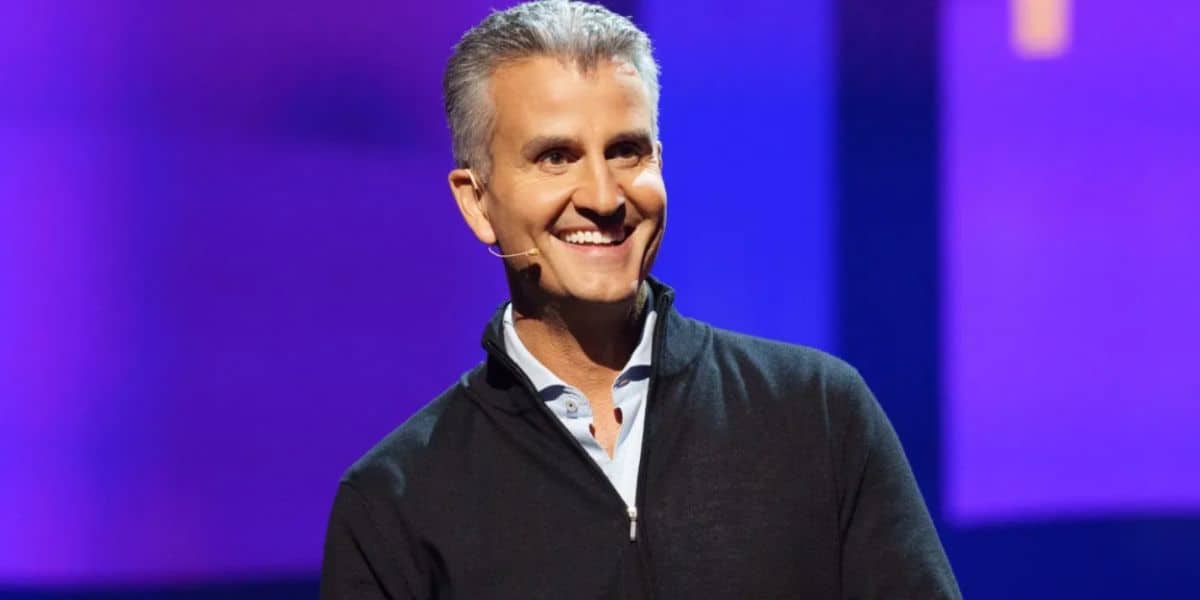
Near the close of the March 18 meeting, a shareholder asked directly whether Disney would consider restructuring DAS to ensure it reaches everyone who needs it. It was a pointed question, and D'Amaro's answer was careful.
He began by grounding his response in the human stakes: “Accessibility is deeply personal and for many families, our services for guests with disabilities, they make it possible to enjoy our parks together.” He followed that with a statement of principle: “Creating a welcoming and inclusive environment for all guests, especially those with disabilities — it's foundational to who we are.”
When it came to the current program specifically, D'Amaro defended the process that produced it: “It reflects really extensive work that we've done with accessibility experts and medical professionals, all in an effort to better understand individual needs and then really thoughtfully match guests with the right levels of support.” He emphasized the individual nature of the current approach, noting that “it's important to us that we have individual conversations with families, and that we have a broad range of accommodations that our cast members can recommend through these individual conversations.”
He closed with language that was carefully worded but not entirely closed: “As we look ahead, as we always do, we'll continue to listen, we'll learn and apply expert guidance as we evaluate these accommodations over time, and we'll always be focused on providing great experiences and designing these services to support our guests.”
It is worth noting that the 2024 DAS changes were implemented while D'Amaro served as Chairperson of Disney Experiences. He is not a new executive inheriting someone else's decision. He is the architect of the current policy now speaking as CEO.
How the DAS Program Changed in 2024 and What Followed
The 2024 update to DAS came with a specific and significantly narrower eligibility standard. Disney revised the program to cover guests with a “developmental disability like autism or similar” who “are unable to wait in a conventional queue for an extended period of time.” The practical effect was to exclude a large population of guests with physical disabilities who had relied on DAS under the previous, broader criteria.
The context behind the change matters. When Disney replaced its free FastPass system with the paid Lightning Lane program, DAS became considerably more valuable. The service lets approved guests and their parties book attraction return times through the My Disney Experience or Disneyland Resort app, then move freely through the park until their window arrives. For a family paying over $100 per day for Lightning Lane access on top of base ticket prices, the appeal of DAS as an alternative is obvious. Disney acknowledged internally that misuse had become a real problem.
Still, the execution drew significant criticism. Reports emerged of cast members advising denied guests to practice waiting in line at home, to rent mobility equipment, or to re-enter a queue by joining a family member who was already waiting. That last suggestion is difficult to execute in a crowded park under normal circumstances and completely unworkable for solo visitors. Disney has made adjustments since the rollout, including extending the service's validity period and clarifying the video call process with third-party medical reviewers, but the core eligibility language has not changed.
A class-action lawsuit filed in 2025 by a Disneyland Resort guest over the DAS changes is currently working its way through the courts.
Proposal 7 and the Shareholder Vote
Disney shareholder Erik Paul brought the DAS controversy formally into the March 18 meeting with Proposal 7, titled “Review and Report on Disability Inclusion and Accessibility.” The proposal asked Disney to hire an independent investigator to examine the updated DAS policies through the lens of legal, financial, reputational, and enterprise risk, and to report the findings to shareholders. It did not require Disney to change the program. It asked for a transparent look at the risks of having already changed it.
Paul made the business case explicitly: “Accessibility policies influence brand trust, customer loyalty, regulatory exposure, guest safety, and repeat visitation. When policies are misaligned or inconsistently implemented, the resulting impact extends beyond guest experience to operational and reputational risk.”
Disney's initial response was to seek SEC approval to exclude the resolution entirely, calling it “materially false and misleading” and a matter of “ordinary business operations.” A subsequent policy change at the SEC rendered that route unnecessary, and Disney allowed the vote while actively urging shareholders to reject it.
The result was not close. Roughly five percent of shareholders voted in favor of Proposal 7. The proposal failed decisively.
What Families With Disabilities Should Know Before Visiting
The shareholder vote does not change anything about how DAS currently operates. The 2024 eligibility requirements are still in effect. Guests must qualify based on a developmental disability, complete a live video call with a third-party medical reviewer, and reapply every twelve months.
D'Amaro's comments leave a narrow opening for future changes, but nothing in his language at the shareholder meeting signals that a meaningful revision is imminent. For families planning a Disney vacation who were affected by the 2024 eligibility changes, the most productive immediate step is a direct conversation with Disney's accessibility services team before travel. D'Amaro specifically mentioned that cast members can recommend a broad range of accommodations through individual conversations, and that process exists whether or not a guest qualifies for DAS.
For families whose needs are met by the current program, the service functions as described. For everyone else, the ongoing lawsuit and D'Amaro's stated commitment to continued evaluation are the two most meaningful signals to watch in the months ahead.
We are tracking the class-action lawsuit and will update as proceedings move forward. If you are planning a Disney Parks visit and navigating accessibility questions, drop them in the comments below. We read every one and will do our best to point you toward the right resources.