Few topics divide Disney fans right now quite like artificial intelligence. Some see it as a powerful new tool that could help Imagineers dream bigger and build faster. Others worry it could water down the hand-crafted artistry that has defined Disney parks for generations.
Wherever you land, one thing is clear: Disney isn't sitting this one out. Over the past year, the company has been steadily bringing AI into how it develops new experiences, from early concept art to the planning that happens long before construction crews arrive.
That effort just took a major step forward. On Monday, November 9, Adobe and The Walt Disney Company revealed a multi-year strategic alliance at Adobe MAX in Miami Beach. The partnership covers Disney's theme parks, Disney Cruise Line, its film studio, and ESPN.
Here's what it actually means, and how Imagineering is already putting these tools to work.
What Adobe and Disney Actually Agreed To
The headline is simple. Adobe is now an Official AI Innovation Partner of The Walt Disney Company.
In practice, that gives Disney early access to Adobe's newest AI, creative, and media tools, including Firefly, Firefly Foundry, Premiere, and Photoshop. Adobe is also dedicating engineering and research staff to help support Disney's production pipeline.
The partnership will support concept exploration as Disney's parks and cruise teams develop new projects. On the marketing side, Adobe can share innovation stories from Walt Disney World, Disneyland Resort, and Disney Cruise Line through campaigns and industry events, and it plans to grow its presence across Disney's media platforms.
Becca Vodnoy, senior vice president of Corporate Alliances at The Walt Disney Company, pointed to the long history between the two companies. “Disney has always embraced innovation, and this alliance with Adobe builds on a longstanding relationship between two companies that share a deep commitment to creativity,” she said.
Imagineering Got Its Hands on These Tools in June
If this news sounds a little familiar, that's because it builds on something announced earlier this year. On June 16, Walt Disney Imagineering Research & Development revealed it was bringing Adobe Firefly Foundry into the design and pre-production process for Disney Parks and Experiences.
Firefly Foundry is Adobe's platform for building custom generative AI models. The key difference from public AI image generators is the training data. Disney's models are built on the company's own creative assets, including Imagineering's design catalog, rather than content pulled from across the internet. Adobe says the models learn details like character attributes, environments, and visual styles so they can deliver commercially safe, production-ready results.
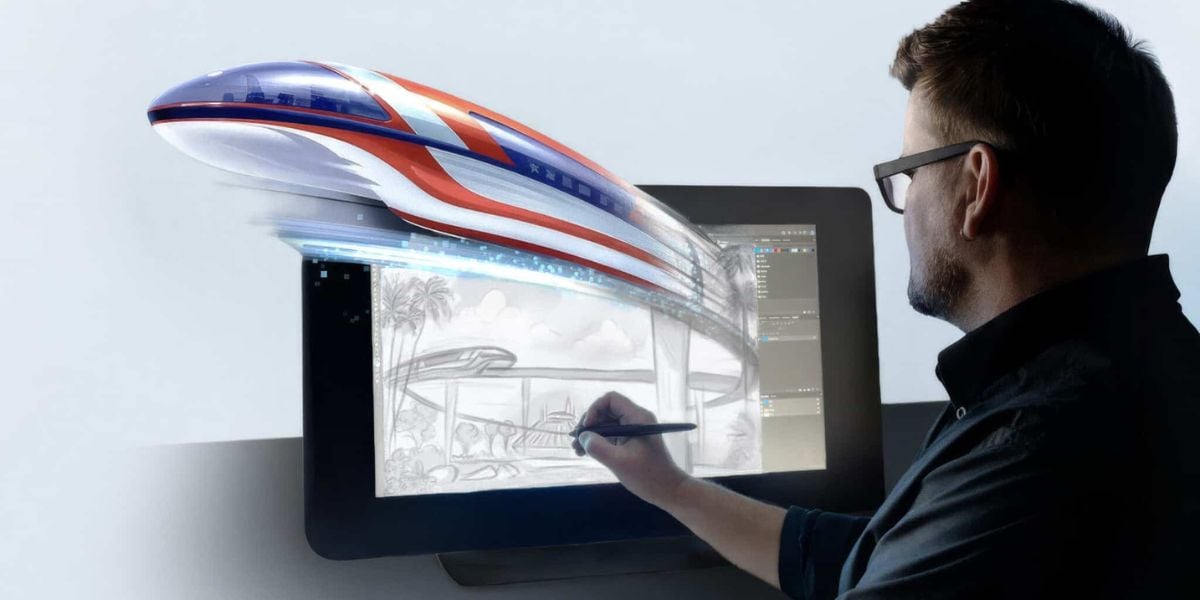
Right now, Imagineering is using two of those tools in its theme park development pipeline. The first is a sketch-to-image model that turns hand-drawn concepts into fully rendered 2D concept art. The second is a custom image model that creates on-brand, franchise-accurate assets. When it was first announced, Adobe gave examples including Mickey & Friends, Frozen, Moana, Lilo & Stitch, and Cars.
There was originally a third piece, too. In June, Adobe described a workflow that would turn 2D renderings into 3D prototypes, helping Imagineers plan builds and estimate materials. Interestingly, that tool didn't come up in the November announcement.
Hollywood and ESPN Get a Piece Too
The first is StudioLAB, The Walt Disney Studios' hub for prototyping new ideas with creative and technical teams. Adobe is joining as a StudioLAB Innovation Partner.
The second is ESPN Edge, the network's innovation center focused on sports storytelling. There, ESPN and Adobe plan to explore how AI can deepen fan engagement and help bring ESPN's archive to life.
Adobe says co-innovation projects with both groups have already started, and more will roll out during the multi-year partnership.
Hannah Elsakr, Adobe's vice president of GenAI New Business Ventures, called the announcement the next chapter in the relationship between the two companies. She noted that Adobe's tools already support Disney in areas ranging from content pipelines to digital experiences in the parks.
Disney Insists the Artists Come First
Given how sensitive the AI conversation is, it's no surprise that both companies are emphasizing the role of people. Adobe says human artists remain at the heart of how these models are used.
Disney has been sending the same message all year. In August, the company said its approach supports a creative process that stays human-centered and artist-driven. When the Imagineering partnership was first revealed in June, WDI's Kyle Laughlin said, “At Imagineering, we've always believed technology and human creativity can work together responsibly.”
There's still plenty we don't know. Neither company has publicly tied these tools to a specific upcoming attraction, land, or ship that we've seen. And it's an open question whether the 2D-to-3D prototyping workflow from June is still in the works.
From Sketchbook to Software
For decades, Disney concept art has given fans their first glimpse of what's coming next. Now some of that early exploration may involve a custom AI model trained on Disney's own artwork. How much that changes the final product remains to be seen.
So let's talk about it. Are you excited to see what Imagineers can do with these new tools, or would you rather keep AI far away from the design process? Is there a line you think Disney shouldn't cross? Share your honest take in the comments below. Love it or hate it, we want to hear from you.