Summer at Walt Disney World is one of the most complicated seasons the resort navigates. The parks are at their fullest — families with school-age children make June, July, and August among the highest-attendance months of the year — and the Florida climate makes those same months among the most physically demanding for guests trying to get through a full park day.

Central Florida summers are not just warm. They are aggressively humid, with heat indexes that regularly push conditions into ranges where outdoor exertion carries real risk for guests who are not managing their exposure carefully. Walt Disney World's parks are largely outdoor environments, and even the best-planned day involves significant time standing in the sun, walking between attractions, and being exposed to conditions that can shift from manageable to genuinely uncomfortable very quickly.
Disney's emergency response teams handle heat-related incidents throughout the summer with enough frequency that experienced guests know to take the season seriously. A patent published on April 2, 2026 — originally filed by Disney Enterprises with the United States Patent and Trademark Office on September 30, 2024 — suggests the company has been building something that could change how guests and cast members alike manage that risk, and the technology described is more sophisticated than anything currently available through My Disney Experience.

What the Patent Describes
The patent carries the title “Predicting and Mitigating Effects of Environmental Conditions.” Its abstract reads: “A system for predicting and mitigating an effect of environmental conditions, the system includes: a user device including a processor and a memory configured to: determine the environmental conditions for a location within an environment; analyze the environmental conditions in light of an individual-specific criterion to determine a predicted impact on an individual within the location during the determined environmental conditions; and generate a mitigation response based on the predicted impact.”
The key differentiators in that description are the two inputs driving the system's predictions: the individual's current location within the environment, and individual-specific criteria. The patent specifies that “the prediction is based on at least one biological characteristic of the user and/or an activity schedule of the user.” The example the patent gives is direct — “people or animals exposed to heat and humidity, particularly while engaging in an activity (e.g., walking, running, etc.), can develop heat stress or other biological conditions” — making clear that heat stress during theme park activity is a primary intended use case for the technology.
The system's stated goal, as outlined in the patent, is to “allow many activities to be continued in a more comfortable and less harmful manner by helping to identify and prevent overexposure within a particular environment,” specifically citing “hot, humid summer days” and listing tourists alongside construction workers and athletes as the intended users who would benefit.
The Animals and Plants Detail
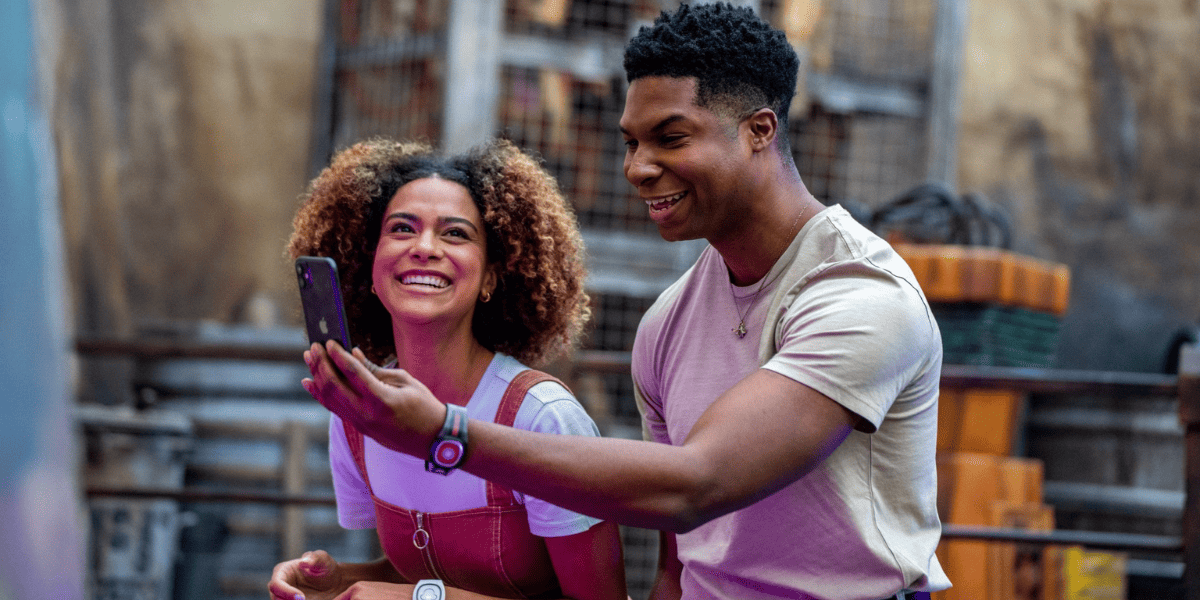
One aspect of the patent that stands out beyond the guest experience application is the scope of who the system is designed to protect. The patent specifies that the term “individual” encompasses “a person, an animal, or a plant.” That is not a throwaway line. Walt Disney World manages a significant population of living things beyond its human guests — the animal residents and plant environments across its properties, particularly at Disney's Animal Kingdom, represent a complex biological ecosystem that requires environmental monitoring on a level most guests never think about. Cast members responsible for those animals and plants would fall under the same alert system as the guests, which makes the patent's scope considerably broader than a consumer-facing feature in My Disney Experience.
Why This Would Actually Matter for a Summer Disney Trip
The gap this technology fills is more specific than it might initially appear. Generalized weather forecasts and temperature alerts are already available in numerous apps, and Disney's current tools provide basic park conditions information. What makes the patented system different is the intersection of location, personal biological data, and activity schedule.
A guest standing inside the air-conditioned queue for Guardians of the Galaxy: Cosmic Rewind is not at meaningful heat risk in that moment regardless of the outdoor temperature. A guest who has just finished a ninety-minute outdoor wait for Tiana's Bayou Adventure and is planning to walk across the park for another outdoor experience is in a completely different situation — and a system that knows their location, knows their next planned activity, and knows something about their individual heat tolerance can generate an alert that is actually relevant rather than generic.
For families traveling with young children, who frequently cannot or do not communicate heat discomfort until they are already significantly stressed, a proactive alert based on conditions and planned movement could be genuinely protective. For guests with health conditions that affect heat tolerance, the same logic applies with even more urgency. And for older guests who may underestimate their own exposure risk, a personalized push notification that says conditions at their current location are approaching a threshold relevant to their profile represents a meaningful safety improvement over the current nothing.
What This Means for Planning a Summer Visit Right Now

The patent describes technology that exists in documented form but has not been announced as an active My Disney Experience feature. The gap between a filed patent and a deployed consumer product can be months or years, and Disney routinely files patents for technologies that take considerable time to reach guests if they arrive at all.
For guests with summer Walt Disney World trips planned before any such feature might be available, the existing summer planning playbook still applies. Arriving early to complete as many outdoor attractions as possible before peak heat hours — typically mid-morning through mid-afternoon — is the single most effective structural change a guest can make to a summer Disney day. Building in an intentional midday break at a resort hotel or air-conditioned venue redistributes the physical load of the day. Staying hydrated throughout, not waiting until thirst signals, remains a non-negotiable baseline. And checking the daily forecast for your specific park dates before you arrive allows you to build flexibility into your afternoon plans before conditions make spontaneity difficult.
We will track this patent and any related My Disney Experience feature announcements as they develop. For a comprehensive guide to planning a Walt Disney World visit during summer — covering crowd patterns, heat management, the best indoor and shaded attractions, and how to structure a day around Florida's climate — our summer planning guide covers everything you need before you book. Read it before your trip and arrive with a strategy rather than a hope.