

Walt Disney World Resort has closed the doors on a familiar dining location after nearly three decades, and the response from fans has been anything but quiet. Guests who built traditions around this stop now find it gone, replaced by uncertainty and frustration. For many, the closure feels less like a routine update and more like a sign that Disney is moving on from experiences that once defined the parks.
That feeling didn’t come out of nowhere. It’s tied to a broader transformation reshaping the entire resort.
Disney World’s Era of Reinvention
Change has always followed Disney World, but today it feels constant. New lands are under construction, older attractions are disappearing, and large-scale projects dominate the conversation. Even repeat visitors struggle to keep up as familiar areas vanish behind construction walls.
Disney’s current strategy centers on immersive storytelling built around well-known franchises. These lands aim to feel seamless and cinematic, drawing guests deeper into recognizable worlds. That vision drives what gets built and, just as importantly, what gets removed.
Nowhere is that shift more evident than at Animal Kingdom.

A Park Undergoing a Major Reset
Animal Kingdom has long been known for its distinct tone, leaning into nature, conservation, and original storytelling. Over time, that approach has slowly given way to a new direction, one that prioritizes intellectual property more heavily.
The most dramatic example came with the permanent dismantling of an entire land. This wasn’t a phased update meant to preserve pieces of the past. It was a complete teardown, marking a turning point for the park and signaling where Disney wants to go next.
That turning point arrived earlier this month.

A Classic Land's Final Chapter
DinoLand U.S.A. has officially closed, ending a land that existed for decades inside Animal Kingdom. The shutdown capped off a gradual process that unfolded in stages, with DINOSAUR closing permanently as part of the final chapter.
DINOSAUR stood out for its intensity and unapologetic design. It delivered a chaotic, thrilling experience that many guests still remember vividly. For kids, it often marked a milestone ride. Its closure underscores how quickly Disney is moving forward, clearing space for what comes next without hesitation.
That future now takes shape as Pueblo Esperanza.
When Dining Disappears Too
Alongside DinoLand U.S.A., Restaurantosaurus also quietly closed. The dining location is nearly celebrating its 28th anniversary and has served as a dependable stop for countless families. While it lacked flash, it made up for it with personality and practicality.
Its sprawling dining rooms, packed with jurassic-sized humor and layered details, offered something rare: breathing room. Guests escaped the heat, regrouped, and relaxed. Losing that option leaves a noticeable gap, especially in a park already stretched thin during busy seasons.
The closure drives home how complete this transition truly is.

A New Experience Rises
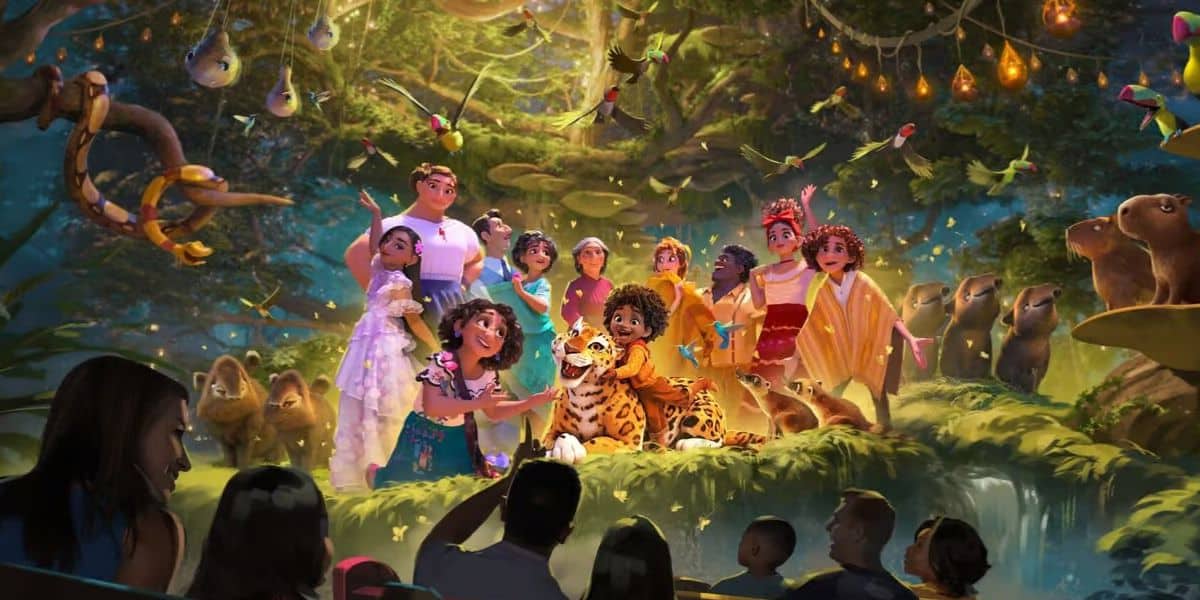
Taking DinoLand’s place will be a Tropical Americas–themed land centered on Pueblo Esperanza. Disney has confirmed key elements that will shape this area and redefine this section of the park.
Guests will eventually explore a version of the Madrigal family’s home from Encanto (2021), brought to life through a dedicated attraction. DINOSAUR’s former space will transform into a new Indiana Jones adventure, preserving the thrill while introducing a new story. A carousel, plus dining and shopping offerings, will help anchor the land as a whole experience.
These additions signal a bold future for Animal Kingdom.
Letting Go While Moving Forward
The loss of DinoLand U.S.A., DINOSAUR, and Restaurantosaurus represents more than physical closures. It reflects a shift in priorities and a farewell to a version of Animal Kingdom that many guests loved deeply. While Disney is betting on what comes next, fans are still processing what’s been left behind.