
The number is 414.

That is how many nuisance alligators state records show have been captured and removed from Walt Disney World property since June 2016, the month a two-year-old boy named Lane Thomas Graves was killed by an alligator on the beach outside Disney's Grand Floridian Resort. The figure comes from newly obtained Florida Fish and Wildlife Conservation Commission records and was shared widely after Disney Clips Guy posted about it on X, prompting a thread full of responses from people who had their own stories about wildlife and water at Walt Disney World.
I'll never forget the first time we stayed at a Disney resort and my kids asked me if there were alligators in the river at Port Orleans. I asked a CM and they said they use Disney magic to keep them out.
Then of course there was the terrible tragedy with that little boy at the… pic.twitter.com/6CDzg1FRJO
— Disney Clips Guy (@disneytipsguy) July 7, 2026
Some were surprised. Many were not. The divide between those two reactions says something important about the gap between how Walt Disney World presents itself and what Florida actually is.
What Happened in June 2016

Lane Thomas Graves was two years old. He was building sandcastles on the beach at Disney's Grand Floridian Resort on the evening of June 14, 2016, standing “ankle deep or less in the water” while scooping it into a bucket, according to the state investigation. An alligator came out of the Seven Seas Lagoon and pulled him in.
He did not survive.
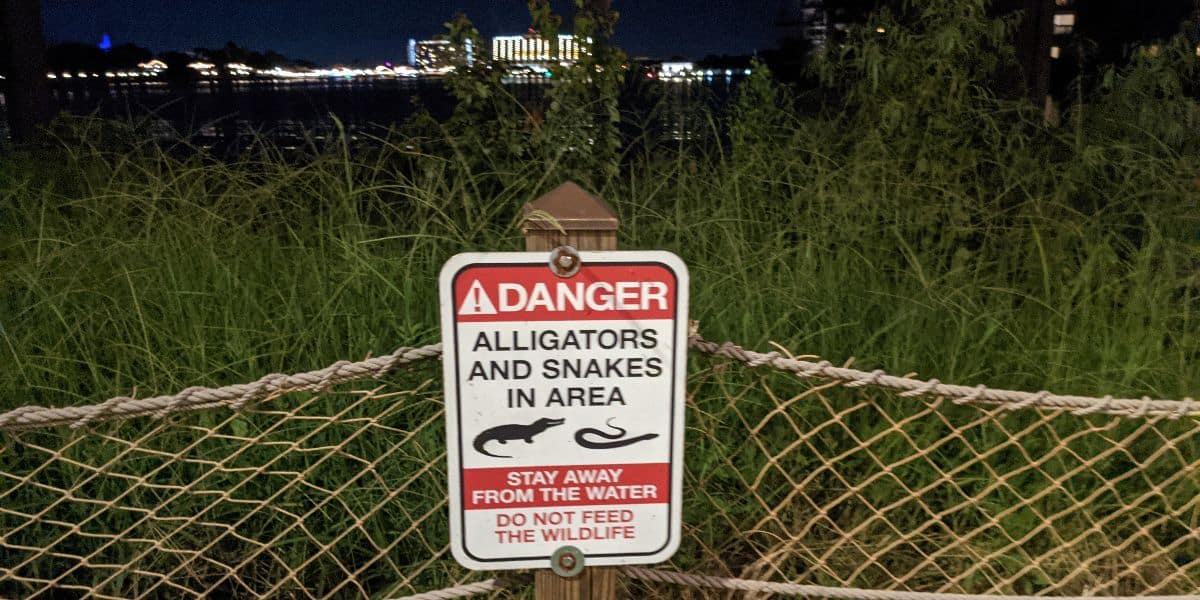
The response from Disney in the days that followed was significant. Fences and large rocks were installed along shorelines across the resort to prevent guests from accessing the water's edge. Signage warning about alligators and snakes went up throughout the property. Cast Member training on wildlife sightings was reinforced. A lighthouse sculpture was placed near the Grand Floridian beach in 2017 to raise awareness of the Lane Thomas Foundation, the nonprofit Lane's parents established to support families of children in need of organ transplants.
Before 2016, the beaches at the Grand Floridian, the Polynesian, and other resort hotels were easily accessible. Guests walked down to the water without barriers or warnings. Early Walt Disney World promotional materials from 1971 showed families swimming in the resort's lakes. The risk was present the entire time.
The Numbers Behind the 414
The FWC records provide a clear before-and-after picture.
In the eight years before Lane's death, state-contracted wildlife trappers removed an average of 23 alligators annually from Disney property. In 2016, the year of the attack, that number jumped to 83. The following year, 57 were removed. From 2018 through 2025, the annual average settled at 36. At least a dozen more were captured in just the first four months of this year.
The cumulative total since 2016 is at minimum 414 alligators.
Walt Disney World addressed the ongoing removal program in a 2021 statement: “In keeping with our strong commitment to safety, we continue to reinforce procedures related to reporting sightings and interactions with wildlife, and work closely with Florida Fish and Wildlife Conservation Commission to remove or relocate certain wildlife from our property in accordance with state regulations.”
The removals happen through the FWC's Statewide Nuisance Alligator Program, known as SNAP. FWC communications coordinator Hailee Seely described what the program is designed to do: “The goal of SNAP is to proactively address alligator threats in developed areas, while conserving alligators in areas where they naturally occur.”
State-contracted trappers receive a $50 stipend per alligator captured. The FWC does not relocate nuisance alligators because they tend to return to their capture sites and because remote areas already carry established populations. Many captured alligators are euthanized, with trappers authorized to sell hide and meat. Others are sent to animal exhibits, zoos, or licensed alligator farms. Ian Hall, owner of Florida Hunting, Fishing and Outdoor Adventures in Okeechobee, described what happens to alligators transferred to his operation: “We received them all alive and they are released on our hunting preserve where our clients can hunt them. Then they are processed for eating.”
Florida's statewide alligator population is approximately 1.3 million. The removal of 414 from a single property over nine years does not meaningfully affect that number.
What the Thread Revealed
The X post generated responses that ranged from genuine shock to the matter-of-fact shrug of lifelong Floridians.
One commenter recalled asking a cast member about alligators at Port Orleans: “I asked a CM and they said they use Disney magic to keep them out.” That answer, given before 2016, is the clearest possible illustration of how the resort's presentation created a false sense of security around a real environmental condition.
Another shared a memory from a 2013 trip to the Grand Floridian and Polynesian beach areas: “I could not believe there was no fence up or any signs at the beaches about gators. The little boy who died was the exact same age as my son, so it's ingrained in my mind, and it was just so unnecessary for that accident to happen. My heart aches for his family.”
A Florida local offered the most direct framing of the baseline reality: “If you're in Florida and you're by water there are gators. Period.” Another described a neighbor who found a baby alligator in their garden after it wandered from a nearby retention pond, and a friend who found one under her car on a hot day.
One account described waking early at Port Orleans and witnessing two cast members trying to push an alligator back toward the river with brooms. Another described seeing “the largest gator I've ever seen” while walking the path from the Boardwalk to Hollywood Studios in 2019. A third mentioned a large alligator that became an informal attraction at Shades of Green before the tragedy prompted its removal.
“WDW was built on Gator habitat,” one commenter wrote simply. That is not an accusation. It is geography.
What Guests Visiting Today Need to Know
The physical changes Disney made after 2016 are real and visible. Fences and rocks line the water's edge at most resort hotel beaches. Signage about alligators and snakes is posted across the property. The casual beach access that existed before that June evening is gone.
What has not changed is the underlying environment. Central Florida has alligators. Bodies of water in central Florida have alligators in or near them. A resort built on former wetlands will always require active wildlife management, which is exactly what the 414 removals represent.
The FWC's guidance for anyone near Florida waterways is specific. Keep a safe distance from any alligator you see. Keep pets leashed and away from the water. Swim only in designated areas during daylight hours and never with pets. Never feed an alligator under any circumstances. Feeding is illegal and strips alligators of their natural wariness of humans, which is the condition that most often leads to dangerous encounters. If you see an alligator that concerns you, the FWC's Nuisance Alligator Hotline is 866-FWC-GATOR (866-392-4286).
For guests traveling to Walt Disney World from outside Florida, particularly those bringing children who have no frame of reference for alligators as a real and present feature of the landscape, the conversation is worth having before you arrive and not after you are already standing at the water's edge.
Have you had a wildlife encounter at Walt Disney World or elsewhere in Florida? Share it in the comments. And if you are planning a Florida trip with family members who have never spent time in the state, what questions do you have about navigating the environment safely? Ask below.




I heard a few years ago there was a black panther hanging out around port orleans, tree house area… haven’t heard of any bears at disney world, I’m sure they are around
Saw a 4ft alligator traveling between the parked water sprites back in 1984 from a balcony at buena vista palace. Very good stealth with no wake. Kept a close eye on my 4 year old after that! Is that one of the reasons WDW does not have the small boats any longer?