We are going to start with the most recent thing and work backward because the most recent thing is genuinely striking and deserves to be the first sentence of this article.
On Wednesday evening, dozens of police vehicles surrounded Disneyland in Anaheim, California after a flood of emergency calls reported an active mass shooting at the theme park. Law enforcement responded in force because that is what the protocol requires when active shooter calls come in regardless of whether anyone has verified them. According to KTLA-TV, the calls were determined to be swatting, a criminal hoax specifically designed to generate exactly that kind of massive law enforcement response.
The park was not evacuated. No guests were harmed. No actual threat existed. Police cleared the scene after confirming the calls were false. And yet the week that produced this moment at Disneyland has been, to put it plainly, a lot.
Because this was not the first safety-related incident at Disneyland this week. It was the third. And it is all happening against a backdrop of a statewide security warning that is generating its own set of questions from guests with upcoming California theme park trips.
We are going to cover everything clearly and completely because that is what you need right now.
Let's Start With the Swatting Because It Deserves Its Own Section

Swatting is a criminal practice in which false emergency reports are made to trigger a significant law enforcement response, typically from SWAT teams, hence the name. It is a serious and increasingly common crime that has targeted schools, government buildings, private residences, and now one of the most recognizable theme parks in the world.
Wednesday evening at Disneyland, multiple calls reporting an active mass shooting prompted dozens of patrol vehicles to descend on the Anaheim property. The response was correct. Active shooter protocol requires an immediate and substantial response before anyone can verify the source or the credibility of the report. That is how the protocol is supposed to work.
The calls were false. The park was not evacuated. Guests were not in danger. Law enforcement cleared the scene after determining it was a hoax.
Swatting is a crime and the people responsible for these calls cause real harm even when no physical threat exists. Emergency resources get consumed. Guests experience genuine fear. Cast members have to manage situations they were not responsible for creating. The fact that no one was hurt does not diminish the seriousness of what happened.
What it does mean for guests is that there was no actual threat to Disneyland on Wednesday evening. The police presence was the response, not the indicator of danger.
Now Let's Talk About the Two Hazmat Incidents That Happened First

Before the swatting call on Wednesday, Disneyland had already dealt with two separate hazardous materials incidents this week. Both happened in backstage areas that guests do not access during normal park visits.
The first involved building materials being used by a contractor that produced a chemical reaction backstage. Response teams examined the area. Several cast members were treated on-site by paramedics and released. At least five employees experiencing dizziness and shortness of breath were transported to local hospitals. Adjacent guest areas were cleared as a precaution and were expected to reopen shortly after. A Disneyland official confirmed the incident and stated no park guests were affected.
The second incident involved an unknown odor in the backstage area near the Star Tours attraction. The Anaheim Fire Department responded to the hazmat call. Four Disney employees experiencing dizziness and shortness of breath were transported to a local hospital. The cause of the odor was not identified at the time of reporting. Star Traders, the retail location connected to Star Tours, was closed and cast members were reported blocking surrounding entrances. Disneyland confirmed there were no guest safety concerns.
Both incidents were handled by the Anaheim Fire Department and on-site paramedics. Neither resulted in a full park closure. Neither disrupted guest-facing operations in any lasting way. Both were genuine emergencies in backstage areas that were contained and resolved professionally.
Two hazmat incidents in the same week at the same park is unusual. Both warranted the responses they received. Both were resolved without harm to guests.
And Then There Is the FBI Warning Covering the Entire State

On top of everything happening at the park specifically, California is also managing a regional security situation that is generating its own set of questions from theme park visitors.
At the end of February, the FBI distributed an alert to California law enforcement agencies warning that Iran may have considered a drone attack originating from a vessel off the U.S. coastline. The alert was specific about what it did and did not know: “We recently acquired information that as of early February 2026, Iran allegedly aspired to conduct a surprise attack using unmanned aerial vehicles from an unidentified vessel off the coast of the United State Homeland, specifically against unspecified targets in California, in the event that the US conducted strikes against Iran. We have no additional information on the timing, method, target, or perpetrators of this alleged attack.”
No timing. No confirmed target. No confirmed method. No confirmed perpetrators. An aspiration tied to a conditional. That is what the alert describes, and the language of the alert itself is the most important context for understanding how much weight to give it.
San Francisco Mayor Daniel Lurie stated: “We are aware of the reports that were made public today, and we have been in constant communication with our state and federal partners, who have assured us there are no imminent threats to us here in San Francisco. As always, public safety is our No. 1 priority, and rest assured we are in constant communication with all of our public safety partners, and we will continue to monitor the situation, and we will always keep you posted.”
Governor Gavin Newsom confirmed the situation at a March 11 press conference: “We've been aware of that information. Drone issues have always been top of mind, and we've assembled some work groups specifically around those concerns.”
The Oakland Police Department added: “We have spoken with our federal partners, who informed us that there may be a heightened risk due to the conflict in the Middle East. To ensure the safety of our community, we are maintaining close contact with local, state, and federal law enforcement. OPD will keep monitoring the situation and determine if there is a need to increase police presence.”
The warning connects to the escalating Middle East conflict following U.S.-Israeli airstrikes that killed Iran's supreme leader, Ayatollah Ali Khamenei, in Tehran on February 28. Iran's Assembly of Experts named his son, Mojtaba Khamenei, as the new supreme leader. The United States has continued military operations against Iran, which has responded with drone strikes across the Middle East. More than 1,300 people in Iran have been killed since the conflict began according to CNN, with over 630 reported deaths in Lebanon following Israeli strikes there.
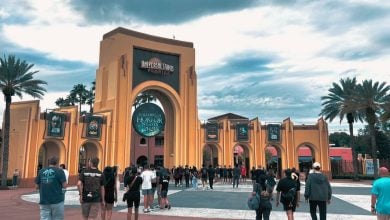
For Disneyland and Universal Hollywood visitors: neither Anaheim nor the Hollywood area has been named as a specific target. The FBI alert covers unspecified California targets without identifying any location. Both parks are operating with standard security infrastructure and no operational changes have been announced at either destination.
What You Should Actually Do With All of This Information
Here is the honest summary of a genuinely unusual week at Disneyland and in California broadly.
The swatting incident was a criminal hoax that was handled correctly and resulted in no harm to guests. It does not indicate that Disneyland is a genuine target of violence.
The FBI drone warning is a real intelligence concern being monitored at city, state, and federal levels across California. The official assessment from California's most senior officials reflects that no imminent threat has been confirmed. That assessment is the most accurate indicator of current severity available.
None of this means a California theme park trip should automatically be reconsidered. It means guests should be informed before they go, which is why this article exists.
Follow Disneyland Resort and Universal Studios Hollywood on social media and check their official websites before your visit for any operational updates. Follow the California Governor's Office account for any changes to the regional security picture. If anything unusual happens during your park visit, follow the direction of park security and cast members immediately and completely.
Both parks are open. Both are operating normally. This week was a lot. It was handled. Go with your eyes open and your official notifications turned on.