The film world has lost one of its most influential and beloved visual artists. Drew Struzan — the legendary illustrator whose cinematic posters became iconic representations of the movies themselves — passed away on October 13 at the age of 78. His death was confirmed via a post on his official Instagram account, noting that he had long expressed how deeply touched he was by the love and admiration his fans showed him.
Struzan had been living with Alzheimer’s disease in recent years and had withdrawn from public life. The Instagram post announcing his passing read:
“It is with a heavy heart that I must tell you that Drew Struzan has moved on from this world as of yesterday, October 13th. I feel it is important that you all know how many times he expressed to me the joy he felt knowing how much you appreciated his art.”
View this post on Instagram
A Career That Defined Generations of Moviegoers
While countless movie posters have come and gone over the decades, few artists have ever managed to shape the public's perception of a film before they even entered the theater the way Drew Struzan did. With his masterful blend of realism, composition, and narrative expression, Struzan turned advertising into artistry.
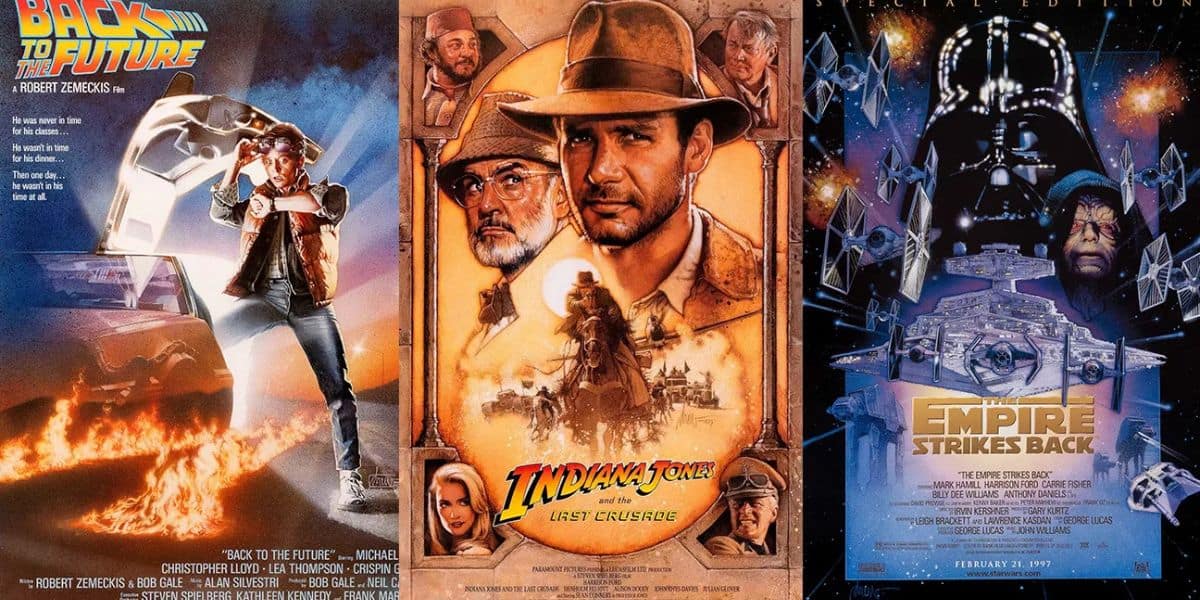
The sheer breadth of his portfolio is staggering. He created some of the most recognizable film artwork of the last 50 years: Back to the Future, The Goonies, Indiana Jones and the Last Crusade, Star Wars: The Empire Strikes Back(Special Edition), Risky Business, The Thing, and Harry Potter and the Sorcerer’s Stone.
Even if you don’t know his name, you know his work. His signature layout — often centered around character portraits, glowing with warm light and emotion — became a visual shorthand for the movies that defined the late 20th century.
Spielberg’s Poster Artist of Choice
Struzan wasn’t just an artist; he was the artist for filmmakers like George Lucas and Steven Spielberg. Spielberg once famously referred to him as “my favorite movie artist,” remarking that the challenge wasn’t commissioning Drew to create a poster — it was making sure the movie lived up to what he painted.
Struzan had a way of capturing both the magic and emotional core of a film. His posters weren’t flat marketing tools — they told stories in their own right. He managed to place sprawling casts into single, beautifully composed frames that felt cohesive, vibrant, and filled with life. That ability earned him a kind of trust from filmmakers few illustrators have ever enjoyed.
View this post on Instagram
From Struggle to Stardom
Struzan’s journey to becoming Hollywood’s go-to illustrator was not easy. At a tribute event in 2018, the artist spoke candidly about his difficult upbringing, sharing that he never had birthday parties or many childhood joys. “Everywhere I went, I worked my ass off,” he said. “Nothing was ever given to me before, except by these lovely people,” referring to the filmmakers who championed him throughout his career.
It was an emotional moment that revealed just how much his career meant to him — not just as an artist, but as a person who had overcome adversity through his talent, work ethic, and passion for visual storytelling.
An Inspiration to Artists Across Disciplines
Struzan’s work didn't just inspire filmmakers — it left a lasting impression on artists of all stripes. In the wake of the announcement of his passing, tributes from major names in the entertainment and art industries began pouring in.
Celebrated DC Comics figure and artist Jim Lee called Struzan “a giant among giants,” while renowned Marvel cover artist J. Scott Campbell reflected on the weight of Struzan’s loss, saying, “He has left us all with so much beauty to enjoy for generations to come.”
The praise wasn’t simply for his technical skill — though that was considerable — but for his ability to inject feeling and depth into promotional material. For many, his posters weren’t just images; they were portals to memory and imagination.
Filmmaker Dean DeBlois, best known for How to Train Your Dragon, once recalled that he couldn’t always afford movie tickets as a kid. Instead, he’d stand in front of Struzan’s posters and let his imagination do the rest. “It just jogged my imagination,” he said, describing how deeply the art impacted him.
“My Favorite Is Always the Next One”
Despite the immense acclaim and recognition, Struzan remained humble throughout his career. When asked in interviews which of his works he considered his favorite, he famously replied:
“If I had a favorite, then I would have already done the best I can do. I’d lose my spark of creativity. My favorite is always the very next one.”
That quote encapsulates who Drew Struzan was — a relentless creative, always looking forward, never coasting on past achievements. Even late into his career, his mind remained focused on what could come next, always driven by the desire to explore new artistic challenges.
His life and career were the subject of the 2013 documentary Drew: The Man Behind the Poster, a film that helped pull back the curtain on an artist whose work had defined so many moviegoers’ imaginations but who often stayed behind the scenes.
A Legacy in Every Theater Lobby
Struzan may be gone, but his legacy is etched into the cultural memory of anyone who has loved cinema over the past five decades. His posters didn't just sell tickets — they became part of the cinematic experience itself. A Struzan poster wasn’t an accessory to the movie; it was a fundamental part of its identity.
As today’s movie posters become increasingly reliant on digital composites and character montages, Struzan’s analog craftsmanship stands apart. His posters were hand-drawn and painted, filled with depth, warmth, and emotional resonance.
Whether you grew up staring at his work in a theater lobby, collecting VHS or DVD covers, or discovering them as digital reproductions years later, Struzan’s art left a mark. His passing closes a chapter in movie history — but the work he created will endure.
Thank you, Drew, for making movies even more magical.