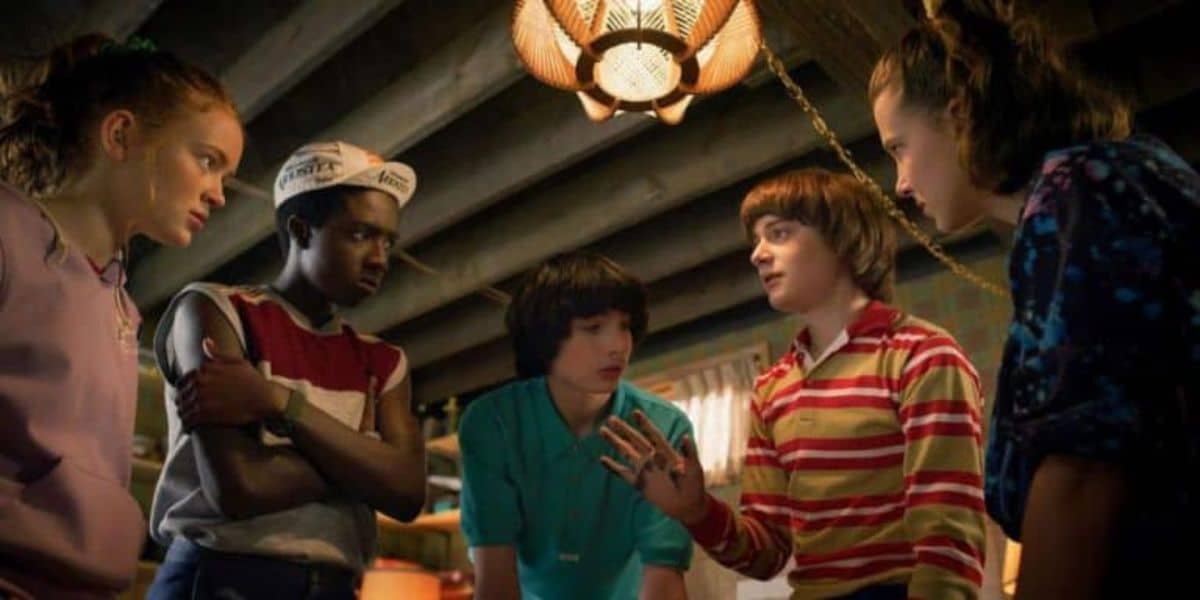
When Finn Wolfhard took the stage as host for Saturday Night Live's 51st season, episode 10, the opportunity to lampoon his most famous role seemed like a natural fit for the sketch comedy institution. Stranger Things had just concluded its fifth and final season on Netflix, generating intense fan discussions about character arcs, narrative decisions, and the handling of sensitive storylines.

The timing positioned SNL perfectly to capitalize on that cultural conversation while Wolfhard, who plays Mike Wheeler in the series, could participate in sending up the show that made him famous. The filmed sketch that emerged featured several Stranger Things cast members, including Gaten Matarazzo and Caleb McLaughlin, satirizing everything from Netflix's franchise expansion tendencies to fan conspiracy theories about deleted episodes. On paper, the concept promised the kind of self-aware humor that works when actors demonstrate willingness to poke fun at their own projects. In execution, however, one specific element of the sketch generated significant online backlash, with critics arguing that the parody treatment of Will Byers' coming out scene crossed from satirical commentary into insensitive mockery of LGBTQ+ representation.
The controversy illustrates ongoing challenges around comedy's role in addressing identity-based storylines, particularly when those storylines carry meaningful weight for audiences who see themselves reflected in the characters. What Saturday Night Live intended as comprehensive Stranger Things satire became, for many viewers, an example of how mainstream comedy still struggles with knowing where to draw lines around representation and respect.
Breaking Down the Controversial Sketch
The SNL segment operated as a multi-layered parody addressing several aspects of Stranger Things' cultural footprint. The primary satirical target was Netflix's business model of extending successful properties through endless spinoffs, sequels, and prequels. The sketch imagined absurd extensions of the Stranger Things universe, including “Strangerous Minds” featuring Steve Harrington as an inner-city teacher, playing on the streaming service's reputation for milking intellectual property beyond reasonable limits.
Another layer addressed the conspiracy theory that spread online claiming the Duffer Brothers and Netflix had deleted a ninth episode from season 5. This theory, despite repeated denials from the show's creators, gained enough traction to spawn Google Docs outlining supposed plot points and a Change.org petition demanding the episode's release. The sketch incorporated this conspiracy into its premise, with Wolfhard's Mike character insisting the finale was an illusion created by antagonist Vecna and attempting to prove his theory by bringing back Eleven, only to reveal an obvious impostor rather than Millie Bobby Brown.
Within this framework, SNL cast member Jeremy Culhane portrayed Will Byers in a segment that joked about the character's coming out scene from season 5 “still going on.” The parody intercut actual footage from Stranger Things with exaggerated dialogue, culminating in a punchline that redirected Will's emotional confession about his sexuality into a joke about his preference for Dungeons & Dragons.
This specific choice became the flashpoint for criticism, with viewers questioning why Will's sexuality warranted parody treatment while other character moments and storylines received different handling in the episode.
Understanding the Source Material Context

Will Byers' coming out scene in Stranger Things season 5 represented the culmination of character development that had been building across multiple seasons. Noah Schnapp, who portrays Will throughout the series, has discussed publicly how emotionally significant filming that scene was for him as an actor. The moment provided explicit resolution to subtext that fans had been tracking and interpreting for years, giving Will an opportunity to articulate feelings the series had been hinting at without making explicit.
The 1980s setting adds layers of complexity to this storyline that can't be ignored. Coming out during that decade, particularly in small-town America as depicted in Stranger Things, involved social risks and potential consequences that have diminished in many contexts today. The series acknowledged this historical reality through its treatment of Will's journey, recognizing the specific challenges faced by LGBTQ+ youth in that era rather than projecting contemporary acceptance backward onto a less tolerant time period.
For LGBTQ+ viewers, particularly younger audience members who grew up watching Stranger Things, Will's story provided representation in a mainstream genre series that doesn't always prioritize those narratives. Seeing a character navigate coming to terms with his identity within the show's specific historical and social context offered validation beyond simple plot mechanics or character development checkboxes.
The Critical Response Takes Shape
Reactions to the SNL sketch spread rapidly across social media platforms following the episode's broadcast. Critics focused specifically on the decision to parody Will's coming out scene, arguing that reducing that emotional moment to a joke about Dungeons & Dragons preferences trivialized important LGBTQ+ representation. Several commenters noted that the sketch singled out Will's sexuality for comedic treatment while other male characters from Stranger Things received different handling in the same episode.
Some viewers referenced Schnapp's previous interviews describing the emotional weight of filming the coming out scene, suggesting that SNL's parody disrespected not only the fictional character but also the actor's investment in portraying that moment authentically. This perspective held that certain storylines involving marginalized identities deserve more thoughtful treatment even within satirical contexts specifically because of the representation they provide.
Others countered that Saturday Night Live has always operated with the premise that nothing is off-limits for comedy and that exempting Will's storyline from parody would constitute a form of differential treatment that itself becomes problematic. This view maintains that comedy serves an important function in puncturing earnestness and that no subject matter should be considered too sacred for satirical examination.
The debate also surfaced existing divisions within the Stranger Things fandom regarding character relationships and narrative choices. Some fans had hoped for a romantic relationship between Mike and Will, and the sketch inadvertently highlighted those ongoing disagreements about how the series handled its LGBTQ+ representation and whether it delivered on perceived promises built through earlier seasons' subtext.
Broader Season 5 Reception Issues
The sketch controversy arrives amid wider criticism of Stranger Things' final season. Episode 7 became the lowest-rated episode in the series' history on IMDb, reflecting audience frustration with pacing, narrative choices, and how certain character arcs concluded. Fan reactions to season 5 have been decidedly mixed, with substantial portions of the audience expressing disappointment about how the Duffer Brothers wrapped up storylines after years of anticipation.
This context of frustrated expectations likely intensified reactions to the SNL sketch. When audiences already feel protective of characters or sensitive about how their stories were handled in the source material, seeing those elements parodied can feel less like good-natured ribbing and more like mockery of something viewers care deeply about. The emotional investment many fans have in Stranger Things characters means that comedy targeting those characters faces higher scrutiny than parodies of properties where audience attachment is less intense.
What the Duffer Brothers Have Said
The conspiracy theory element of the SNL sketch, while played for laughs, reflects actual online discourse that series creators Matt and Ross Duffer have repeatedly addressed. In interviews with Variety, Matt Duffer acknowledged seeing the Google Doc outlining the deleted episode theory, stating definitively that “Obviously, that's not a real thing.” Ross Duffer noted he hadn't encountered the Change.org petition but emphasized “I don't think there's a single cut scene in the entire season.”
The Duffers have been adamant about maintaining creative control throughout the series' run, with Matt Duffer telling multiple outlets that Netflix provided “no interference or direction at all” on content decisions. Speaking with Collider, he clarified that the only significant editing involved a rooftop scene among teenage characters that was trimmed by approximately five minutes due to extensive improvisation. Across all five seasons, only one scene was ever completely deleted, dating back to season 1 and involving content that Netflix requested but the Duffers shot and removed, which apparently went unnoticed by the streaming service.
This repeated pushback against deletion theories makes the SNL sketch's incorporation of that conspiracy particularly meta, satirizing online discourse that has persisted despite creators' direct denials.
Comedy's Evolving Standards
The SNL controversy taps into broader cultural conversations about comedy's boundaries when addressing identity and representation. What distinguishes contemporary discourse from previous eras is the speed and public nature of these debates. Social media platforms allow immediate responses to creative content, with reactions spreading and amplifying within hours of broadcast rather than percolating slowly through traditional media coverage.
Saturday Night Live has faced similar criticisms throughout its five-decade history when sketches addressed sensitive topics. The show's format and mission inherently involve risk-taking, and not every sketch lands successfully with every audience segment. What has changed is the immediacy of feedback and the visibility of dissenting perspectives that might previously have remained confined to private conversations.
The challenge for comedy writers involves distinguishing between satirizing institutions and power structures versus targeting marginalized experiences and identities. Netflix's franchise extension practices present a clear institutional target appropriate for satire. Whether Will's coming out scene falls into the same category remains contested, with perspectives dividing largely based on how viewers interpret the sketch's intent and whether they see Will's storyline as an aspect of Stranger Things' narrative machinery or as meaningful LGBTQ+ representation that warrants different treatment.
Representation and Parody in Entertainment Media
The backlash against the SNL sketch reflects larger tensions around representation in mainstream entertainment. LGBTQ+ audiences and allies have fought for decades to see authentic, respectful portrayals of queer experiences in film and television. When those portrayals appear and carry genuine emotional weight for viewers who see themselves reflected, responses to how those storylines get referenced, parodied, or joked about naturally intensify.
From one perspective, the fact that Will's coming out scene exists in a mainstream Netflix series represents progress worth protecting from trivialization. From another perspective, the ability to parody any aspect of any show without exemptions represents comedy's essential function of refusing to treat any subject as untouchable. Both perspectives contain legitimate points, and the resolution likely depends on individual values regarding comedy's role and the importance of representation.
Looking Forward
The controversy surrounding Finn Wolfhard's SNL episode highlights how entertainment coverage and comedy production must navigate increasingly complex terrain around representation, identity, and audience expectations. What seemed like straightforward Stranger Things parody material in the writers' room translated differently once broadcast to millions of viewers with varying relationships to the source material and its characters.
Whether SNL's approach was appropriate depends entirely on individual perspective, which is probably how it should be with comedy. Different viewers will draw different conclusions based on their values, experiences, and opinions about where humor's boundaries should fall. The sketch generated conversation about representation, comedy, and respect, which at minimum demonstrates that audiences care deeply about these issues even when they disagree about specific applications. That conversation itself has value, even if it doesn't produce consensus about whether Saturday Night Live made the right creative choice in how it handled Will Byers' storyline. Take from that what you will, and maybe consider that entertainment consumed by millions of people will always generate millions of different reactions based on who's watching and what they bring to it.