People across Florida's Atlantic coast felt something on Thursday afternoon that most of them could not immediately explain. A low rumble. Windows vibrating. That unmistakable sensation of the ground doing something it is not supposed to do.
For a state that does not have an earthquake culture the way California does, the instinct to reach for an explanation is understandable. Florida sits on geologically stable limestone and does not produce natural seismic events with any regularity. When the ground moves in Central Florida, something unusual has happened.
On Thursday, something unusual did happen. It just was not what most people assumed.
The U.S. Geological Survey classified the event as a strong experimental explosion in the waters off Central Florida, occurring at approximately 3:04 PM. The USGS recorded it at roughly 91 miles east-northeast of Ponce Inlet and 93 miles east-northeast of Daytona Beach, placed at or near the surface. The preliminary magnitude registered at 3.9.
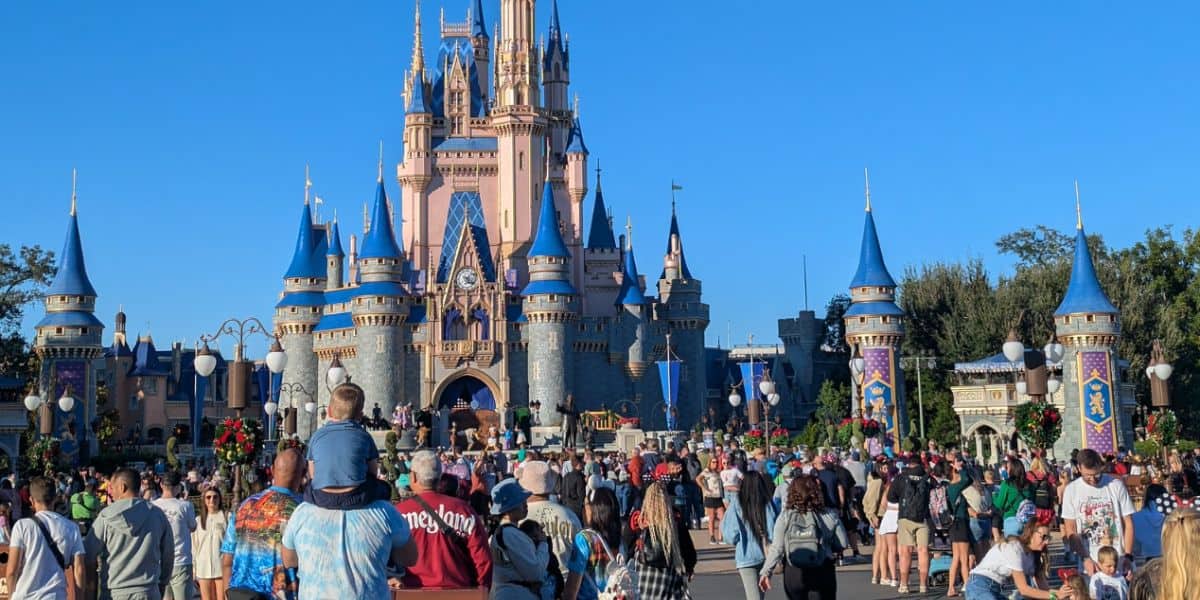
Walt Disney World, located approximately 60 miles west of the coast, was not affected. The parks ran normally through the afternoon. No disruptions to operations, attractions, or guest services were reported, per Click Orlando.
What the USGS Found and Why It Points to the Navy
The USGS statement on the event was specific about what the data showed and careful about what it concluded. “The recorded ground motions from this event are more typical of an explosion than a naturally occurring earthquake,” the agency stated. “The Navy has conducted Full Ship Shock Trials in this region in the past.”
Full Ship Shock Trials are a military testing procedure in which the U.S. Navy detonates large underwater explosives in close proximity to a warship to evaluate whether its systems, structures, and crew can withstand the shock of an underwater attack. The tests are designed to expose and correct vulnerabilities before a ship enters active service. The Navy conducted these trials with the USS Gerald R. Ford aircraft carrier in the Atlantic in 2021, and the region off Florida's coast has been used for similar purposes before.
Thursday's event was the ninth classified as an experimental explosion off this stretch of coast since 2016, according to USGS data. That frequency makes the classification less surprising than it might initially appear. These tests happen in this region. The USGS tracks them. When the pattern of ground motion matches a surface explosion rather than fault movement, the agency says so.
The reason explosions register as seismic events comes down to physics. When a large explosive detonates, energy travels outward in all directions including through the ground and seabed as seismic waves. Seismometers pick up those waves and calculate a magnitude based on their strength. The wave patterns differ from those produced by fault movement, which is how geologists distinguish between the two, but the instrument readings still produce a magnitude number. A comparable event happened on May 28 when the explosion of a Blue Origin New Glenn rocket at Cape Canaveral registered as a magnitude 2.5 seismic event.
How Far the Effects Reached and What They Felt Like
A magnitude 3.9 event, whether caused by an earthquake or an explosion, is generally felt across a moderate area. It is strong enough to rattle windows, shake objects on shelves, and produce a noticeable rumbling sensation, but it is not the kind of magnitude that causes structural damage or poses a safety threat to people in buildings.
The epicenter being 91 miles offshore and at or near the surface means the energy dissipated across a significant distance before reaching populated areas on land. By the time the seismic waves reached the coast and traveled further inland, they had weakened considerably. The Orlando area, including Walt Disney World and the surrounding resort corridor, sits far enough from the event's origin point that any ground motion would have been minimal if felt at all.
For guests who were at Disney World on Thursday afternoon and did not notice anything, that is exactly what would be expected given the distance involved. For guests who were closer to the coast and felt something, they were experiencing the outer edges of ground motion from an offshore explosion, not a geological event with ongoing implications for the region.
What This Means Before Your Disney Trip
For anyone planning a Walt Disney World visit in the coming days or weeks, Thursday's event does not require any adjustment to plans. The classification as an experimental explosion rather than a natural earthquake is specifically reassuring because it identifies both a known source and a known precedent.
The Navy has conducted these trials in this region before. The USGS has classified eight previous events since 2016 the same way. The ground motion that occurred Thursday was temporary, offshore, and unconnected to any underlying geological instability in Central Florida.
Walt Disney World sits on stable ground well away from Florida's Atlantic coast. The resort's operations were not disrupted on Thursday and there is no reason to expect any residual effects. The parks are open and running normally.
The broader Florida coast area is also not at elevated risk from any ongoing seismic concern. The USGS classification closes the question of what happened. It was an explosion in the water, most likely connected to naval activity. It registered on seismometers because that is what large offshore explosions do. And it did not cause harm to anyone on land.
If you felt the shaking on Thursday and want to share where you were and what it felt like, drop a comment below. Reports from people across different parts of Central Florida help build a picture of how far the ground motion reached and how it varied by location. And if you have a Disney World trip coming up and want to know whether anything else in the region is worth paying attention to, ask in the comments and we will share what we know.