


In early 2024, Steamboat Willie – the 1928 black-and-white short that introduced Mickey Mouse to the world – slipped into the public domain. For the first time in history, the character—at least in his original, silent, gloved incarnation—no longer belonged exclusively to The Walt Disney Company.
Few intellectual properties are more tightly protected than Mickey Mouse. But the ticking clock of U.S. copyright law finally caught up with him. Businesses and horror directors alike wasted no time figuring out how far they could take the icon once free from Disney’s grip.

Among the earliest to strike was filmmaker Jamie Bailey, whose film The Mouse Trap imagined a sadistic rodent haunting an arcade. It was a critical failure, but its impact was clear: public-domain horror, even the novelty kind, was a viable niche. A more ambitious entry followed shortly after, and this time, Mickey didn’t just stalk victims—he slaughtered them.
Screamboat Sails into Bloody Waters
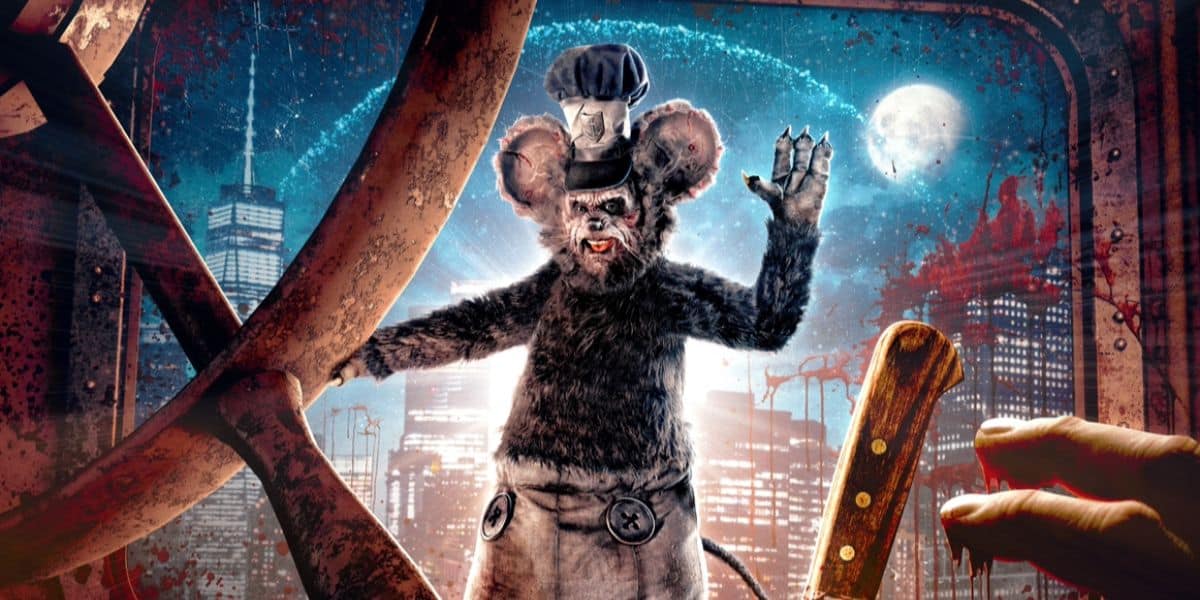
Announced pretty much straight after Steamboat Willie went public, Screamboat is a low-budget horror-comedy from director Steven LaMorte. It centers on a group of New Yorkers trapped on a steamboat and hunted by a monstrous figure known—ironically—as Steamboat Willie. With David Howard Thornton (Terrifier) beneath layers of prosthetics and CGI, the mouse-turned-monster delivers a violent parody of the world’s most famous cartoon.
The critical response has been less severe than some expected. “There is a weirdly undeniable charm to the shlockiness of Screamboat,” wrote Metro, noting the film’s Disney-laced references and over-the-top kills. Among them: genital mutilation and a nose-ripping scene that, depending on the viewer, lands somewhere between absurd and appalling.
Variety acknowledged the film’s comedic tone—“The murders may be grisly, but they’re played almost entirely for laughs”—but took issue with the cast’s limitations. “Screamboat is most taxing when it tries to be serious,” it said, singling out Amy Schumacher’s performance as “knowing her lines” and little else.
Critics Aren’t Exactly Impressed—but They’re Not Outraged Either
While no one’s calling Screamboat prestige horror, some outlets found unexpected value in its awareness of its own absurdity. “It’s not something people buy a ticket to when their arthouse movie of choice isn’t available,” wrote RogerEbert.com. “It could be funnier. It could be a lot smarter… but it also could have been significantly worse.” IGN echoed the sentiment, calling the film “the epitome of ‘Dumb Fun’” and noting that while Screamboat is “not a good movie,” it is “leagues above the competition” in its growing subgenre.
Not every review was as forgiving. The Guardian dismissed the film entirely, criticizing its poor timing and calling it “cut-price, retrograde and reactionary.” Still, it’s hard to ignore that a film starring a legally liberated Mickey Mouse imposter has even garnered this level of attention at all.
The creature design has divided viewers. IGN described Thornton’s version of the mouse as resembling “the midpoint of an Animorphs cover illustration,” while RogerEbert.com lamented that the character “never really looks like it’s sharing the same physical space with the other characters.” A more practical design, the site argued, would have served Thornton’s performance better.
Currently holding a 61% critic score and a 64% audience score on Rotten Tomatoes, Screamboat is hovering in “watchable but forgettable” territory. Still, for a movie that turns Mickey Mouse into a slasher villain, that’s arguably a success.
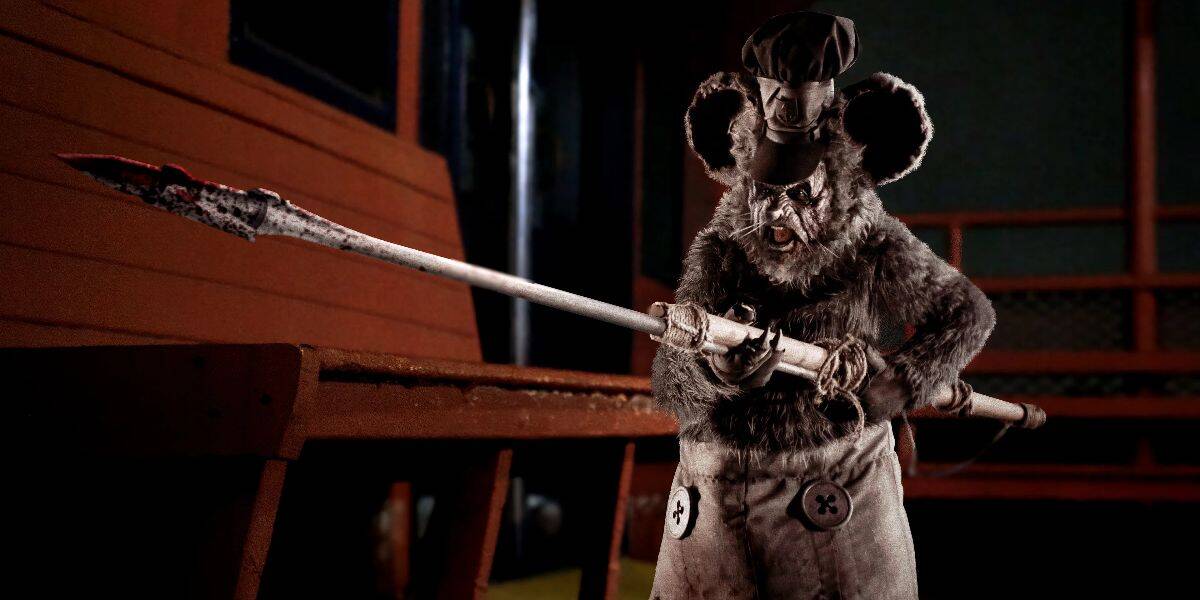 Credit: Iconic Events Releasing
Whether it’s a fluke or the beginning of a flood, Screamboat represents something stranger than its premise: a version of Mickey Mouse that Disney has no control over—and audiences are willing to explore.