
Streaming platforms possess a unique advantage over traditional television: the ability to revise content after initial release.

When mistakes slip through production and post-production processes, services like Netflix can deploy updated versions that eliminate errors before they become permanent fixtures in the viewing experience. This capability has proven particularly valuable when continuity problems threaten to overshadow the narratives they're meant to support.
HBO demonstrated this approach when they digitally erased the now-infamous coffee cup from Game of Thrones Season 8, a Starbucks-style beverage that appeared during a Winterfell scene and immediately became more talked-about than the actual episode content. The edit couldn't prevent the mistake from entering pop culture history or stop screenshots from circulating forever online, but it ensured subsequent viewers wouldn't encounter the same jarring anachronism that distracted millions. Netflix has now employed this same strategy with Stranger Things Season 5 after an Under Armour logo spotted on Holly Wheeler's costume generated comparable viral attention and unfavorable comparisons to the Game of Thrones incident.
The logo appeared during Episode 7 as Holly escapes from Vecna's lair in the Abyss, visible enough that viewers couldn't miss it once the error gained traction on social media.
The fundamental problem was straightforward: Under Armour didn't exist until 1996, yet Stranger Things Season 5 takes place in 1987, creating a nine-year temporal impossibility that completely undermined the show's carefully maintained period authenticity.
For a series that has built its reputation on meticulous recreation of 1980s details, from music choices to technology to fashion, this kind of obvious oversight represented a significant quality control failure that fans struggled to reconcile with the show's typically high standards and extended post-production schedule.
Updated Episode Removes Problematic Logo
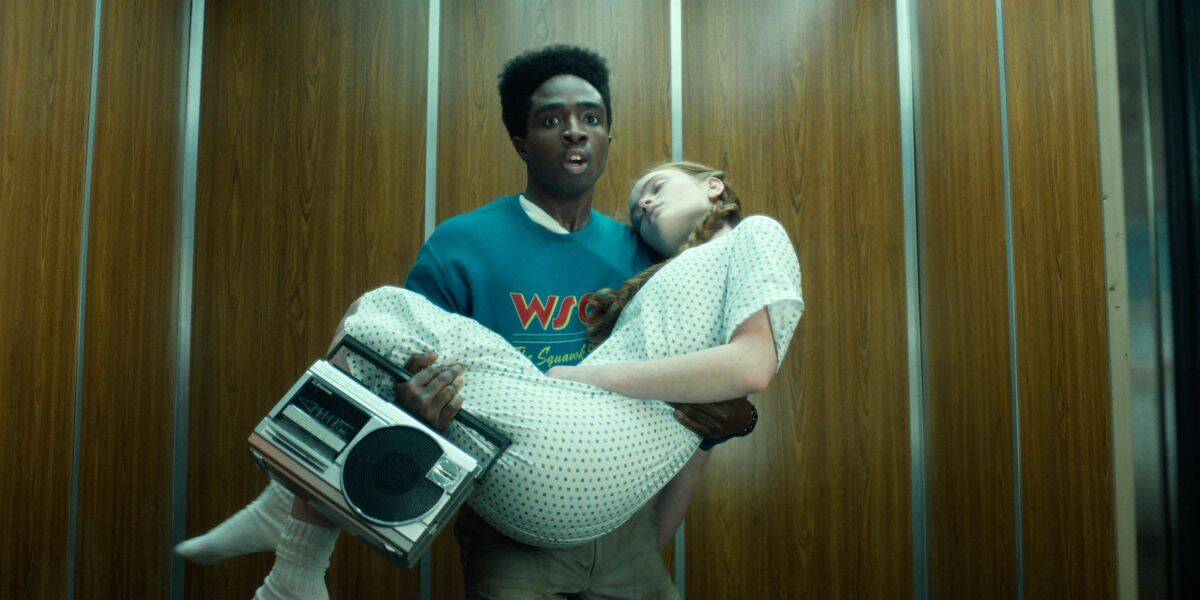
Netflix has replaced the original Episode 7 with a digitally altered version that eliminates the Under Armour branding from Holly Wheeler's clothing. The platform made this change without official announcement or public acknowledgment, instead quietly updating the available stream to reflect the corrected footage.
Current viewers watching Episode 7 will see Holly's escape sequence without the anachronistic athletic wear logo that sparked controversy across social media platforms. The digital removal appears professionally executed, with no apparent visual distortions or obvious signs of manipulation that might draw viewer attention to the edited area.
☆ ru | nɹ ☆ ST5 SPOILERS (@ruthbaderog) took to X and confirmed it was removed, while also sharing the original mistake, “I just went back and rewatch and it’s been edited out.”
I just went back and rewatch and it’s been edited out https://t.co/jKnPyktFZx
— ☆ ru | nɹ ☆ ST5 SPOILERS (@ruthbaderog) December 29, 2025
This approach mirrors standard practice for streaming platforms addressing high-profile continuity errors. Rather than issuing formal statements that might amplify negative attention, services prefer implementing silent corrections and allowing the improved versions to gradually replace problematic content in viewer consciousness.
The edit demonstrates Netflix's responsiveness to viewer feedback and viral criticism, though the company's silence on the matter suggests a preference for letting actions speak rather than acknowledging the original mistake publicly.
How the Error Gained Attention
The continuity problem first surfaced when X user @SovereignTrades shared a screenshot showing the Under Armour logo clearly visible on Holly's sleeve during her prison escape. The post rapidly gained traction as Stranger Things fans, many of whom pride themselves on catching production details, shared and discussed the obvious anachronism.
I love how Holly in Stranger Things is rocking @UnderArmour founded in 1996 pic.twitter.com/41uNpfYFXd
— Sovereign💎 (@SovereignTrades) December 26, 2025
Social media reaction ranged from humorous to genuinely frustrated. User @scar1etbegonias quipped that the Under Armour logo proved “more unsettling than Vecna” and joked about Holly potentially tearing “through the fabric of space and time” to acquire future athletic apparel. Writer Julian Cannon voiced disbelief that the error survived Netflix's year-plus post-production period, calling the oversight “unbelievable” given the time supposedly devoted to editing. (Cannon mistakenly identified Max Mayfield as wearing the Under Armour clothing rather than Holly Wheeler, though his criticism of quality control processes remained relevant.)
Comparisons to Game of Thrones emerged immediately. User @DanDellaCroce suggested that “stranger things is on the same path” as Game of Thrones Season 8, implying the error indicated broader quality decline. User @packalanche highlighted the irony that Stranger Things has historically demonstrated expertise with product placement, making this particular failure especially surprising.
Period Authenticity as Core Brand Element
Stranger Things has consistently differentiated itself through commitment to 1980s authenticity. Every element from soundtrack selections to visible technology to character wardrobes has undergone scrutiny to ensure period accuracy that transports viewers to mid-1980s Indiana. This dedication has become integral to the show's identity and a significant factor in its cultural impact.
When an anachronism as prominent as a 1990s athletic brand logo appears during an emotionally charged scene, it fundamentally breaks the immersive experience the production has spent five seasons constructing. Viewers who notice the error are immediately reminded they're watching a modern production rather than experiencing events in 1987 Hawkins, destroying the carefully built suspension of disbelief.
The mistake also raised legitimate questions about Netflix's quality assurance procedures. The Duffer Brothers publicly emphasized their need for extended post-production time on Season 5, spending over twelve months on editing and visual effects work. This timeline created reasonable expectations that every detail would receive thorough review, making the appearance of such an obvious error particularly confusing.
Previous Anachronistic Mistakes
The Under Armour incident wasn't Stranger Things' inaugural anachronism. Season 3, set during summer 1985, featured Mike Wheeler distributing M&Ms to Eleven, with at least one red candy visible. Red M&Ms had been removed from production in 1976 due to concerns about red dye and didn't return until 1987, creating a historical inaccuracy.
That previous error was considerably more subtle, however. Identifying a single red M&M required frame-by-frame analysis and close examination that most casual viewers never performed. The Under Armour logo, by contrast, remained visible throughout an extended sequence, making it substantially easier to notice once fans began scrutinizing episodes for continuity problems.
The M&M mistake also occurred during Season 3 when the show enjoyed universal critical praise and audience enthusiasm. Season 5 has generated more mixed responses, particularly regarding Volume 2's narrative choices and pacing issues, making viewers more inclined toward critical examination and less willing to overlook production errors.
Volume 2 Faces Broader Criticism
While the Under Armour logo generated significant online discussion, it represented a superficial problem compared to substantive narrative criticisms directed at Volume 2. Fans have expressed disappointment with pacing problems, exposition-heavy dialogue, and excessive emotional conversations that disrupt action sequences.
Will Byers' character development particularly frustrated viewers expecting him to finally utilize his powers after spending most of the series as a victim. Volume 2 quickly neutralized his abilities after one impressive demonstration in Volume 1, reducing him to guilt-focused emotional scenes rather than active combat participation against Vecna.
The show's expanded ensemble has created screen time distribution challenges. Holly Wheeler, previously a minor character, has somehow become a central protagonist while Eleven, the series' traditional focal point, appears sidelined with diminished abilities. Critics pointed to moments like Max's escape from Vecna's mental prison, where she pauses at the exit portal for an extended conversation with Holly rather than immediately fleeing, as examples of unnecessary dialogue prioritized over narrative momentum.
Streaming Era Editing Capabilities
Netflix's correction of the Under Armour error illustrates both advantages and constraints of streaming distribution. Unlike broadcast television or physical media releases, streaming platforms can modify content post-release, eliminating mistakes that would have been permanent in previous media eras.
This capability doesn't erase the original error from collective memory, however. Screenshots and video clips of the Under Armour logo have proliferated across social media platforms and will remain indefinitely accessible. The mistake has been documented in numerous articles and discussed extensively in online communities. Future viewers may encounter the corrected version, but the error has already established its place in television continuity failure history.
The silent correction approach also raises transparency questions. Should platforms publicly acknowledge content alterations, or does quiet editing represent appropriate response? Viewer opinions will vary on whether streaming services should announce retroactive changes to previously released material.
Implications for Future Productions
The Under Armour situation reinforces that extensive post-production schedules and substantial budgets don't guarantee error-free releases. Despite Netflix's significant investment in Stranger Things' final season and over a year of editing work, an obvious continuity problem still reached viewers.
Future period productions might benefit from additional review layers specifically targeting anachronisms. Employing historical consultants or dedicated continuity specialists to examine every frame for temporal accuracy could identify errors that standard editors and visual effects artists might overlook while concentrating on other production aspects.
The incident also establishes that streaming platforms now treat continuity errors as correctable issues rather than permanent mistakes. When errors generate substantial negative attention, platforms have demonstrated willingness to invest in retroactive fixes, even though such corrections cannot reverse reputational damage already sustained.