
Corporate leadership discussions rarely center on emotional concepts like love, yet emerging research suggests organizations ignoring the distinction between satisfaction and genuine affection leave significant value unrealized.
Traditional business metrics capture compliance, efficiency, and short-term behavioral responses, but they fail to measure the emotional intensity that predicts long-term loyalty, organic advocacy, and the kind of customer relationships that generate compounding returns over decades rather than quarters. The theme park industry provides particularly revealing testing grounds for understanding these dynamics because guest experiences are discrete, measurable, and directly tied to revenue through both immediate spending and future visitation decisions influenced by emotional responses formed during previous trips. Disney's approach to evaluating attraction performance offers insights extending beyond entertainment into broader questions about how organizations should define success when human experience drives outcomes.
The difference between creating something customers use and creating something they love manifests across industries, from retail to technology to hospitality, yet few organizations possess frameworks for systematically designing toward love rather than mere satisfaction or functionality.
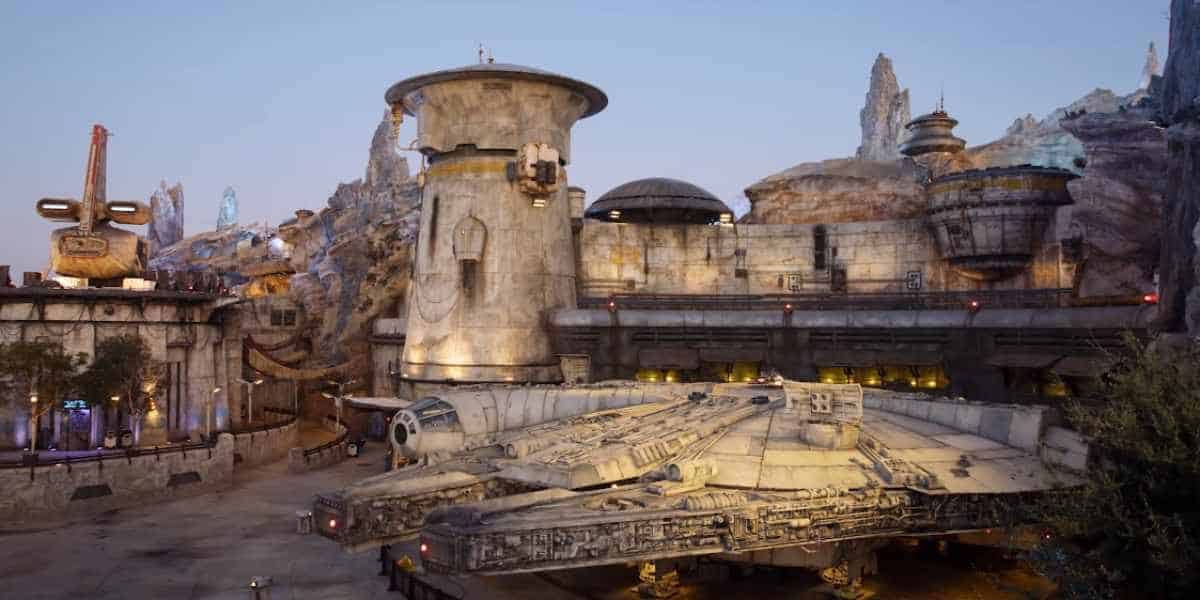
Harvard Business Review research into Disney's future CEO Josh D'Amaro's leadership revealed that Walt Disney Imagineering spent years planning a comprehensive redesign of Millennium Falcon: Smugglers Run despite the attraction's strong operational performance. The project, driven by D'Amaro's assessment that guests “like it, but they don't love it,” demonstrates a leadership philosophy prioritizing emotional intensity over traditional success metrics.
Quantifying the Love Gap

During observed design sessions with 30 Imagineers and operators, D'Amaro diagnosed Smugglers Run's fundamental challenge. The attraction drew consistent two-hour waits and maintained strong attendance, satisfying conventional operational benchmarks. Yet these metrics masked a critical deficiency.
Psychometric research cited in the Harvard Business Review study shows that while positive responses like enjoyment, respect, and appreciation all register favorably, only love predicts future behavior. Guests expressing liking may visit once. Guests expressing love return repeatedly, generate organic recommendations, and develop lasting emotional attachments that drive long-term value.
For Disney, this distinction carries enormous financial implications. The company doesn't merely seek to fill attraction capacity during single visits. It aims to create experiences generating multi-decade customer relationships where guests return across life stages, introduce their children to beloved attractions, and maintain emotional connections that transcend rational cost-benefit analyses of vacation spending.
Attractions guests like represent functional successes but strategic failures. They process visitors efficiently without creating the emotional intensity that transforms customers into advocates. In Disney's business model, that represents wasted capital investment in assets that could have generated compounding returns through genuine emotional resonance.
The Structural Problem

D'Amaro identified a specific design flaw undermining Smugglers Run's emotional impact. The attraction assigns six riders to different cockpit positions, but those roles offer dramatically unequal levels of agency and engagement.
Pilots exercise genuine control, steering the Millennium Falcon through missions where their decisions produce visible consequences. This position delivers the experience Disney intended: riders feel they genuinely flew the iconic ship, creating memories centered on personal agency and skill demonstration.
Gunners and engineers receive diminished experiences. Their button presses trigger predetermined sequences that feel decorative rather than consequential. They participate without controlling, act without influencing outcomes, and emerge feeling they assisted rather than piloted.
This disparity creates an inevitable problem. Only one-third of riders per mission receive experiences capable of generating love. The remaining two-thirds receive secondary versions that produce satisfaction at best, creating a structural ceiling on how many guests can form the emotional attachment Disney requires for long-term strategic success.
Observable guest behavior confirms this diagnosis. The negotiations happening in queue lines, the family dynamics around seat assignments, the visible disappointment when riders receive non-pilot positions all demonstrate guests intuitively recognizing that Smugglers Run delivers fundamentally different value depending on assigned roles.
The Experience Intelligence Framework

Leadership researcher studying D'Amaro describes his approach as “experience intelligence,” defined as the ability to read and shape human experience in ways that produce lasting emotional responses rather than temporary compliance.
This capability rests on two key insights. First, traditional management tools including goals, feedback, rewards, and loyalty programs produce only short-term behavioral changes. Lasting change requires creating experiences that generate specific emotional responses, with feelings driving behaviors and behaviors driving outcomes.
Second, among all positive emotions, only love consistently predicts future action. While enjoyment, respect, and appreciation all register favorably, psychometric data shows they don't reliably forecast what customers do next. Love alone demonstrates predictive power.
The Smugglers Run redesign exemplifies experience intelligence in practice. Despite the attraction's operational success, D'Amaro recognized it failed to create emotional responses necessary for strategic success. Addressing this required years of Imagineering resources dedicated to solving a problem invisible to conventional metrics but critical to long-term value creation.
“Disney is a delicate brand,” D'Amaro explained. “Anything I can do to help more guests say they love Disney is a valuable use of my time.”
This statement reveals how experience intelligence reframes leadership priorities. Time spent analyzing emotional responses to trash can placement or ride mechanics isn't perfectionism or micromanagement. It's strategic resource allocation toward the specific capability that drives Disney's business model: creating experiences people love enough to build lifetime relationships around.
The Planned Solution
The Imagineering redesign aimed to democratize agency across all six cockpit positions. Rather than accepting that some riders would inevitably receive secondary experiences, the project sought to ensure every position offered meaningful control, skill demonstration opportunities, and genuine influence over mission outcomes.
Specific implementation mechanics weren't detailed in the research observations, but the strategic intent was clear: transform Smugglers Run from an attraction where one person flies while others assist into one where six people collaboratively pilot, each contributing in ways that feel essential.
Success would be measured not through operational metrics but through qualitative guest responses. Instead of hearing “I liked it, but I wish I'd been pilot,” Disney wanted “I loved it” regardless of assigned position. That shift from qualified approval to unqualified enthusiasm represents the difference between functional adequacy and strategic excellence.
The redesign was scheduled to debut in May, with D'Amaro acknowledging uncertainty about whether his diagnosis would prove correct once guests experienced the changes. This willingness to invest resources based on qualitative assessment rather than certain returns demonstrates commitment to experience intelligence even when outcomes remain unpredictable.
Operational Experimentation Continues
Beyond the major redesign, Smugglers Run has seen incremental adjustments suggesting ongoing experimentation with guest experience optimization. The recent introduction of a Double Rider queue alongside existing Single Rider options provides a third path between full standby waits and complete party separation.
This addition acknowledges that emotional priorities don't always align with operational efficiency. Some guests prioritize shorter waits but refuse complete separation from companions. The Double Rider queue offers togetherness without guaranteed role assignments, creating middle ground between certainty and efficiency.
Whether this represents part of the larger reimagining or independent operational refinement remains unclear, but it signals continued attention to how guests emotionally process choices before boarding. Even queue design becomes an opportunity to shape experience in ways that influence satisfaction versus love outcomes.
Cross-Industry Implications
While documented in a theme park context, the experience intelligence framework has broader application. The Harvard Business Review research cites examples from retail (Tim Massa at Kroger), quick service restaurants (Susannah Frost and Cliff Robinson at Chick-fil-A), and utilities (Patti Poppe at Pacific Gas and Electric) where leaders applying similar principles achieved measurable business results.
Kroger's “From like to love” store initiative, which recast associates as “experience-makers,” yielded dramatic increases in employee retention, in-store friendliness ratings, and same-store sales. Chick-fil-A's focus on wrapping transactions in genuinely loving experiences drives operator education and hundreds of new playgrounds. PG&E's “leading with love” campaign, initially met with skepticism, produced measurable trust restoration.
These examples suggest that designing for love rather than satisfaction produces competitive advantages across industries, not just entertainment. Organizations treating human beings as sources of energy to be cultivated rather than variables to be controlled generate superior long-term outcomes even when short-term costs appear higher.
The Strategic Bet
Disney's willingness to invest years redesigning a functioning attraction represents a specific strategic bet: that the incremental value generated by transforming guest responses from “like” to “love” exceeds the considerable cost of comprehensive reimagining.
This calculation only makes sense within a framework recognizing that customer lifetime value depends on emotional intensity, not just initial satisfaction. If Smugglers Run guests who merely like the attraction visit once while those who love it return multiple times and bring others, the redesign investment generates returns through increased visitation frequency, expanded party sizes, and extended relationship duration.
Traditional ROI analysis focusing on single-visit metrics would struggle to justify such investment. Experience intelligence analysis focusing on lifetime relationship value makes it strategically essential despite uncertain outcomes.
Whether the Smugglers Run redesign succeeds in achieving its goals remains to be seen. D'Amaro acknowledged this uncertainty, noting he would learn whether his diagnosis proved accurate once guests experienced the changes. But the willingness to make that bet signals organizational commitment to a leadership philosophy that prioritizes emotional outcomes over operational metrics as the ultimate measure of strategic success.
For organizations beyond theme parks, the lesson isn't necessarily to redesign functioning products. It's to recognize that satisfaction and love represent fundamentally different outcomes with different strategic implications, and that systematic capability development around creating love rather than settling for satisfaction may represent competitive advantage in industries where human experience drives long-term value.