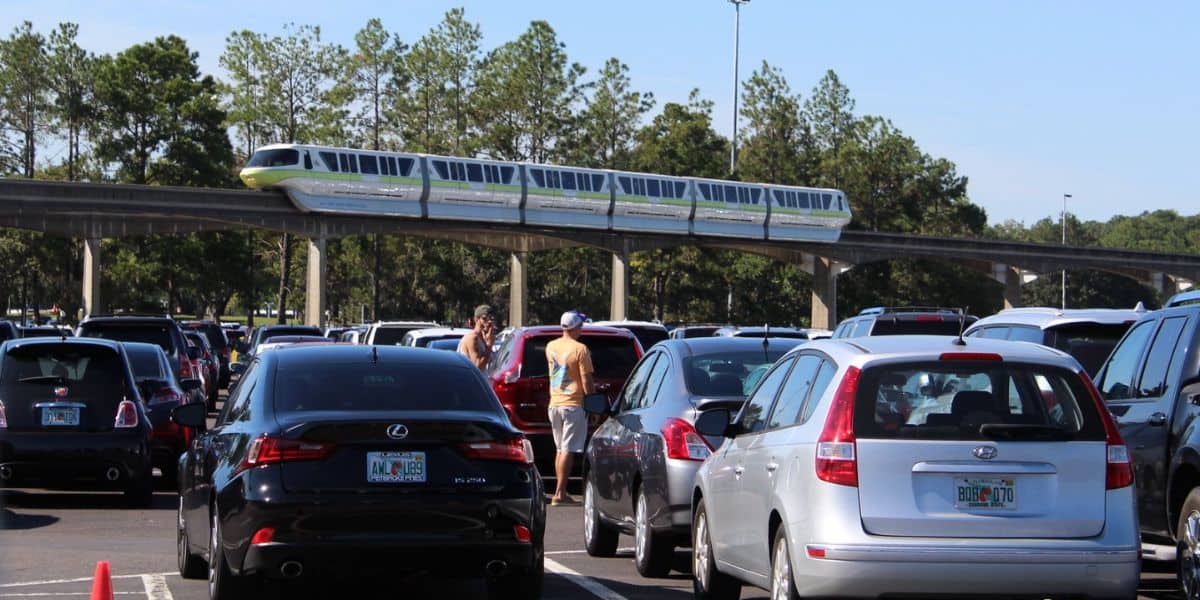
Accessible parking in Florida was already stretched thin before any of this happened. That is the detail that makes everything else in this story land differently.
Florida is home to some of the most visited theme parks on the planet. It is also a state where, by some estimates, as many as 20 percent of drivers hold a disabled parking permit of some kind. Put those two facts next to each other and you already have a picture of accessible parking infrastructure that is working harder than it was designed to. Federal guidelines only require that 2 to 4 percent of spaces in a parking lot be designated for accessible use. The gap between what exists and what is actually needed is real and documented, and disability advocates have been pointing it out for years.
Then Florida passed a new law.
The legislation, which cleared the statehouse last year, allows pregnant women to obtain temporary disabled parking permits. The woman who proposed it, State Rep. Fiona McFarland, a Republican from Sarasota, was motivated by something personal. “My fourth baby was due in September, and I was so hot in the Florida summer, and my mobility really was restricted,” McFarland said. “I just wanted to help out moms.” The argument for the law is not hard to follow. Late pregnancy in a Florida summer is genuinely physically demanding. Walking long distances from a parking spot when you are eight months pregnant in ninety-degree heat is not a minor inconvenience.
But disability rights organizations looked at that law and saw something different. They saw thousands of new permit holders gaining access to a pool of spaces that was already too small for the people it was originally designed to serve. This week, those organizations filed an expanded legal complaint against the law, and the fight over who gets to use Florida's accessible parking spaces is now heading toward a courtroom.
The Legal Argument

The lawsuit, which includes the United Spinal Association among its plaintiffs, rests on a conflict between Florida state law and the Americans with Disabilities Act. The ADA is federal law. It sets the criteria for who qualifies for accessible parking accommodations. Florida's pregnant parking law grants permit access to people who do not meet those federal criteria. The plaintiffs argue that is not a policy disagreement. It is a legal contradiction.
Since the law passed, Florida has issued thousands of temporary permits to pregnant women who would not otherwise qualify under ADA standards. Every one of those permits represents someone using a space that federal law designates for a specific population.
“We already know that there aren't enough ADA parking spaces,” said Steve Liberman with the United Spinal Association. “Allowing folks who are not covered by the ADA to park in ADA parking spaces just exacerbates the existing problems.”
The math is the argument. If 20 percent of Florida drivers already hold some form of disabled permit, and the legal requirement is that only 2 to 4 percent of spaces be designated accessible, there is no version of that equation where adding more permit holders improves the situation for the people who were already struggling to find open spaces.
Claudia Center with the Disability Rights Education and Defense Fund framed the stakes clearly: “Everybody should have the parking that they need, but we already have a shortage for disabled people. I think it's great to require pregnancy parking, but it has to be separate. It can't be the same spots.”
That is the compromise floating around this debate. Nobody in the disability advocacy community is arguing that pregnant women do not deserve better parking options. The argument is that those options cannot come directly out of a supply that is already inadequate for the population it was built to protect.
McFarland has acknowledged that tension. “I don't want to take away from handicapped people who truly have a true physical limit in their mobility,” she said. “I just wanted to be able to park in a convenient location when I was really uncomfortable at late stages of my pregnancy.” She did not respond to a request for comment on the expanded legal challenge filed this week.
The lawsuit is asking a judge to block the law and invalidate all temporary permits issued under it. A hearing date has not been set.
The Theme Park Connection
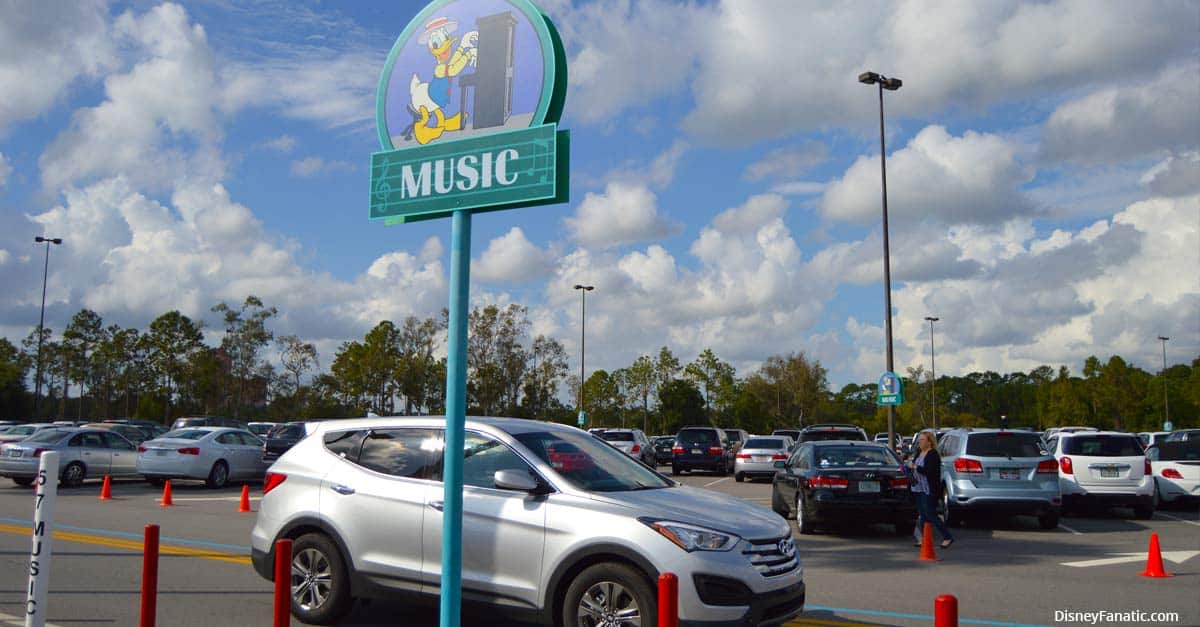
For guests planning a trip to Walt Disney World or any of Florida's major theme parks, the on-site parking situation is somewhat insulated from this legal fight. Disney, Universal, and SeaWorld all operate on private property and manage their own accessible parking programs independently of Florida's public parking statutes. A guest arriving at Disney World with appropriate documentation is directed to accessible parking through the park's own system, not through a state-issued permit process.
The complication comes everywhere else on a Florida vacation. Off-site hotels, restaurants, shopping areas, airport facilities, and every other stop a guest makes along the way are all subject to the same public parking conditions that this lawsuit is about. A family traveling with a member who uses a wheelchair or has a qualifying mobility disability does not only park at the theme park. They park at their hotel, at dinner, at the grocery store run for snacks, at every errand the trip involves. Each of those stops is affected by how available accessible spaces actually are in the broader Florida market.
For Disney guests staying on-site and using Disney's own transportation, most of that exposure disappears. Buses, the Skyliner, the monorail, and boat transportation between resorts and parks eliminate most of the off-property parking dependency entirely. For guests staying off-site, driving a personal vehicle, or splitting time between Disney and other Florida destinations, accessible parking availability is a real planning consideration right now.
If the lawsuit succeeds, the temporary permits issued under the law would be invalidated and accessible parking supply would return to pre-law conditions. If it does not, the shortage disability advocates are describing will continue to deepen as the state issues more permits.
If accessible parking or mobility accommodations are part of how you plan a Disney trip, get ahead of it before you travel. Disney's accessibility team can answer specific questions about what is available at Walt Disney World, and booking on-site means transportation options that skip most of the off-property parking complications entirely. Call or chat with Disney guest services before your trip and ask specifically about your situation. It is a five-minute conversation that can change how the whole trip is structured.