
A company relocating its corporate offices doesn't typically make waves among the people who actually ride the coasters, but Six Flags Entertainment Corporation operates enough parks across enough states that even a headquarters decision carries real weight.

The company just confirmed it's returning to Texas after several years elsewhere, and that announcement lands right on the heels of one of the biggest mergers in amusement park history. Here's what's actually happening, and what it could eventually mean for guests who visit Six Flags or Cedar Fair parks regularly.
Arlington Becomes Home Base Again
Six Flags Entertainment Corporation confirmed plans to relocate its corporate headquarters in 2027, moving from Charlotte, North Carolina back to its existing offices in Arlington, Texas. Once complete, Arlington will serve as the central hub for corporate leadership and shared business functions across the company. The transition is expected to wrap up by March 2027, and it's not exactly starting from zero, since Choctaw Stadium has already functioned as a corporate office since 2020, currently housing part of the company's workforce.
Six Flags President and CEO John Reilly laid out the thinking behind the decision. “The decision to return the Company's headquarters to Arlington is a continuation of our efforts to evolve the organization and enhance operational efficiency,” Reilly said. “After an extensive review, we determined that concentrating our personnel, processes, and decision-making in our Arlington office, where a portion of Six Flags corporate employees are located, is the best path forward for the Company. Bringing our corporate team together in the office will enhance collaboration across functions, strengthen our culture, and improve coordination among our new executive leaders as we further align our organization around our key strategic priorities and long-term vision.”
He also pointed to the deeper history tied to the location. “Arlington is a vibrant entertainment district where the Six Flags story began more than six decades ago with the opening of Six Flags Over Texas,” Reilly said. “The city sits at the heart of our five Texas parks and provides our leadership team with direct access to park operations and a regular on-the-ground presence.”
A City Already Riding High on New Attractions
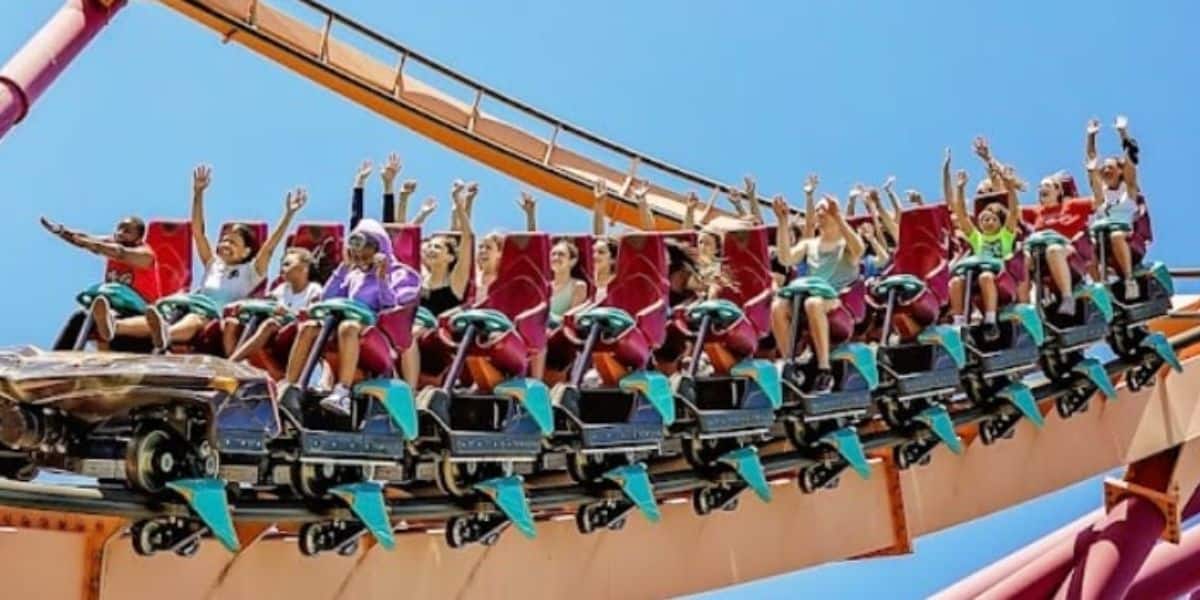
This move comes at a moment when Arlington itself has been generating plenty of buzz within the industry. Earlier this summer, Six Flags Over Texas debuted Tormenta: Rampaging Run, billed as the world's first giga dive coaster and described as a record breaking addition that reshaped the city's skyline. The opening drew local officials, community partners, and tourism leaders, underscoring just how much Arlington has become an entertainment destination in its own right.
Reilly connected the headquarters decision directly to the company's broader operational philosophy. “Bringing our corporate team together in Arlington helps us run a leaner, more responsive organization,” he said. “Our job at the corporate level is to support our parks and park leaders and enable their success. This move is about making sure we're best set up to serve them well. That kind of alignment matters as we execute our long-term strategy, it's about how effectively we work, not just where we sit.”
Six Flags confirmed its Charlotte area properties, including Carowinds and Carolina Harbor, will continue receiving investment, with Carowinds' upcoming Rip Roarin' Falls attraction on track for a 2027 opening. The company will also keep an office in Sandusky, Ohio.
Setting the Scene: The Cedar Fair Merger

None of this happens in a vacuum. The headquarters announcement comes after Six Flags completed an $8 billion merger with Cedar Fair a couple of years back, creating the largest amusement park operator in the country. The combined company now runs 42 amusement and water parks spread across 17 states, with Cedar Fair holding a 51 percent stake and Six Flags holding the remaining 49 percent. Cedar Fair CEO Richard Zimmerman took over leadership of the merged company, which trades under the ticker FUN.
That merger arrived after a genuinely rough patch for Six Flags. The company's stock fell around 40 percent over five years, and a 2022 price increase, pushing average admission from $28.73 up to $35.99, triggered a 26 percent drop in annual attendance. That pricing move was tied to a “premiumization” strategy under former CEO Selim Bassoul, who described the old approach bluntly at the time, saying Six Flags had become “cheap day care centers” for teenagers, and that the company wanted to shift “a little bit from what I call the Kmart, Walmart to maybe the Target customer.”
What Longtime Fans Have Noticed on the Ground

Season passholders felt that shift firsthand. Bill Kneass, who has held a Six Flags season pass on and off for roughly 30 years at Six Flags Great Adventure in New Jersey, said the company leaned heavily into major thrill rides while neglecting smaller attractions, family friendly options, and overall guest experience. “Six Flags can feel a bit disjointed,” Kneass said. “Finances were more important than the guest experience.” Still, he's holding out hope for what comes next. “If the new Six Flags can find a way to honor the history of their parks and bring in new attractions for all types of enthusiasts, they're poised for success,” he said.
Chris Miller, who runs the YouTube channel Coaster Conquest and co-hosts the Theme Park Stan podcast, described his own outlook as “cautiously optimistic.” He's hopeful the merger could bring fresh rides to parks that historically don't see much investment, but he's also concerned reduced competition might drive season pass prices upward, and worries that Cedar Fair's more individually themed parks could start losing their distinct character under Six Flags' broader corporate structure. “I hope they keep the parks as they are,” he said.
For now, Six Flags spokesperson Gary Rhodes indicated there's no major shakeup planned at the park level in the near term. “We expect this combination will enable us to deliver even more engaging and entertaining experiences to guests,” Rhodes said, noting that fans shouldn't expect immediate changes to pricing, ticket structures, or season passes.
Where This Could Actually Head Next

Industry analysts see genuine strategic advantages in the combined company's footprint, regardless of how individual parks fare day to day. Dennis Speigel, CEO of consulting firm International Theme Park Services, highlighted how well distributed the parks are geographically. “They're so strategically laid out across the United States. There's not a lot of overlap,” Speigel said. “If you take those parks and meld them together, you have tremendous marketing opportunities.”
Guests may also see new season pass options and loyalty programs that expand access across the combined network, according to Deutsche Bank analyst Chris Woronka, since passholders already account for more than half of annual attendance at both Six Flags and Cedar Fair properties. There's also potential for shared intellectual property moving between parks, since Six Flags controls the rights to DC Comics and Looney Tunes characters while Cedar Fair holds the rights to Peanuts and Snoopy, opening the door to familiar characters showing up in new places across the combined portfolio.
Not everyone is convinced this ends well for guests. Michael Musil, a longtime visitor to Cedar Point from Bay Village, Ohio, worried the merger might sand down what makes individual parks feel unique. “Six Flags is going to corporatize it and budget out everything and end up with this very sanitized, fixed version of the amusement park,” Musil said. “That might be great for the bottom line, but it would be boring.”
If you regularly visit a Six Flags or Cedar Fair property, keeping an eye on how these corporate shifts unfold over the next year or two is worth doing, since decisions like this headquarters move and the underlying merger tend to eventually shape everything from ticket prices to which new attractions actually get greenlit.
Have you noticed anything different at your local Six Flags or Cedar Fair park since the merger took effect, or do you have thoughts on the upcoming move to Arlington? Share your perspective in the comments, we'd love to hear how longtime passholders feel about where things are headed.