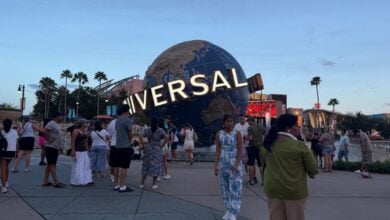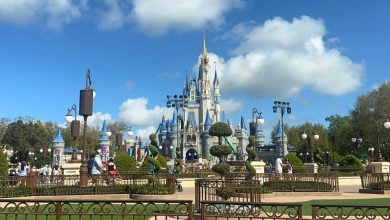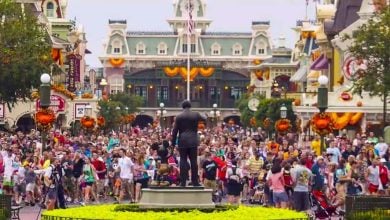

When YouTube creators pull off an impressive stunt, it usually comes with applause and a few million views. But Dude Perfect’s latest high-speed globe-trotting challenge through every Disney park on Earth has landed in hot water—not for the attempt itself, but for the AI-generated Mickey Mouse used in the promotional art.
And the problem isn’t just that it exists. It’s that Disney itself shared it.
The video follows Dude Perfect members Garrett Hilbert and Sparky as they attempt to break the world record for the fastest time to visit all twelve Disney parks around the world. They succeeded—visiting parks across Hong Kong, Tokyo, Shanghai, Paris, and the United States in just under 75 hours. But controversy began brewing not over their itinerary, but over their AI-generated thumbnail, which features a jarringly off-brand image of Mickey Mouse on a rollercoaster, grinning with tiny, uncanny teeth beside a grinning YouTuber as shared on X by Futureport.
Disney Parks keep embarrassing themselves.
Stare into the abyss of AI Mickey's teeth. pic.twitter.com/Kg0mSzPCaT
— Futureport 82 (@futureport82) October 5, 2025
The issue? That’s not Disney’s Mickey—but Disney is the one boosting the content.
A Record-Breaking Run… With a Side of AI
Let’s start with the basics. The video is a feat of travel logistics. Garrett and Sparky began at Hong Kong Disneyland, sped through the newly opened Fantasy Springs in Tokyo DisneySea, got in a ride at Shanghai Disneyland, dashed through both Paris parks, and wrapped up the journey across Walt Disney World and Disneyland Resort in California.
They were required to ride at least one attraction and take a photo with a landmark at each park. The final total? Twelve parks, five countries, four continents, and one newly claimed world record: 74 hours and 14 minutes.
Disney didn’t just give them the green light—they sponsored the video through Disney Experiences, even promoting it across their Facebook and Instagram platforms. But what should’ve been a feel-good marketing success is instead stirring pushback for an unexpected reason: AI Mickey.
The Thumbnail That Crossed a Line
The thumbnail attached to the video doesn’t look like anything Disney would typically produce. It’s an AI rendering of Mickey Mouse with unsettling realism—complete with small, human-like teeth that place it firmly in the uncanny valley. The image has since been widely circulated on social media, with one viral comment calling it “nightmare fuel.”
What’s most surprising is that Disney didn’t stop it. They amplified it. By reposting the video with that exact thumbnail on their verified accounts, the company is essentially validating and promoting an unofficial, AI-crafted version of their most iconic character.
This is where things get murky.
Fans and critics alike are asking a simple question: Why would Disney, a company obsessed with protecting its character IPs, give any platform to an AI-generated Mickey Mouse?
In recent years, Disney has been vocal about its commitment to creative innovation—particularly through its Imagineering division. But AI in entertainment and design remains a sensitive subject. Many within the Disney community, especially theme park creatives and longtime fans, see AI as a threat to the human craftsmanship that defines the parks.
And while this image might not be officially from Disney’s own AI lab, their decision to endorse it by association is rubbing people the wrong way.
The Bigger Problem: What Does Disney Stand For?
Let’s be clear: Dude Perfect didn’t try to sneak something past Disney. Their video is an officially sponsored collaboration, and the image was likely part of the package Disney reviewed ahead of time. The real issue is how quickly a major brand like Disney seems to have accepted AI-generated depictions of its most sacred intellectual property.
It opens the door to a much bigger conversation. If Disney is okay with AI-generated marketing, what’s next? AI park posters? Synthetic voices for characters? Deepfake Mickey meet-and-greets?
This might sound like hyperbole, but for a company built on animation, puppetry, and physical artistry, these kinds of decisions matter.
At a time when theme park fans are already on edge about changes to the parks—shortened hours, price hikes, and concerns about creative integrity—this kind of move feels like another chip away at the Disney magic people expect to be protected.
A Win for Dude Perfect, a Miss for Disney?
To be fair, the Dude Perfect video is a highly produced, engaging watch. Whether it’s the team riding Big Grizzly Mountain, enjoying Zootopia: Hot Pursuit in Shanghai, or taking on Guardians of the Galaxy: Cosmic Rewind in EPCOT, there’s no doubt it serves as a dynamic promotion of Disney’s global offerings.
Garrett and Sparky handled the pressure with plenty of energy and just enough chaos to keep viewers hooked. And their achievement—a legitimate world record—is undeniably impressive.
But as Disney continues to blur the lines between user-generated content, sponsored collaborations, and corporate promotion, it’s forced to reckon with what it chooses to validate. And this time, Disney fans have drawn the line at AI Mickey with creepy teeth.
A Cautionary Moment for the Mouse House
AI in marketing isn’t inherently evil. Plenty of companies are experimenting with synthetic imagery and automation to create content faster and cheaper. But when you’re Disney, and your characters are part of global culture, the bar is higher.
Sharing an AI-generated Mickey Mouse—even indirectly—signals to fans and creatives alike that Disney might be ready to trade artistry for automation, or at the very least, let it slide when it’s convenient.
That’s a dangerous precedent for a company whose motto still claims to be about making magic “by hand, by heart, and by imagination.”
Let’s just hope that next time, the thumbnail shows the real Mickey.