For years, the internet has confidently repeated one of its favorite pieces of political trivia: China banned Winnie the Pooh because the cartoon bear looks like President Xi Jinping. The claim is irresistible in its simplicity, pairing a soft-spoken Disney character with the image of an authoritarian government unable to tolerate mockery. It has been shared so widely that it now registers as common knowledge. The problem is that it is not actually true.

Like many viral stories, the Winnie the Pooh ban exists in the gap between something that happened and something that sounded better. What unfolded in China was not a blanket ban on a beloved character, but a narrower effort to suppress political symbolism that spiraled into an international myth.
The story begins in 2013, when Xi Jinping visited the United States and was photographed walking alongside President Barack Obama. Chinese social media users noticed an amusing visual parallel: Xi’s stocky build and measured walk resembled Winnie the Pooh, while Obama’s taller, springier presence brought to mind Tigger. The comparison spread quickly, not as an attack but as lighthearted internet humor.
The joke resurfaced and gained traction in 2014, when Xi met Japanese Prime Minister Shinzo Abe. Online users cast Abe as Eeyore, the perpetually gloomy companion to Pooh. These comparisons followed the familiar logic of meme culture, in which visual coincidence becomes comedy. In most countries, such jokes about political leaders would barely register. In China’s political environment, they attracted attention.

By 2015, an image comparing Xi to Winnie the Pooh during a military parade became one of the most heavily censored images of the year, according to research by Global Risk Insights. Chinese authorities reportedly viewed the meme as undermining the dignity of both the presidency and Xi himself. From that point on, censors began removing posts that paired Pooh imagery with political commentary about Xi. Searches and hashtags combining the character with political discussion were restricted, and memes explicitly making the comparison were deleted.
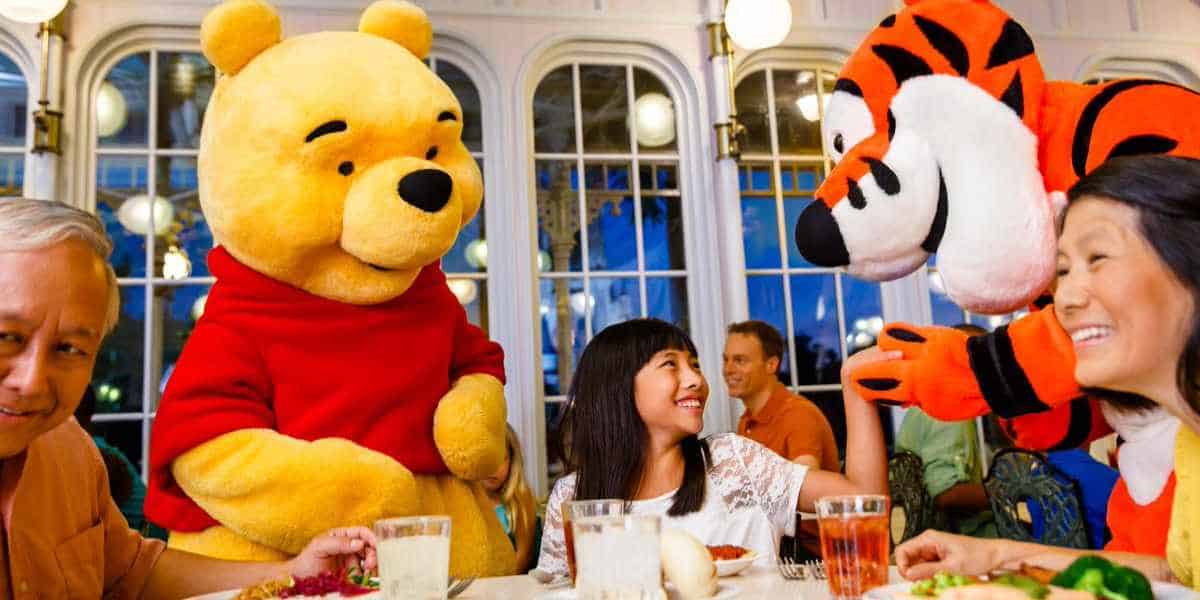
What did not happen was a ban on Winnie the Pooh as a character. Pooh books continued to be sold in China. Merchandise remained widely available. Most notably, Winnie the Pooh continued to appear at Shanghai Disneyland, where the character has his own attractions and meet-and-greet appearances. If China had truly outlawed the bear, one of Disney’s flagship parks would not have been permitted to feature him.
The confusion intensified in 2018, when Disney’s live-action film Christopher Robin was not released in Chinese theaters. Western media outlets quickly connected the absence of the film to the Pooh-Xi meme controversy, treating it as confirmation that the character had been blacklisted. The reality was less definitive.
China strictly limits the number of foreign films it allows into theaters each year, with only 34 slots available. Studios compete fiercely for approval, and decisions are influenced by a mix of political considerations, commercial appeal, and timing. That same year, Disney’s A Wrinkle in Time was also denied release, while Ant-Man and the Wasp was approved. Chinese authorities never publicly explained why Christopher Robin was excluded, leaving room for speculation but no official confirmation that the decision was politically motivated.
Later that year, the story gained new life when comedian John Oliver devoted a segment of Last Week Tonight to mocking Xi’s apparent sensitivity to the Pooh comparisons while criticizing China’s broader authoritarian policies. Shortly after the episode aired, HBO’s website was blocked in China. For many observers, this appeared to validate the idea that even mentioning Winnie the Pooh was unacceptable. In reality, the blocking of HBO fit a broader pattern of restricting platforms that host political criticism, rather than a targeted campaign against a children’s character.
Ironically, efforts to suppress the meme only amplified it. Analysts noted that Chinese authorities had effectively transformed a mild, organic joke into an international symbol of censorship and overreach. What might have remained a fleeting piece of online humor became global news precisely because of the attempt to control it.
As Winnie the Pooh enters his centennial era, marking 100 years since A.A. Milne’s original 1926 publication, the character remains one of the most recognizable figures in global pop culture. That includes China, where Pooh continues to exist as a commercial and cultural presence despite restrictions on how his image can be used politically.
The accurate version of the story lacks the punch of the viral headline but reflects the reality more closely. China did not ban Winnie the Pooh. It censored specific political uses of the character’s image that were seen as mocking the country’s leader. The distinction matters, not only for historical accuracy but for understanding how modern censorship works. It is often selective, symbolic, and reactive rather than absolute.
In the end, the legend of the banned bear says as much about how internet myths form as it does about China itself. A simple narrative proved more durable than a complicated truth, even while Winnie the Pooh himself never actually went anywhere.