
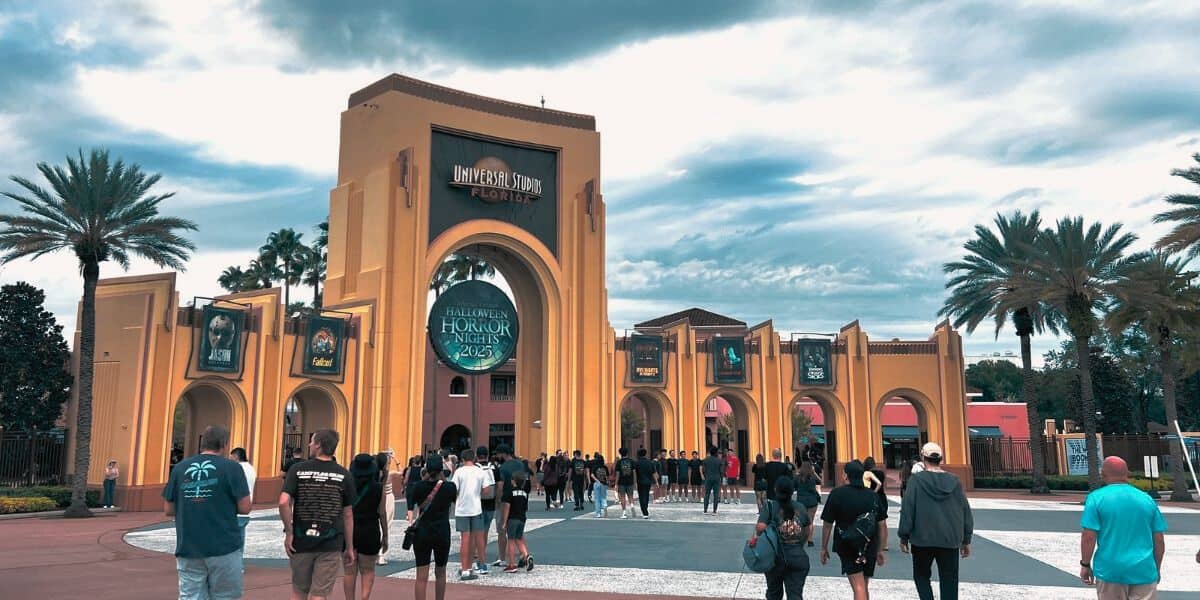
A Universal Orlando Resort incident report reveals the dangers inherent in some of their rides, even on their best days.

A Routine State Report Reveals a Sobering Discovery at Universal Orlando Resort’s Newest Theme Park
At first glance, it looked like another administrative release—dry, clinical, predictable. Florida’s quarterly theme park injury report rarely sparks emotion. But this time, among the entries detailing dizziness, neck strain, and chest discomfort, one line in the document carried a weight far beyond its simple wording. A single fatal incident, logged without elaboration, is now prompting renewed attention toward Universal Orlando’s biggest expansion in decades. Why did this quarter’s report feel different?
Theme parks continue to grow bigger, faster, and more ambitious every year. Epic Universe, Universal’s brand-new resort-scale park, is the latest symbol of that push. But the report released this season illustrates a truth industry insiders know well: with every leap forward, the stakes rise with it.

What Florida’s Injury Report Actually Shows
Under state rules, major theme parks must self-report any guest injury requiring at least 24 hours of hospitalization. The goal is transparency, though the reports themselves are deliberately minimal: no ongoing medical updates, no names, and just enough information to establish when and where an incident occurred.
In the newly released July–September data, Universal Orlando listed seven qualifying injuries across its parks. On paper, most of the entries resemble those seen in previous quarters—medical responses tied to high-intensity attractions, motion-heavy rides, or age-related sensitivities.
But one entry stands out not because it is sensationalized—on the contrary, it’s the quietest line in the entire report.

The Tragic Case Hidden in Plain Sight
The fatality listed in the report was that of a 32-year-old man at Epic Universe. Autopsy records later confirmed the individual as Kevin Rodriguez Zavala, who suffered “multiple blunt impact injuries” after being discovered unconscious following a ride on Stardust Racers, one of the park’s headline coasters.
The state report does not provide context, speculation, or contributing factors—only the required information. Yet its significance is unmistakable: this marks the first publicly documented death associated with the new park since its opening in late May.
In a resort built on innovation and precision, any fatal incident carries immense weight, prompting a comprehensive review of not only the ride involved but also broader safety frameworks.

Universal’s Investigation and the Ride’s Reopening
Following Zavala’s death, Universal launched a multilayered safety evaluation. According to a company memo, the coaster underwent inspection by multiple parties:
-
Universal’s internal safety team
-
Officials from the Florida Department of Agriculture and Consumer Services
-
The ride manufacturer
-
An independent third-party roller coaster engineering specialist
All four groups reached the same conclusion: Stardust Racers was operating correctly, and team members adhered to established procedures. After these determinations, the roller coaster reopened to the public on October 4.
It is worth noting that, aside from the fatality, the report lists no additional injuries involving Stardust Racers during the July–September quarter. Two nonfatal incidents had been documented in June, shortly after the park had launched.

Other Ride-Related Medical Events This Quarter
The state report also details several ride-related medical cases across the wider Universal Orlando Resort:
-
Incredible Hulk Coaster (Islands of Adventure)
-
July 22: A 66-year-old man reported chest pain.
-
August 20: A 56-year-old man experienced a headache after the ride.
-
-
Hagrid’s Magical Creatures Motorbike Adventure
-
July 5: A 40-year-old woman experienced an “altered level of consciousness.”
-
-
Revenge of the Mummy
-
August 24: A 32-year-old woman reported neck pain and motion sickness.
-
-
Hogwarts Express
-
September 29: A 78-year-old woman experienced dizziness while traveling aboard the attraction.
-
-
Krakatau Aqua Coaster (Volcano Bay)
-
August 4: A 38-year-old woman reported neck pain.
-
These entries may appear routine, but they reveal the spectrum of medical events that can occur in high-capacity theme parks, where guests experience rapid acceleration, sudden directional changes, and intense sensory environments.

Why This Quarter’s Report Feels Different
The theme park industry continuously refines its safety systems, from engineering checks to operational training. Yet Zavala’s death has refocused attention on how parks evolve their oversight as new ride types emerge. Epic Universe, designed to usher in a modern era of coaster design and thematic immersion, is now navigating the same complex balance every major park faces: offering cutting-edge thrills without compromising safety.
The state’s quarterly reports are not designed to alarm. They are designed to inform. This quarter’s findings—routine incidents alongside a tragic fatality—underscore a deeper truth: the pursuit of bigger and better attractions brings both excitement and responsibility. And as Epic Universe continues drawing millions of guests, the conversation around how parks adapt to unprecedented ride technology remains more important than ever.