Every television show that achieves massive success faces a unique challenge: the sheer number of eyes watching means nothing escapes notice. When you're a niche program with a modest following, a costume error here or a prop mistake there might slide by without comment.

But when you're operating at the level of cultural juggernaut, millions of viewers are scrutinizing every frame, ready to screenshot and share anything that feels off. Game of Thrones learned this lesson the hard way when a coffee cup appeared in Season 8, becoming one of the most talked-about moments from the show's controversial final episodes. The cup itself was meaningless, but it became symbolic of what many fans perceived as declining attention to detail during the series' rushed conclusion. HBO eventually scrubbed the offending beverage from streaming versions, but by then the damage was done. The mistake lived on in infamy, referenced in think pieces and memes years later. Netflix is now discovering that lightning can strike twice in the same place. Stranger Things, the streaming giant's flagship series and one of the most meticulously crafted period pieces in recent memory, has committed its own high-profile continuity blunder. The show has spent five seasons recreating 1980s Indiana with obsessive accuracy, from the music to the fashion to the technology. That dedication makes the latest error all the more surprising and, for some fans, all the more disappointing.
Holly Wheeler's Impossible Athletic Gear
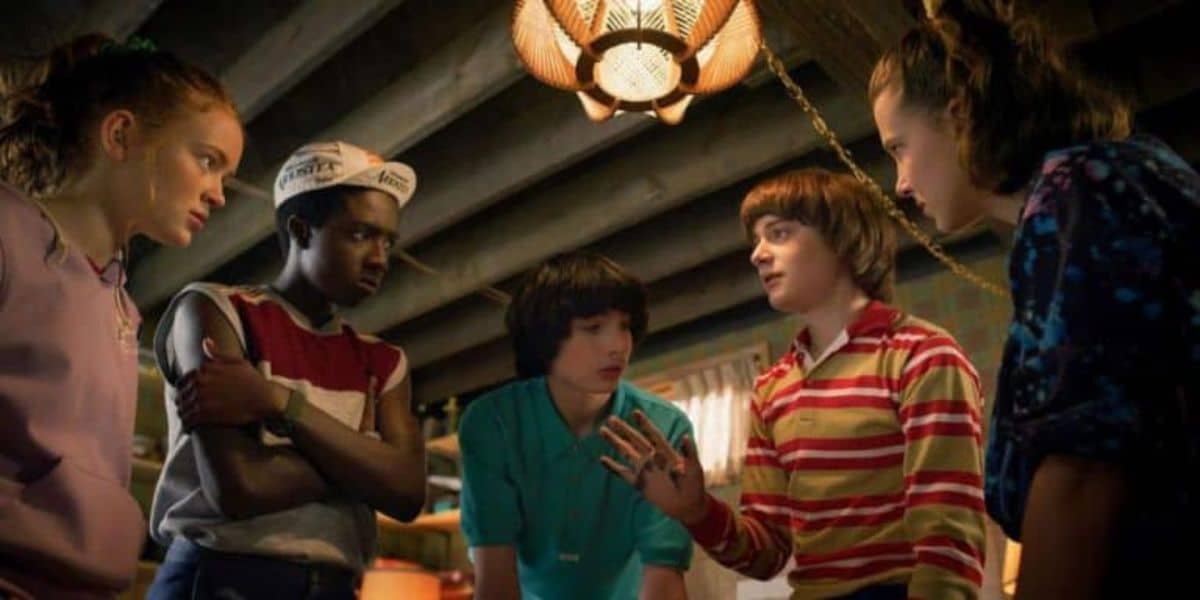
The controversy centers on Episode 7, during a pivotal scene where Holly Wheeler escapes from Vecna's lair in the Abyss. Sharp-eyed viewers noticed an Under Armour logo clearly visible on Holly's sleeve as she breaks free. The issue becomes immediately apparent to anyone familiar with the timeline: Stranger Things Season 5 is set in 1987, but Under Armour didn't launch as a company until 1996.
This means Holly is wearing athletic apparel from a brand that won't exist for another nine years. It's the kind of anachronism that completely breaks immersion for viewers who notice it, particularly those who appreciate how carefully the show has historically handled period details.
The discovery went viral after @SovereignTrades posted about it on X, sharing a screenshot that clearly shows the logo during Holly's escape sequence. The image quickly circulated among the Stranger Things fandom, with reactions ranging from amused to genuinely frustrated.
I love how Holly in Stranger Things is rocking @UnderArmour founded in 1996 pic.twitter.com/41uNpfYFXd
— Sovereign💎 (@SovereignTrades) December 26, 2025
One user, @scar1etbegonias, joked that seeing the Under Armour logo was “more unsettling than Vecna” and quipped about Holly potentially tearing “through the fabric of space and time” to acquire future athletic wear. The humor masked real disappointment from fans who expected better quality control.
The Post-Production Timeline Makes It Worse
What's particularly galling to many viewers is the extended post-production period Season 5 underwent. The Duffer Brothers and Netflix repeatedly emphasized how much time they needed for editing, visual effects, and ensuring the final season met their quality standards. That makes missing something as obvious as a 1990s brand logo feel especially egregious.
Writer Julian Cannon expressed this frustration directly: “They took over a year for post-production because of the time they claimed to need for editing and there is a scene of Max being strangled by Vecna where you can see the Under Armour logo of her shirt. Unbelievable.” While Cannon mistakenly identified Max as the character wearing the anachronistic clothing (it's actually Holly), his point about the lengthy post-production timeline stands.
User @packalanche highlighted another layer of irony. Stranger Things has previously demonstrated sophisticated understanding of product placement, seamlessly integrating period-appropriate brands into its storytelling. Coca-Cola, Eggo waffles, and various 1980s consumer products have appeared throughout the series in ways that feel organic and historically accurate. How did a show with such proven attention to brand details miss this one?
Drawing Parallels to Game of Thrones
The inevitable comparisons to Game of Thrones arrived quickly. @DanDellaCroce declared that “stranger things is on the same path” as Game of Thrones Season 8, suggesting the error represents a broader pattern of declining quality rather than an isolated mistake.
The parallel stings because both shows share similar trajectories. Each became appointment television that dominated cultural conversation. Both invested heavily in production values and world-building. And both have now committed memorable continuity errors near their conclusions that fans interpret as evidence of larger problems.
Whether Netflix will follow HBO's lead and digitally remove the Under Armour logo from future streams remains to be seen. The practical reality is that screenshots have already proliferated across social media, meaning this mistake is preserved in the internet's collective memory regardless of any corrections.
The Time Travel Theory Nobody Really Believes
Whenever a continuity error this significant appears, some fans attempt to rationalize it as intentional. Could the Under Armour logo be a deliberate clue about time travel? Given that Season 5 has introduced the Abyss as an alternate world connected to the Upside Down, maybe reality-bending elements could explain Holly's futuristic clothing?
The theory doesn't hold much water. With only the series finale remaining, introducing time travel mechanics would add unnecessary complexity to a season already struggling with pacing and an oversized cast. The simpler explanation is almost certainly correct: someone in the costume department grabbed the wrong shirt, and it slipped through review.
This wouldn't be the first time Stranger Things has included anachronistic products. Season 3, set in summer 1985, featured Mike giving Eleven red M&Ms. Red M&Ms had been discontinued in 1976 and didn't return until 1987, making their appearance historically inaccurate. However, that error was subtle enough that most viewers never noticed it. A prominently displayed brand logo is considerably harder to miss.
Volume 2's Larger Reception Issues
The Under Armour controversy exists within a broader context of mixed reactions to Volume 2. While the logo represents a technical error, critics have raised more substantive concerns about storytelling choices, pacing problems, and character development.
Many fans expected Will Byers to finally step into a powerful role after his abilities emerged in Volume 1. Instead, Volume 2 quickly sidelines him, limiting his powers and reducing his role to emotional conversations rather than active participation in the fight against Vecna. It's a disappointing trajectory for a character who spent most of the series as a victim.
The expanded cast has created its own problems. Holly Wheeler, a relatively minor character in previous seasons, has become oddly central to Season 5's plot, receiving more screen time than established favorites. Meanwhile, Eleven's powers have been significantly weakened, and she often feels like a supporting character in what should be her story.
Pacing suffers from an overabundance of heart-to-heart conversations that interrupt action sequences. Max's escape from Vecna's mind realm includes a scene where she stops at the portal to have an extended dialogue with Holly rather than simply escaping to safety. These choices prioritize emotional moments over narrative momentum, resulting in episodes that feel simultaneously bloated and rushed.
When Scrutiny Becomes Inevitable
Shows that reach Game of Thrones or Stranger Things levels of popularity operate under microscopes. Every detail faces examination from millions of viewers who watch, rewatch, and analyze each episode. This intense scrutiny can amplify relatively minor mistakes into major controversies.
That said, fans argue their attention to detail is warranted when shows explicitly market themselves on production values and historical accuracy. Stranger Things built its brand partly on authentic 1980s recreation. When the show fails at that core promise in such a visible way, viewers feel justified in calling it out.
Despite the controversy, Season 5 continues performing well. Volume 1 achieved record viewership, and critical reception has been generally positive, with Rotten Tomatoes showing an 84% score. Continuity errors, while irritating to detail-focused fans, haven't significantly impacted the show's overall success or audience engagement.
The two-hour series finale arrives on New Year's Eve, offering one last chance for Stranger Things to stick the landing. Whether Season 5 is ultimately remembered for its storytelling or its mistakes may depend on how that final episode plays. But the Under Armour logo has already earned its place in television history, joining the Game of Thrones coffee cup as a reminder that even the most carefully produced shows can overlook the obvious.