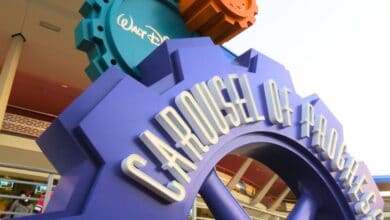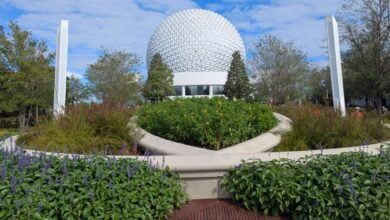

For nearly thirty years, the most iconic futuristic land in theme park history has been plagued by a visible identity crisis. Guests walking through the entrance are met with a “steampunk” bronze aesthetic from the 90s, stagnant tracks from the 60s, and a collection of rides that range from state-of-the-art to significantly dated.

While fans have long called for a total structural overhaul, recent revelations have confirmed that a massive, “blue-sky” solution was once considered. However, it was ultimately killed by former CEO Bob Chapek—not because the ideas weren't good, but because the numbers didn't add up to a high enough profit.
The $1 Billion Proposal: Imagineering’s “Grand Reset”
Before the recent shifts in corporate strategy, Walt Disney Imagineering (WDI) presented a comprehensive plan to “fix” the land’s broken infrastructure once and for all. This project was estimated at a staggering $1 billion—a price tag comparable to building an entire new land, such as Star Wars: Galaxy’s Edge.

The proposal aimed to strip away the “bronze and gold” clutter of the 1990s and return to a unified, “Retro-Futurist” aesthetic—the sleek, white, optimistic curves of the mid-century modern era. More importantly, it addressed the People Mover problem. The plan included a structural resolution for the decaying, empty tracks that have sat dormant since 1995, either by introducing a 21st-century transit system or removing the blight entirely to broaden the park's increasingly crowded walkways.
The Chapek “No”: Why Beauty Isn't a Good Investment
When the project reached the executive level, it hit a brick wall. Bob Chapek, who served as Chairman of Parks, Experiences and Products before becoming CEO, was famously focused on Return on Investment (ROI) and “yield management.” In Chapek's world, every dollar spent had to be tied to a measurable increase in revenue.
According to reports from the Wall Street Journal (WSJ), Chapek rejected the revitalization for two cold, financial reasons:
- “Non-Incremental” Growth: Chapek reportedly argued that a $1 billion renovation wouldn't actually attract new guests. In his view, people were already paying record-high ticket prices to visit the park for “anchor” attractions, such as Space Mountain. A “better-looking” land might make existing guests happier, but it wouldn't “move the needle” for first-time visitors in the same way a brand-new movie-themed ride would.
- The Maintenance Trap: Chapek viewed the project as “expensive maintenance.” To a data-driven executive, spending a billion dollars just to fix “broken” aesthetics was seen as a vanity project for Imagineers rather than a sound business move.
The Shift to “Floating Theme Parks”
As the WSJ highlights, the money Chapek “saved” by scrapping land renovations didn't stay in the bank—it moved to the ocean. Disney is currently navigating a $60 billion capital investment plan, but a massive portion of that is being diverted to the Disney Cruise Line (DCL).
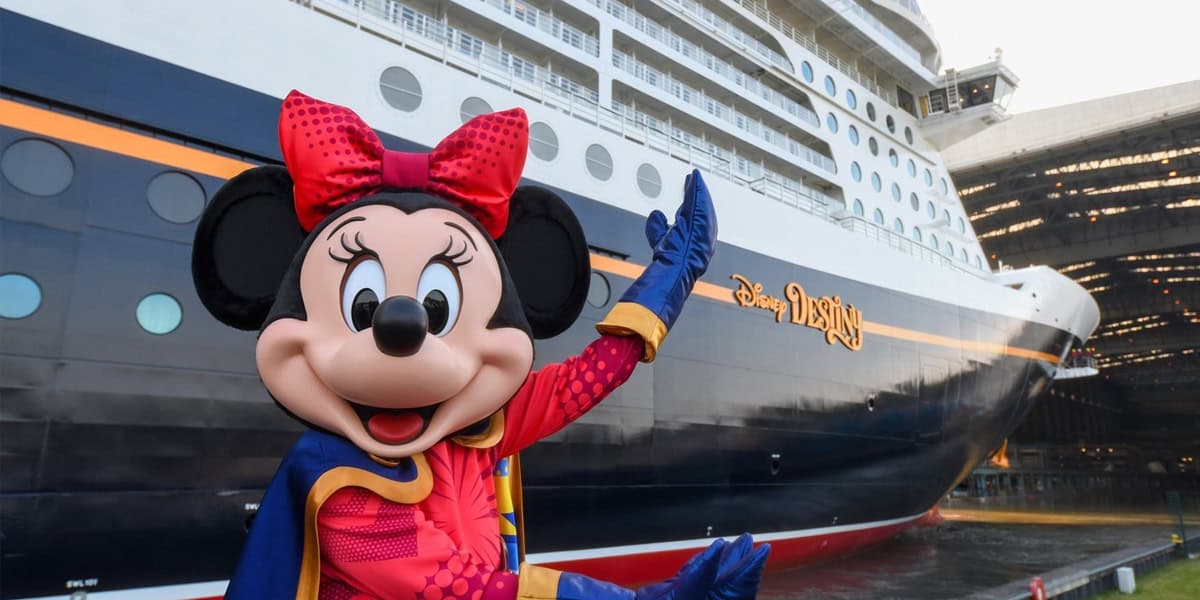
Theme park renovations are land-locked and subject to local capacity limits. A new cruise ship, however, is a “mobile theme park” that can be moved to wherever the market is strongest. For Chapek, the math was simple: Why spend $1 billion fixing a land in an existing park when that same money could pay for half of a new mega-ship that reaches an entirely different audience and generates higher margins?
The PeopleMover Casualty: A Permanent Eyesore
The most visible casualty of the “Chapek Cancellation” is the continued decay of the PeopleMover tracks. These tracks are the literal skeleton of the land, and their state of disrepair is a frequent point of criticism for guests.

By discarding the revitalization plan, Disney leadership effectively decided to let these “dead tracks” remain. Because removing them or fixing them would cost hundreds of millions of dollars without adding a “new” attraction name to the map, it was deemed a “zero-revenue” project. For now, the tracks remain a permanent reminder of a future that Disney—under Chapek’s legacy of cost-cutting—was simply unwilling to fund.
Conclusion: A Discarded Tomorrow
As we move through 2026, the “Magic” of a Disney vacation is increasingly coming at a premium. With ticket prices hitting all-time highs and “upcharge” culture becoming the norm, the company’s refusal to invest in its legacy infrastructure has created a widening “experience gap.”

The blueprints for a breathtaking new Tomorrowland exist. The Imagineers were ready to build it. But until Disney leadership believes that “thematic integrity” and “guest satisfaction” are as valuable as a cruise ship's bottom line, the great, big, beautiful tomorrow will remain a discarded dream of the Chapek era.
Do you think Bob Chapek was right to prioritize the Cruise Line over the repair of legacy park lands, or is the “PeopleMover eyesore” starting to damage the Disney brand?