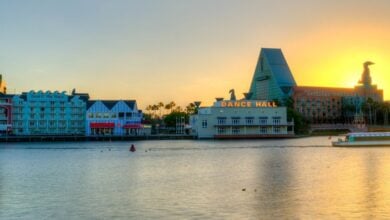

The “Disney Bubble” is more than just a marketing phrase; it is a promise of safety and sanctuary that millions of families rely on when they travel to Central Florida. But on Saturday, January 17, 2026, that bubble didn't just leak—it burst. In the quiet Indian Point subdivision, a mere eight miles from the gates of Walt Disney World, three men were executed in what authorities describe as a “cold-blooded” and “senseless” random act of violence.

As the community reels, the narrative has shifted from the tragedy to a scandalous “system failure.” New details reveal that the suspect, Ahmad Jihad Bojeh, was a ticking time bomb known to the state—one whose court-mandated supervision collapsed due to a bureaucratic lapse and a staggering spike in the cost of psychiatric medication.
A Random Execution in a Vacationer’s Paradise
The victims—Robert Lewis Kraft (70), his brother Douglas Joseph Kraft (68), and their longtime friend James John Puchan (69)—were in town from Michigan and Ohio for the Mecum Car Show. They had done everything right: they stayed in a reputable vacation rental neighborhood and were preparing to head home.

In a cruel twist of fate, car trouble stranded the men for one extra day. While they sat outside their rental home on Indian Point Circle waiting for a replacement vehicle, authorities say Ahmad Bojeh, 29, walked out of his house next door and opened fire. There was no argument, no robbery, and no known prior interaction. To Bojeh, they were simply targets. To the Central Florida tourism industry, they are a tragic reminder that the outskirts of the parks are not immune to the world's violence.
The Suspect: A “Frequent Flier” with a Dangerous History
Ahmad Bojeh was not a stranger to the Osceola County Sheriff’s Office. Sheriff Christopher Blackmon described him as a “frequent flier” and a “known threat” who had been the subject of numerous calls for service in the neighborhood.
The most damning evidence of a system failure, however, dates back to 2021. Bojeh was arrested for a random shooting at a Wawa gas station in Kissimmee, where he fired at cars and bystanders. In 2022, he was found not guilty by reason of insanity. Despite the violent nature of his crimes, he was not involuntarily committed. Instead, he was placed on “conditional release,” allowing him to live at home under the mandate that he remain compliant with psychiatric treatment and medication.
The Lethal Lapse: A 2,000% Treatment Price Hike
In a revealing update, State Attorney Monique Worrell has pinpointed the exact moment the system failed. Bojeh was supposed to be under the supervision of Park Place Behavioral Health, but that supervision reportedly evaporated when the cost of his mandatory treatment skyrocketed.

Worrell disclosed that Bojeh’s monthly treatment costs recently spiked by over 2,000 percent, jumping from a subsidized $7 to more than $150 per month. For Bojeh, who worked part-time at a local McDonald’s, this was a financial wall he could not climb. He stopped attending sessions and stopped taking his medication.
The breakdown was two-fold:
- Non-Reporting: The private treatment facility allegedly failed to notify the Ninth Judicial Circuit Court that Bojeh had fallen out of compliance. Under his release order, a single missed appointment should have triggered an immediate notification to a judge.
- Statutory Limitations: Worrell noted that under Florida law, involuntary commitment is based on a suspect’s danger to society at the time of sentencing, not at the time of the crime. Because Bojeh was “stable” on medication during his 2022 hearing, he was sent home rather than to a high-security facility.
“The individual was no longer in compliance with his treatment because of an inability to pay,” Worrell stated. “This is a failure of the safety net designed to protect our community.”
Impact on Central Florida Tourism: The Security Crisis
For the $30 billion Central Florida tourism industry, the Bojeh massacre is a reputational nightmare. Millions of guests stay in Davenport, Kissimmee, and Celebration precisely because they believe these areas are part of the Disney safe zone.

The Short-Term Rental Dilemma
The Indian Point subdivision is a microcosm of the Orlando rental market—a mix of permanent residents and high-turnover vacationers. Unlike the gated, 24-hour security of Disney-owned resorts like Disney’s Riviera Resort, these neighborhoods are open to the public. This tragedy has reignited calls for Osceola County to mandate stricter safety disclosures or security requirements for residential zones used as high-density tourist hubs.
Erosion of the “Disney Bubble”
When “random” acts of violence occur on the outskirts, they drive fear into the heart of the “Disney Bubble.” Tourism experts worry this could lead to a “security premium” where families feel forced to pay for expensive on-property hotels just to avoid the perceived volatility of the surrounding neighborhoods.
Conclusion: A Preventable Tragedy
Ahmad Bojeh is currently held without bond in the Osceola County Jail, facing three counts of first-degree murder. But for the Kraft and Puchan families, the “system failure” is a life sentence of grief.

As Florida lawmakers look toward the 2026 legislative session, the Indian Point massacre will likely serve as the primary catalyst for reform. From the way insanity acquittals are monitored to the pricing of mandatory psychiatric care, the demand for accountability is loud and clear: the magic of the parks cannot survive if the safety of the surrounding streets crumbles.