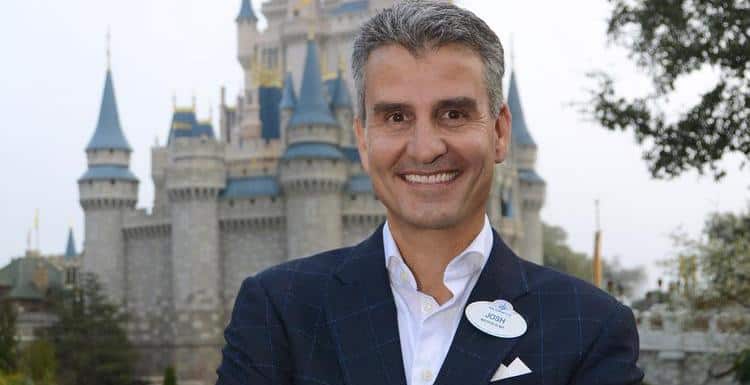
Disney's board of directors has resolved one of the entertainment industry's most scrutinized questions by naming Josh D'Amaro, chairman of Disney Experiences, as the company's next chief executive officer. The appointment concludes a multi-year succession process that has captivated investors, industry observers, and Disney stakeholders who recognize the enormous responsibility of leading one of America's most influential entertainment conglomerates. D'Amaro will succeed Bob Iger, whose nearly two-decade tenure leading Disney across two separate stints has shaped the modern entertainment landscape.

The selection carries particular weight given Disney's recent succession history. Six years ago, Iger handed leadership to Bob Chapek, his previous parks division chief, in what quickly became a cautionary tale of corporate governance challenges. Chapek's brief tenure ended with Iger's return to stabilize operations and restart the succession planning process. This history creates heightened expectations that D'Amaro's transition will proceed more smoothly and that his leadership will prove more durable than his predecessor's abbreviated time at the helm per CNBC.
D'Amaro's appointment also reveals Disney's strategic priorities at this particular moment in the company's evolution. By elevating the executive who oversees theme parks, resorts, cruise lines, and consumer products rather than selecting from the entertainment or streaming divisions, Disney signals that operational excellence and proven business performance weigh heavily in leadership decisions. The Experiences division recently crossed $10 billion in quarterly revenue for the first time, demonstrating growth and stability that contrasts with the volatility affecting other parts of Disney's portfolio.
The timing coincides with mixed signals from Wall Street about Disney's current trajectory. Despite reporting quarterly earnings and revenue that exceeded analyst expectations, Disney's stock declined 7 percent following the announcement. This disconnect between operational performance and market valuation creates an immediate challenge for D'Amaro as he prepares to assume leadership. Investors remain skeptical about certain aspects of Disney's business model even as the company demonstrates financial strength in key divisions.
For Iger, this succession represents his second attempt to identify and install a capable successor who can maintain Disney's position while navigating profound changes in media consumption, entertainment production, and consumer behavior. His emphatic endorsement of D'Amaro suggests confidence that this transition will achieve the stability that eluded the Chapek handoff. The board's thorough vetting process, led by former Morgan Stanley CEO James Gorman, aimed to avoid repeating previous mistakes while identifying the executive best positioned to lead Disney through its next phase of development.
D'Amaro's Professional Foundation
Josh D'Amaro built his Disney career primarily within the parks and experiences organization before ascending to the chairman role that oversees the entire division. His leadership has coincided with significant expansion plans, including the $60 billion investment commitment in theme parks over the next decade and development of new properties like the planned Abu Dhabi resort. Managing this growth while maintaining the guest experience standards that justify premium pricing demonstrates the operational discipline and strategic thinking required for company-wide leadership.
Bob Iger's public statement endorsing D'Amaro emphasized specific qualities that the board apparently values for Disney's future direction. Iger highlighted D'Amaro's “instinctive appreciation of the Disney brand” alongside his “ability to combine creativity with operational excellence.” This combination addresses what many viewed as shortcomings in previous succession attempts, where operational competence alone proved insufficient without the strategic vision and communication skills necessary for leading a complex entertainment company.
The succession committee's process involved extensive evaluation of multiple internal candidates. Iger's four direct reports, including D'Amaro, ESPN Chairman Jimmy Pitaro, and Entertainment Co-Chairmen Dana Walden and Alan Bergman, all participated in formal interviews beginning in 2024. As the process advanced, speculation increasingly focused on D'Amaro and Walden as the leading candidates before the board made its final determination.
Strategic Challenges Awaiting New Leadership

D'Amaro inherits a company facing significant strategic questions across multiple business segments. Traditional television revenue continues declining as audience migration to streaming and other platforms accelerates. While Disney successfully moved its streaming operations to profitability, sustaining growth while managing content costs and subscriber retention requires constant strategic attention and investment discipline.
The theatrical film business presents its own complexities. Disney dominated the 2025 box office, demonstrating continued strength in tentpole releases and franchise management. However, production budgets have escalated dramatically while theatrical revenue windows have compressed, fundamentally altering the economics of moviemaking. Determining optimal production strategies, release patterns, and platform allocation for high-budget films represents an ongoing challenge.
Disney's theme parks division, which D'Amaro currently oversees, must execute on ambitious expansion plans while maintaining operational standards and managing capacity. The $60 billion investment commitment represents enormous capital allocation that will shape Disney's physical presence globally for years to come. Balancing expansion with operational excellence and guest satisfaction requires sophisticated project management and strategic prioritization.
The streaming business, now profitable after years of losses, operates in an environment of intense competition. Netflix, Amazon, Apple, and numerous other platforms compete for both subscriber attention and content creator relationships. Disney must continue differentiating its streaming offerings through content quality and franchise strength while avoiding the subscriber churn that has plagued the broader industry.
Context from Previous Leadership Transition
The Chapek succession attempt provides important context for understanding both the challenge D'Amaro faces and the scrutiny his leadership will receive. When Iger first stepped down in 2020, Chapek seemed a logical successor given his success running the parks division. However, his tenure quickly encountered difficulties ranging from public disputes over creative compensation to strategic decisions that frustrated investors and damaged stock performance.
By late 2022, the board concluded that Chapek's leadership wasn't achieving desired results and made the dramatic decision to reinstall Iger. This move stabilized operations but also acknowledged that succession planning had failed. Iger's second term focused heavily on restructuring, implementing significant cost reductions, and reorganizing the company around three primary divisions that consolidated related operations.
D'Amaro's advantage lies in observing what went wrong during Chapek's tenure and understanding the broader leadership requirements beyond operational management. Leading Disney demands sophisticated stakeholder communication, strategic vision extending beyond immediate financial results, and ability to balance the company's creative culture with fiscal discipline. The board's selection suggests confidence that D'Amaro possesses these capabilities based on his track record and leadership approach.
Transition Planning and Near-Term Outlook
While Disney has identified D'Amaro as Iger's successor, specific transition timing hasn't been detailed in the announcement. Iger previously indicated plans to remain CEO through early 2026, though his departure dates have shifted multiple times over the years as circumstances evolved. Announcing the successor now provides clarity and allows time for transition planning that should facilitate smoother leadership handoff than occurred during the Chapek succession.
Disney's chief financial officer Hugh Johnston expressed optimism about the company's position for new leadership, noting improvements in parks performance, streaming profitability, and theatrical business success. This assessment suggests Disney's executive team believes the company's operational foundation is strong enough that D'Amaro can focus on growth initiatives rather than addressing fundamental business challenges.
Iger characterized Disney's current position positively in comments to investors, expressing pride in accomplishments during his second tenure and confidence in the company's future trajectory. This framing indicates Iger views this succession attempt differently than his previous experience, with greater confidence in both the strategic foundation he's leaving and his chosen successor's capabilities.
Implications for Disney's Strategic Direction

Josh D'Amaro's selection as CEO communicates clear messages about Disney's strategic priorities and organizational values. The board chose an executive whose career centered on guest experience, operational excellence, and demonstrated business results rather than entertainment production or content strategy. This choice suggests Disney believes future success depends more on executing effectively across existing businesses than on transformative strategic shifts or major acquisitions.
For observers of Disney's theme parks specifically, D'Amaro's elevation suggests continued emphasis on parks investment and development. His deep understanding of the parks business and demonstrated commitment to guest experience could influence how Disney approaches customer relationships and brand management across all divisions.
The substantial test begins when D'Amaro formally assumes the CEO role. Leading Disney through ongoing media industry transformation while preserving creative legacy and financial performance will challenge even highly capable executives. Disney's board has made its decision based on extensive evaluation of D'Amaro's qualifications and leadership potential. Whether this succession attempt succeeds where the previous effort failed will become clear as D'Amaro establishes his leadership approach and navigates the complex challenges facing the company.
The announcement marks an important milestone in Disney's corporate evolution, but the real story will unfold in execution. D'Amaro's performance as CEO will ultimately determine whether Disney's succession process has finally identified the leader capable of sustaining the company's position in an increasingly challenging entertainment landscape. For now, Disney moves forward with clarity about its next leader and hope that this transition will prove more successful than its recent predecessor.