Magic Kingdom changes slowly — until it doesn’t.
Recently, something about Space Mountain feels different. There hasn’t been a bold announcement or a dramatic reveal. Yet when longtime fans pay attention, they can sense when Disney begins evaluating an attraction instead of celebrating it.
After ongoing issues and internal concerns, Space Mountain appears to be standing at a pivotal moment. And that alone sparks questions.
Why Space Mountain Still Matters
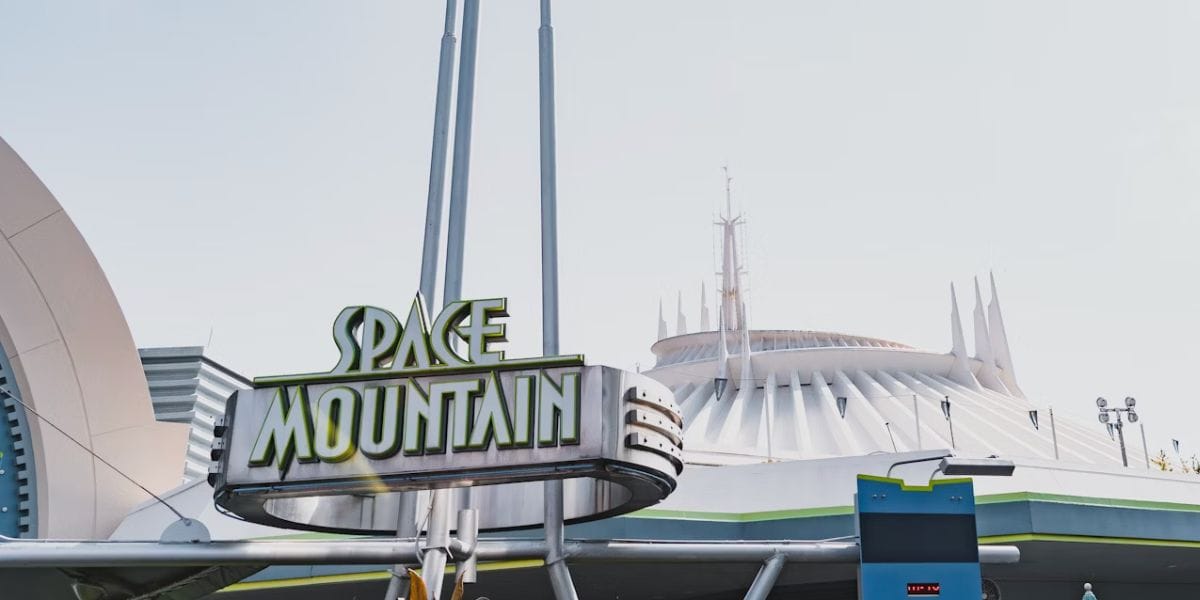
Space Mountain isn’t just another roller coaster. When it opened in 1975 at Magic Kingdom, it became the benchmark for indoor thrills at Walt Disney World. Fully enclosed. Pitch black. Rockets flying through simulated stars. It delivered suspense in a way no other Disney ride had done before.
Guests still feel that energy today. The queue winds through a futuristic corridor. Riders board compact rockets. The lift hill clicks upward, and then the darkness takes over.
There are no giant screens. No massive projection effects. Just track, music, and imagination.
For generations, it has served as a rite of passage. That emotional connection runs deep.

The Reality of Age
But nostalgia doesn’t modernize steel.
Place Space Mountain next to Guardians of the Galaxy: Cosmic Rewind at EPCOT, and the contrast is sharp. Cosmic Rewind launches riders smoothly into motion. Its vehicles rotate. Its story surrounds you. Everything feels engineered for comfort and immersion.
Space Mountain still uses a traditional lift hill and decades-old track design. The turns can jolt riders. The ride often feels rougher than today’s coaster standards.
Some guests appreciate the intensity. Others leave feeling rattled.
Disney now builds attractions with smoother ride systems and layered storytelling. Space Mountain reflects an earlier philosophy — one built more on imagination than technology.
That gap grows more noticeable each year.

Original vs. Intellectual Property
Another factor looms over the conversation: branding.
Disney consistently integrates recognizable franchises into its attractions. Splash Mountain became Tiana’s Bayou Adventure. The Great Movie Ride transitioned into Mickey & Minnie’s Runaway Railway. Familiar stories drive attendance and merchandise sales.
Space Mountain remains an original concept. It doesn’t connect directly to Star Wars, Marvel, or Pixar. In a corporate environment focused on synergy, that independence can look like both strength and weakness.
Tomorrowland already showcases major intellectual property. Buzz Lightyear’s Space Ranger Spin sits nearby. Tron Lightcycle / Run anchors the area with a film-based identity. Across Disney parks, familiar characters increasingly shape ride experiences.
The question isn’t whether Disney values Space Mountain. It’s whether original ideas hold the same strategic power they once did.

Possible Paths Forward
If Disney chooses to evolve the attraction, several directions make sense.
A Star Wars-themed coaster could transform the building into an immersive space battle, combining launch systems with cinematic effects.
Another Guardians of the Galaxy attraction would expand on Cosmic Rewind’s popularity. A new storyline could generate instant excitement.
Pixar’s Toy Story universe offers a lighter option. A Buzz Lightyear or Alien-focused indoor coaster could update the thrill factor while remaining family-friendly.
Disney could also rebuild Space Mountain itself. A redesigned track layout, smoother transitions, updated vehicles, and enhanced lighting could preserve the brand while modernizing the experience. Tokyo Disneyland’s developing version demonstrates that the concept can evolve without losing its core identity.

Standing at the Intersection
Right now, nothing has officially changed. Rockets still launch into darkness. The dome still glows at night. Guests still line up for the experience.
But Disney rarely stands still for long.
Infrastructure ages. Technology advances. Expectations rise. When an attraction begins to feel dated beside newer innovations, leadership takes notice.
Space Mountain now stands at that intersection between preservation and reinvention. Protect the original. Upgrade it. Or replace it with something tied to a powerhouse franchise.
For decades, it defined Tomorrowland. The coming years will reveal whether it continues to do so — or whether Disney charts a new course entirely.