Something is coming to Disney+ this Sunday that the Deaf community has never had before, and most people scrolling through their streaming queue this week have no idea it exists yet. Disney is about to drop Songs in Sign Language on April 27, and if you have not heard about this project yet, the next few paragraphs are going to hit harder than you expect.
What Disney Did to the Films Frozen, Encanto, and Moana
Walt Disney Animation Studios returned to the original source files for three of its most beloved recent musical sequences and rebuilt them entirely in American Sign Language. Not captions. Not subtitles. Not sign language overlaid on top of existing footage. The studio reanimated each sequence from scratch using the original animation assets, with ASL choreography developed specifically for each song and new facial animation built to reflect how sign language actually communicates rather than how spoken dialogue works. The three songs are “The Next Right Thing” from Frozen 2, “We Don't Talk About Bruno” from Encanto, and “Beyond” from Moana 2. The project, Songs in Sign Language, debuts on Disney+ this Sunday, April 27.
The Person Who Made It Happen
The project was directed by Hyrum Osmond, a Disney animator and director who previously helmed Olaf Presents. Osmond developed the concept from a personal place that anyone who has felt the specific pain of a communication barrier with someone they love will recognize immediately. He grew up without learning sign language and carried real regret about what that cost him in his relationship with his Deaf father. That regret drove years of developing ideas for a project that could take down barriers between Disney storytelling and Deaf audiences before he finally pitched it to Walt Disney Animation Studios leadership and got the green light to make it happen. More than 20 animators volunteered to work on the project after Osmond put out an internal call, bringing their own personal connections to sign language and the Deaf community to the project.

Why the Animation Had to Be Completely Rebuilt
The decision to go back to the original source files and rebuild rather than overlay is the detail that separates this project from a well-intentioned accommodation and makes it something genuinely significant. ASL places enormous communicative weight on the face. The eyes, the brows, and the overall facial expression carry meaning alongside the hands, and if the face does not match what the hands are doing, the message changes. The original animation in each of these sequences was built around spoken dialogue, and the facial performances were designed to reflect that. Reimagining the ASL sequences meant rebuilding most of the facial animation so that the expressions matched the signing rather than the dialogue.
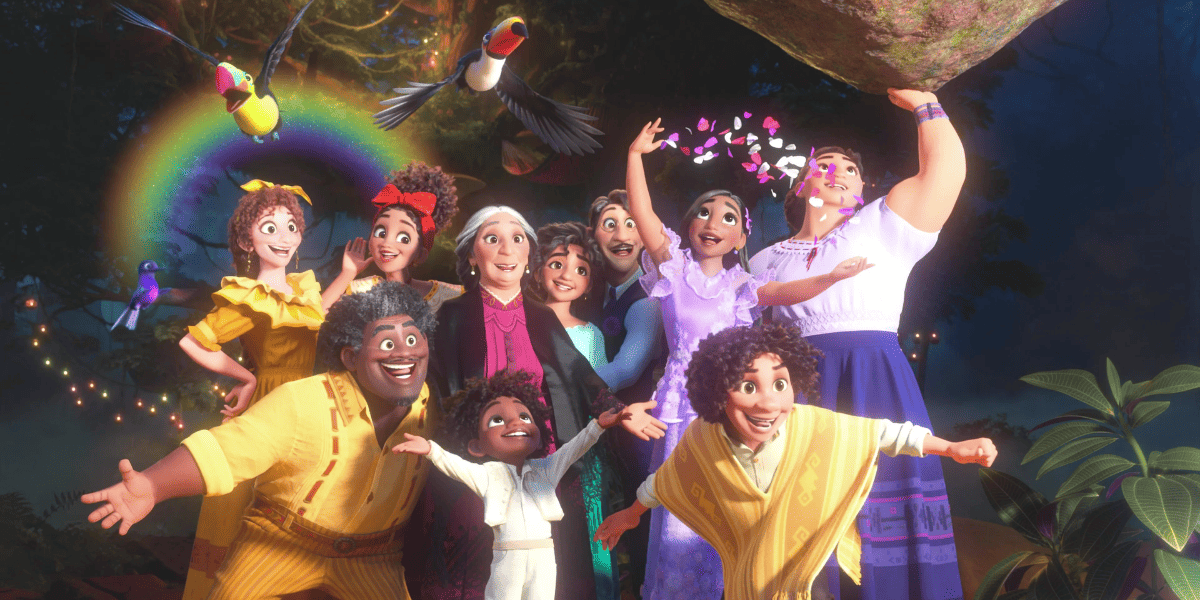
The ASL choreography itself required significant creative work. Sign language is not a monolith, and a single concept can be expressed through multiple different handshapes and approaches, each carrying different nuances. The team worked with DJ Kurs, artistic director of Deaf West Theatre, and choreographer Catalene Sacchetti to make deliberate creative choices for every moment in every song. One of the most thoughtful decisions made throughout the process was the commitment to giving each character a distinct singing voice rather than having them all sing identically. Deaf people do not all sign the same way, and the animation reflects that reality by imbuing each character's signing choices with personality and individuality. We Don't Talk About Bruno required the most complex execution with as many as eight performers signing in a single frame at certain points in the sequence.
What This Actually Means for the Films
Deaf and hard-of-hearing children have never seen Disney animated characters speak directly to them in their own language before. That is the simple and significant reality of what debuts on Sunday. Sacchetti said it directly during the development process, noting that the Deaf community has never had the opportunity to experience this in entertainment and that this moment is a historic first. For a studio that has built its entire identity around the idea that its stories belong to everyone, Songs in Sign Language is the most concrete expression of that belief Disney has ever produced.
April 27. Disney Plus. Do not miss it.