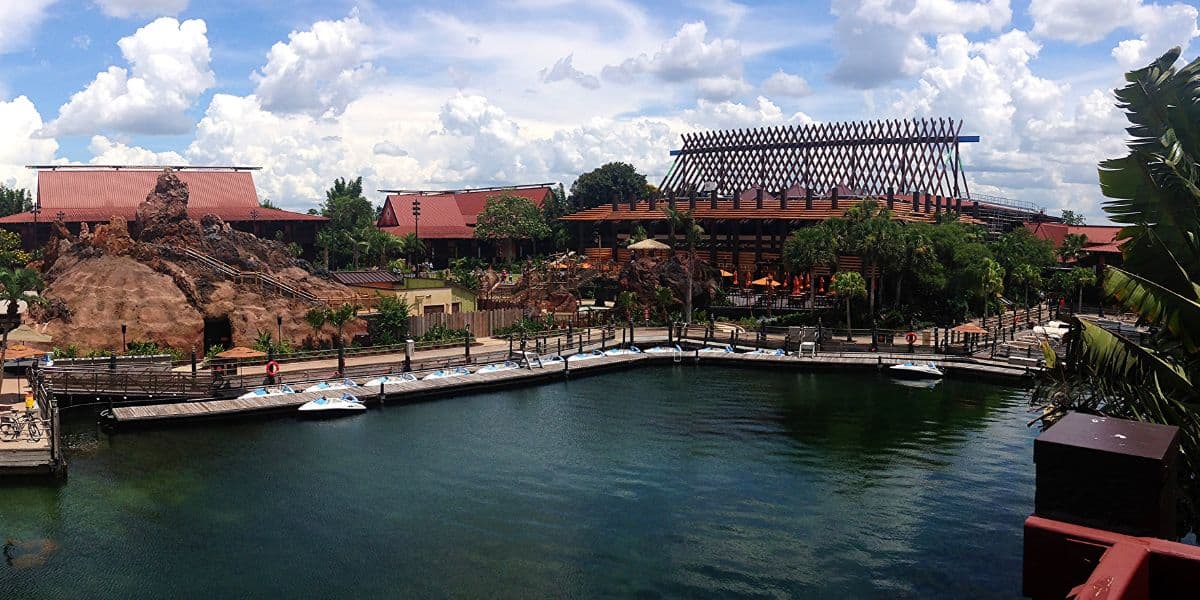
A horrifying collision at Walt Disney World’s Polynesian Village Resort was narrowly avoided thanks to the rapid reflexes of a fellow parkgoer. In a viral video shared on X by social media user @AKrause55, a male guest descending the feature volcano water slide at the resort’s Lava Pool was forced to make an emergency mid-air rescue after spotting an unsupervised child scaling the inside of the slide chute.

Acting purely on instinct, the swimmer scooped the toddler into his arms mid-slide, riding out the remainder of the drop and landing safely in the splashdown basin with the uninjured child.
The Heroic Mid-Slide Scoop
The dramatic incident occurred along the final stretch of the Lava Pool’s signature feature—a 142-foot-long water slide built into a massive artificial volcano structure. As the male guest accelerated through the curved, partially enclosed flume, he rounded a bend to find a young child dangerously attempting to climb up the slippery slide channel against the rushing water.
Because water slides rely on momentum and feature blind turns, a descending rider has zero ability to steer away or brake. Realizing a high-speed collision was inevitable, the rider executed a split-second rescue:
- Instant Reaction: The man reached out as he approached, picking the toddler off the slide surface in one smooth motion.
- Absorbing Momentum: Securing the boy firmly against his chest, the guest rode out the remaining curve of the slide.
- Safe Entry: He entered the catch basin feet-first, keeping the child’s head well above the water line as they splashed into the pool.
Had the guest lacked such sharp reflexes, the force of a full-grown adult impacting a standing toddler at high speed could have caused severe blunt-force trauma for both individuals.
Where Were the Parents?
While the guest's quick thinking prevented a physical emergency, the aftermath on the pool deck left onlookers baffled.

Video footage shows the hero standing in the splash pool, holding the toddler, looking around the deck, expecting anxious parents to run forward. Instead, no one appeared. Even after carrying the child out of the water and onto the main pool deck, the toddler's guardians were nowhere to be found.
The rescuer was left holding the young child while waiting for Disney lifeguards and resort staff to take charge, secure the area, and locate the missing parents.
Lava Pool vs. Kiki Tiki's: Understanding the Layout
To understand how critical this safety breach was, it helps to recognize the distinct aquatic zones at Disney's Polynesian Village Resort:
- The Lava Pool (Feature Slide): Located in the resort's central courtyard, this main pool features a 142-foot volcano slide designed for single riders descending one at a time. It empties into a deeper basin and is intended for capable swimmers. Climbing up the slide chute is strictly prohibited under posted Disney safety rules.
- Kiki Tiki’s Splash Play Area: Situated right beside the Lava Pool, Kiki Tiki’s is a completely separate, dedicated splash pad built specifically for toddlers and young children under 48 inches tall. It features low-height, open-air slides, gentle wading water, and interactive sprayers designed for small kids to play safely under direct parental supervision.
The unsupervised child had wandered away from the child-friendly Kiki Tiki’s zone, entered the main Lava Pool area, and climbed into the exit of the high-speed volcano slide—placing himself directly in the blind landing path of descending riders.
The Hidden Hazards of Water Slide Obstructions
Theme park safety experts continually warn that climbing up an active water slide is one of the most dangerous things a guest can do at a resort pool. Because feature slides wind through artificial caves and rockwork, riders cannot see obstacles ahead until it is too late to react.

Furthermore, an impact at the bottom of a slide carries enough force to knock a child unconscious or disorient them, creating an immediate drowning hazard in the splash basin.
While Disney employs certified lifeguards across all resort pools, safety guidelines emphasize that lifeguards are stationed to monitor water conditions and respond to emergencies—not to serve as individual babysitters. Constant, direct visual contact by parents remains the single most important line of defense.
Thanks to the incredible “dad reflexes” of an attentive guest, what could have been a catastrophic resort accident instead ended in a safe landing and a stark reminder of the importance of pool safety.