
Cars parking cars. It sounds like something straight out of a Pixar movie, but Disney is exploring a real-world version of that idea. Instead of building a vehicle that parks itself, the company is investigating robotic assistants that could help drivers navigate parking areas.
The Walt Disney Company revealed the collaboration during Disney Accelerator Demo Day on November 3, 2026, at the Walt Disney Studios lot. Working with robotics company FieldAI, Disney Experiences Technology and Walt Disney Imagineering R&D are studying how robots could assist parking operations. The more intriguing development, however, is what Imagineering hopes to learn for future theme park characters.
Disney's Robotic Parking Assistants Could Change the Arrival Experience
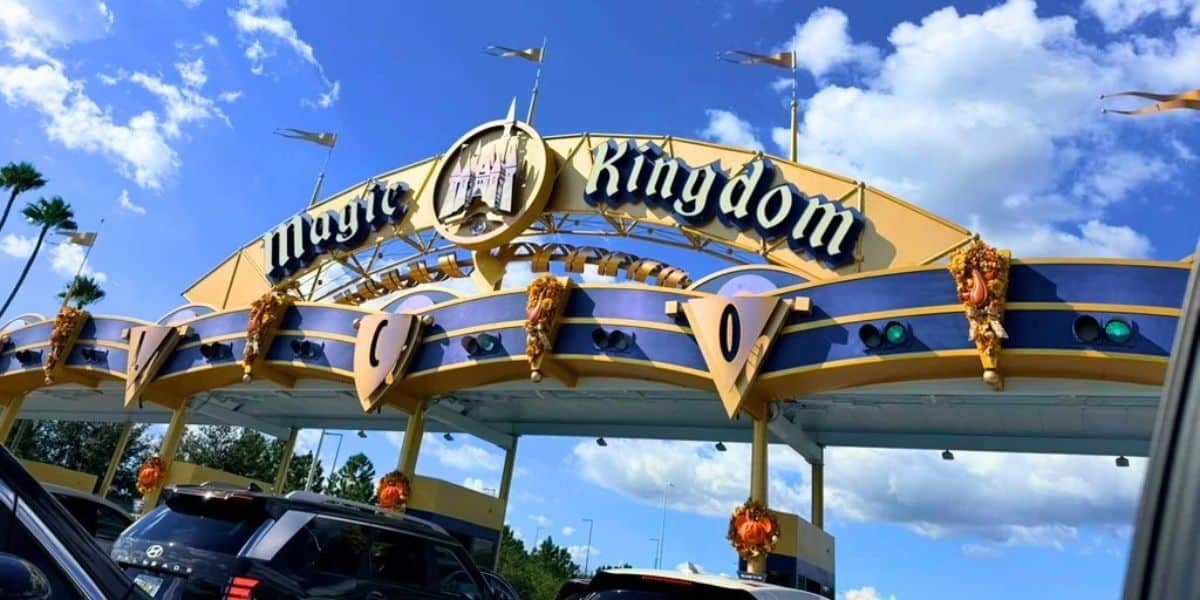
For millions of Disney visitors, the theme park experience begins long before reaching Cinderella Castle or stepping onto Main Street, U.S.A. It begins with the drive into a parking lot, where Cast Members help direct vehicles toward available spaces.
As Inside the Magic previously reported on Walt Disney World's parking operations, parking Cast Members are a recognizable part of the arrival process, guiding vehicles while wearing high-visibility costumes.
Disney's latest research explores whether robots could eventually provide additional assistance in that environment.
According to Disney's official November 3 announcement, FieldAI is collaborating with Disney Experiences Technology and Walt Disney Imagineering R&D to investigate robotic support for parking operations. Disney specifically identifies complex terrain and unpredictable weather as challenges the technology must address.
The stated goals are to improve the working environment and provide guests with a more consistent arrival experience.
Importantly, Disney has not announced a deployment date, identified a theme park parking lot where the robots will operate, or confirmed that the technology will replace any existing Cast Member responsibilities.
The announcement describes an exploration of potential capabilities, not an operational change guests should expect on their next vacation.

What Makes Disney's Parking Robots Different?
A robotic parking assistant sounds relatively straightforward. Direct a car toward an available space, communicate where the driver should go, and repeat the process.
The challenge becomes more complicated when a robot must navigate a changing physical environment.
Parking areas contain moving vehicles, pedestrians, obstacles, uneven surfaces, and weather conditions that can alter how equipment performs. A system designed for this environment needs to understand its surroundings and respond appropriately.
That is the problem FieldAI specializes in addressing.
When Disney introduced its 2026 Accelerator participants in July, the company explained that FieldAI develops robot intelligence capable of operating in uncertain environments without depending on prior maps, GPS, or predetermined routes.
FieldAI's technology is intended to work across different types of robots rather than perform only one narrowly programmed task.
That distinction matters because a parking lot is not a perfectly controlled environment.
A route that is unobstructed one moment may require a different approach when a vehicle or pedestrian enters the area. Successful navigation involves more than simply moving between two predetermined points.
For Disney, exploring these capabilities in a parking application offers a practical way to investigate how robots interpret changing surroundings while performing a task people can immediately understand.

Imagineering Sees a Bigger Future Beyond Parking Lots
The parking project is only one part of Disney's announcement.
Walt Disney Imagineering R&D is also collaborating with FieldAI to investigate whether its navigation and situational-awareness capabilities could inform future character-based robotic experiences in the parks.
This is where the research becomes particularly interesting for Disney fans.
Unlike traditional stationary Audio-Animatronics figures, mobile robotic characters must account for what is happening around them as they move.
Guests may approach unexpectedly. Pathways can become crowded. Obstacles can appear, requiring a robot to adjust its movement while maintaining the illusion that visitors are encountering a living character.
Disney has already explored the entertainment possibilities of mobile robotics.
In 2023, Inside the Magic covered Disney's experimental Star Wars droids, highlighting how small robotic characters could interact with visitors in themed environments.
Later, BDX droids appeared at Star Wars: Galaxy's Edge at Walt Disney World during a limited engagement in 2025.
Those earlier appearances illustrate Disney's interest in bringing mobile characters beyond traditional ride scenes.
The FieldAI collaboration represents a separate research effort, however. Disney has not announced that FieldAI technology will be installed in the BDX droids or any other existing character.
Instead, Imagineering is exploring capabilities that could help inform future designs.

Disney's Robotics Research Goes Beyond One Project
FieldAI was one of five growth-stage companies participating in the 2026 Disney Accelerator program.
The four-month initiative also included Promise, OpenArt, Physical Intelligence, and Simile, whose collaborations span filmmaking, creative technology, robotics, and guest planning.
Another robotics company, Physical Intelligence, worked with Imagineering on a different operational challenge: using adaptable robots to handle and arrange 3D glasses for cleaning between shows.
That project focuses on repetitive backstage work rather than directing vehicles or interacting with guests.
Together, the two collaborations demonstrate how Disney is investigating robotics for distinct purposes, including operational assistance and potential entertainment applications.
There is also an important history behind this research.
Inside the Magic previously examined Disney's research involving roaming droids, including how guests encountered research-related notices during earlier character experiments.
Those examples underscore the difference between testing emerging technology and establishing a permanent guest offering.
For FieldAI, the immediate focus remains understanding how general-purpose robot intelligence could operate safely and effectively in changing environments.
For Imagineering, those findings may eventually contribute to the development of more adaptable robotic characters.
When Could Disney Guests Encounter These Parking Robots?
For now, Disney has provided no public timeline for robotic parking assistants to begin operating at Walt Disney World Resort, Disneyland Resort, or another Disney destination.
The company has also not identified specific future characters that would use FieldAI's technology.
That means visitors should not interpret the November showcase as confirmation that robotic parking assistants are being installed or that a new robotic character experience is scheduled to open.
The distinction matters because Disney's past experiments have included both research demonstrations and limited guest-facing appearances.
For example, Inside the Magic documented earlier R2-D2 roaming tests at Disneyland, offering another example of how Disney has explored mobile character interactions before making broader decisions about guest experiences.
The latest FieldAI partnership adds a different technical question to that continuing work: Can robots navigate unpredictable physical environments well enough to support practical operations and potentially inform character movement?
Disney's November 3 announcement establishes that both applications are being explored.
What remains unanswered is whether the parking research will lead to an operational deployment, a future character application, or another stage of development.
For now, one of Imagineering's most interesting robotics projects is focused on an unexpectedly familiar part of a Disney vacation: finding somewhere to park.