HBO's episodic adaptation of J.K. Rowling's novels — a seven-season undertaking helmed by showrunner Francesca Gardiner — is positioning itself as a fundamentally different creative proposition than the film franchise that preceded it. That distinction is becoming clearer not just through the show's expansive cast, but through the churn already reshaping that cast well ahead of Season 1's December 2026 premiere.
The most notable recent development concerns Ginny Weasley. Gracie Cochrane, who portrayed the character in Season 1, will step away from the role for Season 2, a transition HBO has described in a statement only as resulting from “unforeseen circumstances.” The change is significant given the narrative arc of 1998's “Harry Potter and the Chamber of Secrets,” in which Ginny's presence in the story grows substantially — meaning the part is being recast precisely as it gains weight.
Cochrane addressed her departure publicly, resharing HBO's casting announcement on Instagram with the message “Handing over the wand” and “Good luck,” directed at her successor, Bonnie Hill. Hill's previous credits include Film Club and The Six Triple Eight (2024).
Hill's casting arrives alongside two other Season 2 additions. Lenny Rush — a 2023 BAFTA recipient known for Doctor Who and Enola Holmes 2 (2022) — has been cast to voice Dobby the house-elf, a role Toby Jones originated on-screen in the earlier films. And Billy Barratt, an International Emmy winner for Responsible Child (2019) with recent credits in Kraven the Hunter (2024) and Bring Her Back (2025), will play the teenage Tom Riddle, closing out speculation that Adolescence actor Owen Cooper — never officially attached by HBO — might take the part.
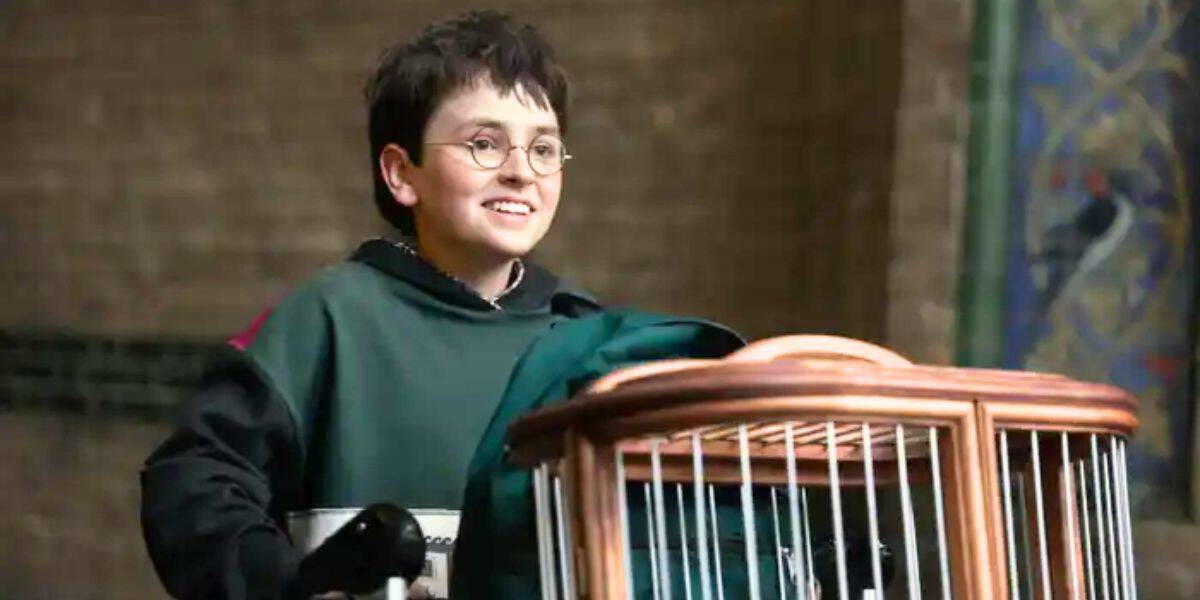
The production has also weathered another high-profile change in recent weeks, with Nicholas Hoult departing the role of Gilderoy Lockhart. Game of Thrones alum Kit Harington has since been announced as his replacement.
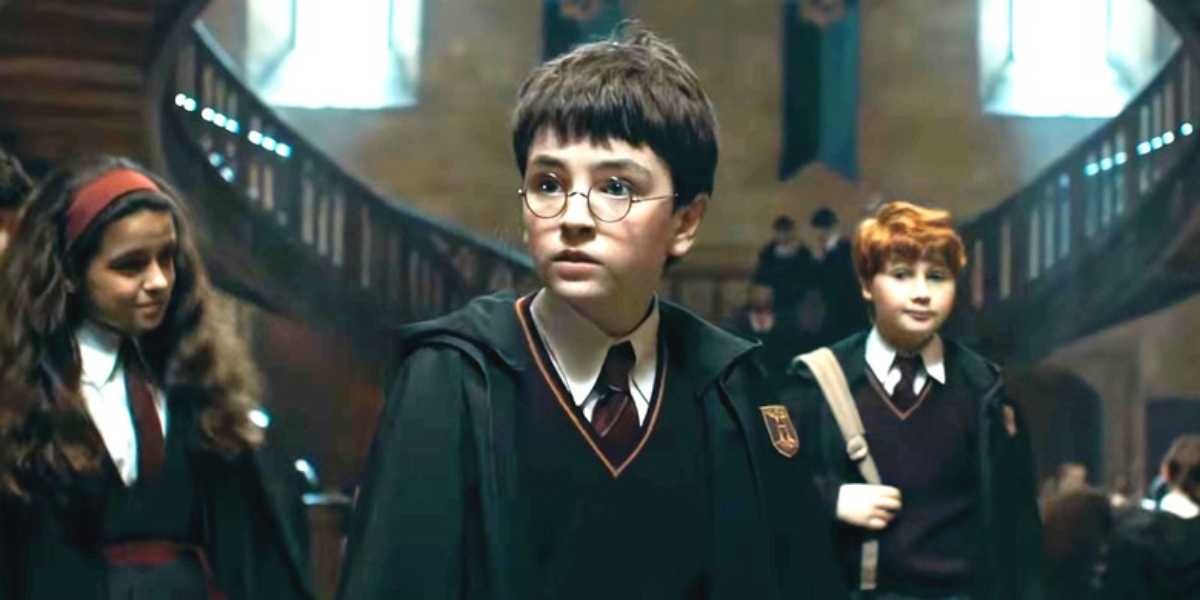
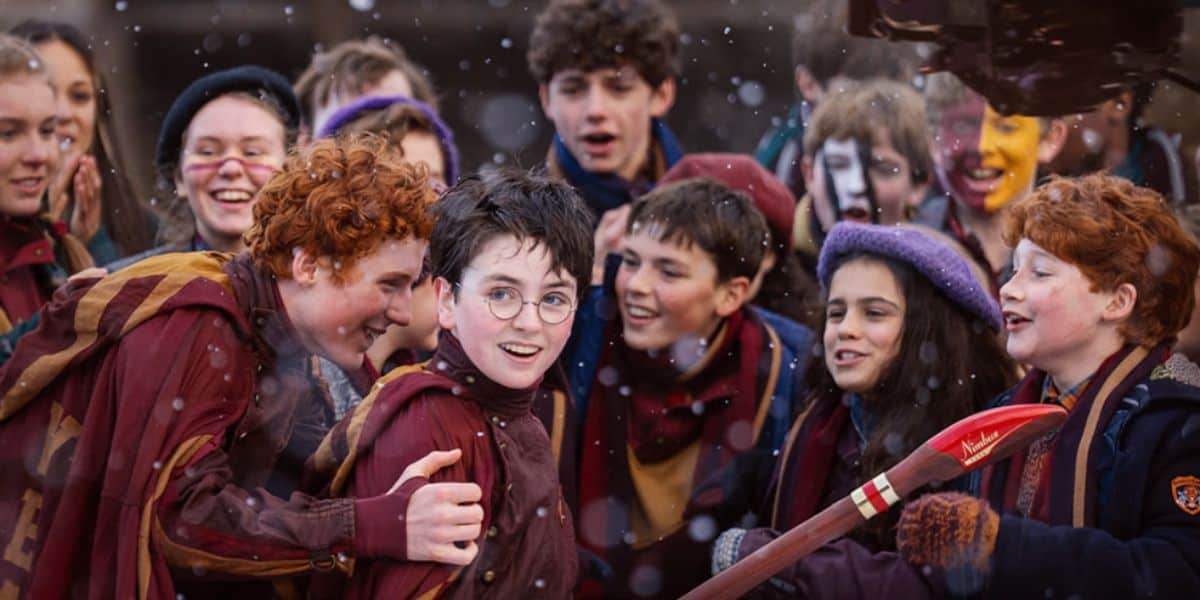
These moves follow the series' initial ensemble reveal, which notably bypassed any legacy casting in favor of new talent: Dominic McLaughlin as Harry Potter, Arabella Stanton as Hermione Granger, and Alastair Stout as Ron Weasley, supported by John Lithgow, Paapa Essiedu, Janet McTeer, and Nick Frost as Dumbledore, Snape, McGonagall, and Hagrid, respectively.
Among the supporting casting decisions, one in particular has been read as a signal of the production's broader ambitions: the addition of Peter Serafinowicz — known for Guardians of the Galaxy (2014), Parks and Recreation, and his voice work as Darth Maul — as Peeves the Poltergeist. The character was absent from all eight films despite footage reportedly having been shot with the late Rik Mayall for 2001's Harry Potter and the Sorcerer's Stone. His inclusion here marks the character's live-action debut and reinforces the production's stated commitment to closer textual fidelity than the films achieved.
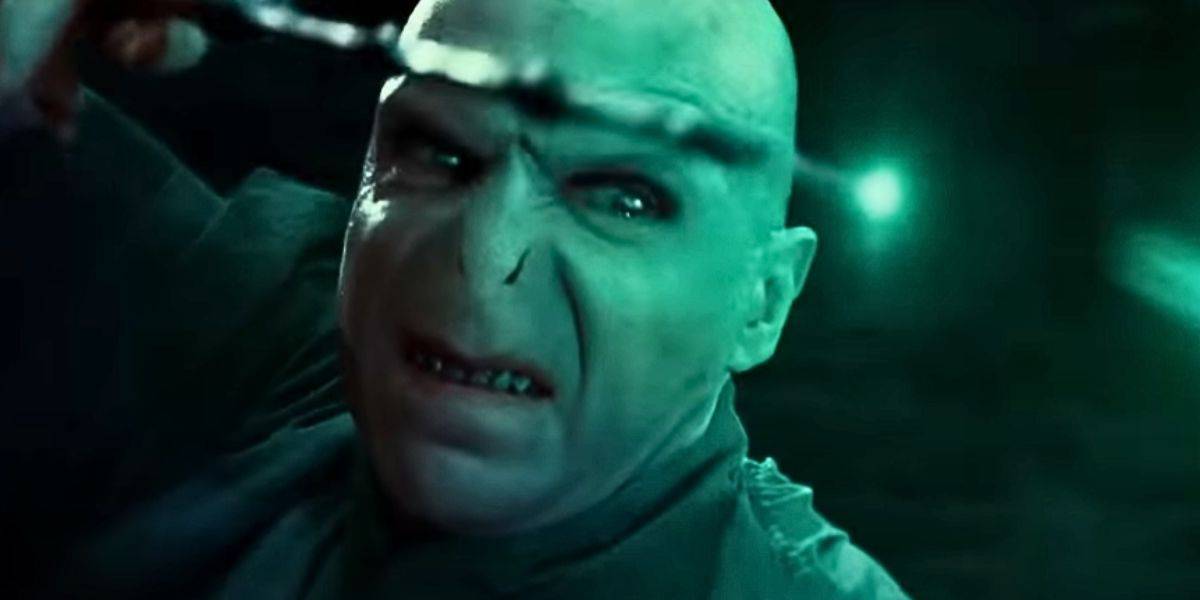
What remains unresolved is arguably the franchise's most consequential open casting question: the adult Voldemort. Barratt's role is confined to the character's adolescent incarnation as Tom Riddle, leaving the transformed villain unassigned. Names circulating in fan discussion include Paul Bettany, Tom Hiddleston, and Ralph Fiennes.
Separate reports have floated Daniel Radcliffe as a potential Voldemort, a scenario that appears improbable given his defining association with the character of Harry Potter in the original film series.
Also unresolved is whether Radcliffe, Emma Watson, or Rupert Grint might eventually appear in a “19 Years Later” epilogue sequence tied to 2007's “Harry Potter and the Deathly Hallows.” HBO has not confirmed any such casting, and observers note the network faces a balancing act: too heavy a reliance on the original stars risks undermining the reboot's premise of standing apart from the films that came before it.
With six more seasons to go and a young ensemble whose long-term availability cannot be guaranteed, further cast changes appear likely. For HBO, the calculus seems clear — prioritizing narrative fidelity to Rowling's source material, even at the cost of a shifting cast, is central to the case it is making that this adaptation warrants a place alongside the films.
What part of the Harry Potter series are you most looking forward to? Let us know in the comments down below!