
The Sphere in Las Vegas has quickly become one of the most talked-about entertainment venues in the world. Its 580,000-square-foot LED exterior dominates the skyline, while its interior has been used to test the limits of immersive technology. Now, executives are eyeing Harry Potter as the venue’s next high-profile attraction.
According to Bloomberg, Sphere Entertainment chief executive James Dolan has spoken with Warner Bros. about adapting the wizarding world for the venue. The concept would follow the model of The Wizard of Oz (1939), which has been reimagined at the Sphere with generative visuals and 4D effects. Audiences experience wind, fog, and panoramic projections that extend far beyond the traditional cinema screen.

The financials suggest why the discussions are serious. The Wizard of Oz at Sphere is reportedly raking in an average of $200 per person. At two or three showings of 4,000 to 5,000 fans per day, the venue is raking in as much as $2 million per day from the film.
A Harry Potter production, with its global fan base, could potentially outpace that revenue.
Minimal Risk for Warner Bros.
For Warner Bros., the arrangement requires little upfront investment. Warner Bros. was reportedly happy to let James Dolan, the executive chairman and chief executive officer of Sphere Entertainment Co., assume the cost of adapting The Wizard of Oz. In turn, Warner Bros. receives a licensing fee and a small share of sales.

A similar deal for Harry Potter would give the studio a new revenue stream without the risks of live production.
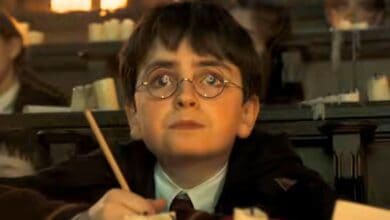
The Sphere partnership would also broaden the franchise beyond conventional formats. After dominating box offices between 2001 and 2011, Harry Potter has reemerged in streaming and audio. HBO is now filming a serialized adaptation of the books, while Audible is developing a full-cast dramatization featuring Hugh Laurie, Matthew Macfadyen, Riz Ahmed, and others. An AI-driven venue show would add another layer to that expansion.
Resistance to AI
Still, the proposal comes at a sensitive time for the industry. Generative AI is already controversial in Hollywood, where strikes and labor negotiations have placed a spotlight on technology’s impact on creative jobs.

That resistance could complicate a Sphere adaptation of Harry Potter. Fans who flocked to theaters or theme parks might be less willing to embrace an AI-rendered spectacle, even one designed for a venue built to overwhelm the senses.
For Dolan, the calculation is different. The Sphere is still searching for permanent programming that can justify its multibillion-dollar construction cost. A globally recognized brand like Harry Potter could anchor that strategy, drawing international visitors to Las Vegas in the same way Broadway or Universal theme parks do elsewhere.

Whether the project moves forward remains unclear. What is certain is that Harry Potter, decades after its debut, continues to be reshaped for new markets. The Sphere may represent the boldest — and most contentious — experiment yet.
Do you think an AI-enhanced version of Harry Potter is a good idea?