
Anyone who's visited Disneyland recently understands that the financial commitment involved has escalated dramatically over the past several years.

The days of spontaneous weekend trips or last-minute family vacations to the Anaheim theme parks have given way to months of advance planning and careful budget allocation. Social media overflows with tips and tricks for managing Disney costs, from detailed spreadsheets tracking every expense to strategies for maximizing value from meals and snacks. The phenomenon of adults purchasing children's portions at quick-service restaurants has become common enough that it barely raises eyebrows anymore.
These cost-saving measures reflect genuine economic pressure facing families who want to maintain the Disney vacation tradition despite steadily climbing prices across every category. Disneyland itself has acknowledged these pressures by rolling out various discount programs and promotional offers designed to sustain attendance levels even as individual guest spending increases.
The park has essentially admitted that current pricing has pushed beyond what many traditional visitors can comfortably afford, necessitating incentives to keep turnstiles moving. Yet this economic reality exists alongside a completely different tier of Disney experiences aimed at guests operating under entirely different financial constraints. While some visitors carefully calculate whether purchasing a souvenir is financially responsible, others seek out the most exclusive and expensive offerings available regardless of cost. Disney has become adept at serving both audiences simultaneously, maintaining affordable entry points while also creating premium experiences that command eye-watering prices.

The gap between these extremes continues widening each year, creating a two-tiered system where budget travelers and luxury consumers inhabit the same physical space but engage with vastly different versions of the Disney experience. Perhaps nowhere is this divide more visible than in seasonal food and beverage offerings, where a single location can serve items ranging from a few dollars to several hundred.
Seasonal Cart Brings Holiday Specialties
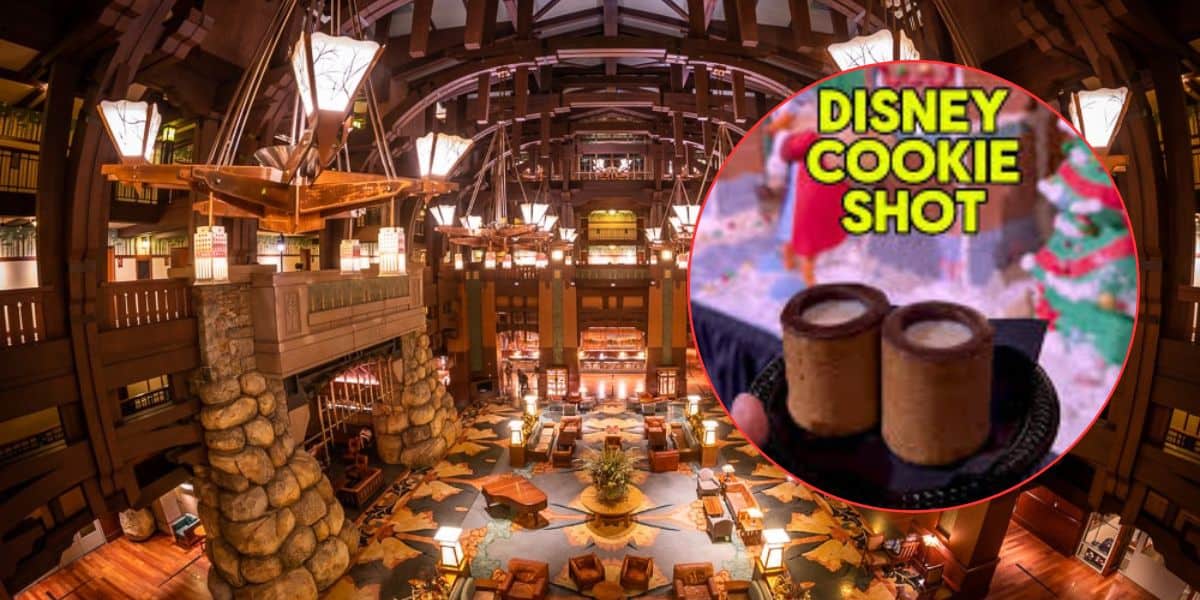
The Grand Californian Hotel at Disneyland Resort operates a temporary snack cart in its grand lobby during various celebrations throughout the year. This cart makes appearances during Lunar New Year festivities, Halloween Time, and the extended winter holiday season, offering themed treats that align with each celebration's aesthetic and traditions.
During the current holiday period, the cart has drawn crowds with its selection of festive items, particularly the Mickey-shaped gingerbread cookies that have become something of a seasonal tradition. These cookies deliver exactly what guests expect: quality baked goods with the iconic silhouette that makes them instantly recognizable as Disney merchandise worthy of social media documentation.
However, the cart's most conversation-generating item isn't a cookie at all. It's a beverage that costs more than many guests spend on an entire day at the parks.
Cookie Shot Pricing Spans Wide Range
The Grand Californian has built a reputation over multiple holiday seasons for its cookie shots, an innovative dessert concept that merges baked goods with beverage service. The shots themselves are miniature glasses shaped from chocolate chip cookie dough and baked until structurally sound. A coating of chocolate on the interior creates a temporary waterproof seal, allowing the edible vessel to hold liquid for the brief period needed to consume it.
Three distinct price points make the cookie shots accessible to different guest segments. The entry-level version pairs the chocolate-lined cookie glass with cold milk for $10.75, creating a family-friendly treat that appeals to children and adults alike. This version works as a novelty dessert, combining the fun of eating the container with the nostalgic pleasure of cookies and milk.
Stepping up to the adult category, guests can opt for cookie shots filled with liqueurs such as Baileys Irish Cream or RumChata for $19. This transforms the concept into an actual cocktail experience, blending dessert and alcohol into a single indulgent bite. At $19, the price aligns with specialty cocktails available throughout the resort, making it a splurge rather than a luxury.
The third tier exists in a completely different economic universe. For $250, guests can fill their edible shot glass with Louis XIII cognac from Rémy Martin, one of the world's most prestigious and expensive spirits.
Understanding Louis XIII's Premium Status
Louis XIII occupies the absolute pinnacle of the cognac world, a spirit created through processes that span multiple generations. Each bottle contains a blend of up to 1,200 individual eaux-de-vie, some aged for a century before being deemed ready for inclusion. The resulting liquid represents decades of expertise, patience, and quality control that few spirits can match.
A standard 750ml bottle carries a retail price between $3,000 and $4,000, placing it far beyond casual consumption for the vast majority of consumers. The ornate crystal decanter that houses each bottle adds to both the cost and the sense of occasion surrounding Louis XIII. This is cognac meant for landmark celebrations and once-in-a-lifetime experiences, not everyday drinking.
Disneyland has featured Louis XIII at select locations for years, primarily at restaurants catering to guests seeking fine dining experiences. The Grand Californian's Napa Rose, currently closed for renovation, has historically maintained an extensive spirits collection including Louis XIII. Just steps from the lobby cart, the hotel's Hearthstone Lounge currently offers two Louis XIII options: Rémy Martin Louis XIII Grande Champagne Cognac for $260 and Rémy Martin Louis XIII Cognac for $690.
Traditionally, Louis XIII is served in glassware specifically designed to concentrate and showcase its complex aromatic profile. Snifters and tulip glasses allow the cognac's bouquet to develop, which connoisseurs consider integral to the tasting experience. The cookie shot presentation, while creative and aligned with Disney's playful brand identity, represents a significant departure from conventional Louis XIII service.
Comparative Value Within the Resort
At $250, the cookie shot actually represents the most economical way to taste Louis XIII at Disneyland Resort. The Hearthstone Lounge's $260 pour costs $10 more for what is presumably a similar serving size, while the $690 option positions itself as an ultra-premium experience for serious cognac enthusiasts.
Whether saving $10 matters to someone contemplating a $250 drink remains an open question. The purchase decision at this price point likely has less to do with finding the best deal and more to do with the novelty of combining a world-class spirit with an edible serving vessel during the holiday season at Disney.
The cookie shot offers something the Hearthstone Lounge cannot: a distinctly whimsical Disney experience. Drinking Louis XIII from a chocolate-lined cookie in the Grand Californian lobby during the holidays creates a story and memory that differs substantially from ordering the same spirit at a bar. For guests valuing unique experiences over traditional luxury presentation, the cookie shot may justify its premium price despite the unconventional serving method.
Price Evolution Reflects Broader Trends
When the Louis XIII cookie shot first attracted media attention in 2022, Disney charged $185 for the experience. The current $250 price represents a 35% increase over approximately two years, a rate of growth that substantially exceeds general inflation during the same period.
This pricing trajectory fits patterns seen throughout the luxury goods sector, where premium products often experience steeper price increases than mainstream alternatives. For items already positioned at the top of their category, price increases serve multiple purposes beyond covering rising costs. They reinforce exclusivity, signal quality, and ensure that the product remains accessible only to those willing and able to pay for extraordinary experiences.
The question of value becomes highly subjective at this price level. Louis XIII enthusiasts might view $250 as reasonable for a pour of exceptional cognac in a unique setting. Disney fans operating on tight budgets might see the same item as emblematic of how disconnected certain resort offerings have become from typical guest financial realities.
Holiday Season Timeline
Disneyland has not announced a specific end date for the holiday snack cart's operation, but seasonal decorations and offerings typically remain available through the official conclusion of the holiday celebration. This year's holiday season extends through January 7, suggesting guests have until at least that date to experience the Louis XIII cookie shot.
The temporary nature of the offering adds an element of urgency for interested guests. Unlike permanent menu items available year-round, seasonal specialties require specific timing or risk being missed entirely. This scarcity potentially enhances appeal for some consumers who view the experience as a limited opportunity rather than an always-available option.
Serving Multiple Markets Simultaneously
The Grand Californian's holiday cart illustrates Disney's approach to serving dramatically different customer segments within the same physical space. A family can purchase milk-filled cookie shots for their children at $10.75 each while standing next to guests ordering the $250 Louis XIII version. Both transactions happen at the same counter, served by the same cast members, during the same operating hours.
This pricing spectrum reflects Disney's broader strategy of maintaining something for everyone while also creating premium tiers for guests seeking exclusivity. The approach allows the company to capture spending from budget-conscious families while also maximizing revenue from affluent visitors willing to pay extraordinary prices for unique experiences. Whether this represents smart business diversification or uncomfortable economic stratification depends largely on individual perspective.