
For more than seventy years, the true beating heart of the Disney theme park empire hasn't been soaring roller coasters, digital projections, or fairy-tale castles. It has always been the human Cast Members. From the parking attendant greeting stressed families at sunrise to the backstage technician sanitizing attraction gear late into the night, genuine human interaction and unseen personal labor have long been the source of Disney’s most unassailable competitive advantage.

Now, a quiet technological revolution unfolding behind the scenes is challenging that long-standing foundation.
At the 2026 Disney Accelerator Demo Day in Burbank, Walt Disney Imagineering and Disney Experiences Technology unveiled advanced robotics partnerships that extend far beyond traditional scripted animatronics. The company showcased autonomous, character-styled mobile units navigating active parking garages, alongside dexterous robotic arms engineered to clean, untangle, and sort 3D glasses backstage.
While corporate leadership insists these machines are intended merely to relieve employees of repetitive, physically draining tasks, the timing has ignited deep unease across the workforce. Coming alongside mounting reports that Disney is preparing another round of massive cost reductions targeting thousands of jobs, workers and industry watchers are asking an uncomfortable question: is Disney actively building the automated infrastructure meant to replace frontline human labor?
Directing Traffic: AI ‘Cars' in Disneyland's Parking Garages
The most conspicuous front of Disney’s automation trials is taking place right where visitors begin their day: the parking lot.
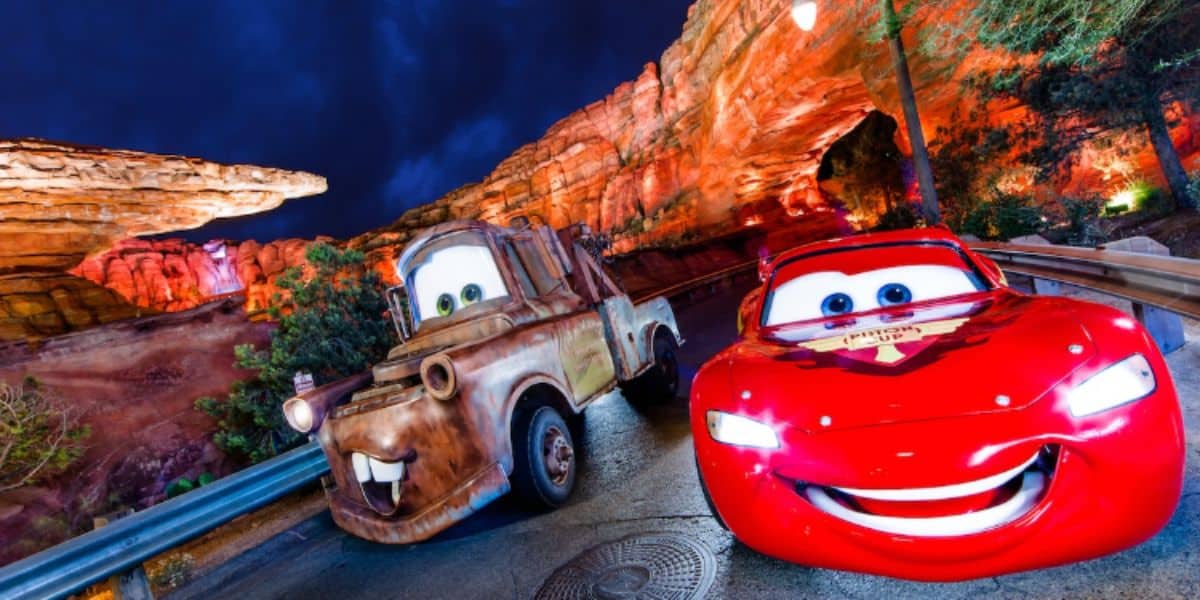
Disney revealed it has been working closely with FieldAI, an Irvine-based robotics company specializing in foundation autonomy. During the demo event, Imagineering shared footage of a mobile robot styled in the cheerful aesthetic of Pixar’s Cars and Wall-E, equipped with an overhead digital display and illuminated, traffic-control-style arms.
Rather than rolling along pre-mapped rails inside a sterile lab, the robot was deployed in dynamic, unpredictable real-world settings—specifically, Disneyland’s multi-tier parking garages, such as the Mickey & Friends and Pixar Pals structures. Using integrated computer-vision suites, the robot processes live visual data in real time, identifying approaching cars, maneuvering around pedestrians, and pointing vehicles toward empty stalls.
Gary Daniels, Senior Vice President of Products and Experiences at Disney Experiences Technology & Digital, pitched the initiative as an exciting fusion of storytelling and practical logistics:
“Imagine if a character from Cars or robots from Wall-E direct you where to park when you arrive. The work we are doing now is a great way to see how the robots function and, as important, how people respond.”
Yet for the hundreds of human parking attendants who spend eight-hour shifts on concrete managing morning arrival rushes, the experiment carries a far more sober implication. Parking management is a crucial entry-level, union-backed operational role. If autonomous wheeled units can safely choreograph traffic in heat, cold, and rain without taking meal breaks, claiming overtime, or requiring healthcare benefits, the economic incentive to automate entire parking operations becomes hard for corporate bean counters to resist.
The Backstage Grind: Robotic Arms Take on 3D Eyewear
While FieldAI navigates the asphalt in plain view of guests, a parallel initiative targets the unglamorous, heavy-volume labor hidden deep backstage.

Disney confirmed a partnership with Physical Intelligence, a robotics company developing general-purpose artificial intelligence models to teach mechanical limbs human-like dexterity. The focus of the trial at Disneyland: automating the handling, untangling, and racking of 3D glasses.
At popular attractions like Toy Story Midway Mania!, Star Tours: The Adventures Continue, and Millennium Falcon: Smugglers Run, tens of thousands of guests cycle through 3D eyewear each day. The manual process behind maintaining that inventory is relentless:
- Cast Members haul bins brimming with thousands of jumbled, smeared glasses from attraction exit ramps.
- Workers manually pull apart tangled plastic frames, inspect lenses for scratches, and align them neatly into wash trays.
- The trays are pushed through industrial high-temperature sanitizing tunnels, dried, and restacked for redistribution.

Victor Hwang of Physical Intelligence noted that sorting jumbled glasses is a deceptively tricky dexterity challenge for machines. By training multi-jointed arms using visual-tactile models and physical demonstration data, the robots learn how to grip, separate, and rack delicate frames without jamming.
Disney maintains that automating this chore will free workers to deliver “magical moments” out in the parks. But backstage staging and custodial roles represent steady, predictable hours for thousands of support employees. If robotic arms take over processing thousands of glasses per hour across multiple lands, dozens of daily operational shifts can be eliminated across resort schedules.
The Layoff Shadow: A 20% Cost-Cutting Mandate
These robotics demonstrations cannot be viewed in isolation. They are emerging against the backdrop of one of the most anxious labor environments in recent Disney history.
Throughout 2026, The Walt Disney Company has executed rolling rounds of workforce eliminations, cutting positions across marketing, corporate administration, Pixar, ESPN, human resources, and Walt Disney Imagineering. Tensions escalated sharply following reports from outlets including Bloomberg and Reuters revealing that Disney executives have asked division managers to identify up to 20% in annualized cost savings through expense reductions and job cuts.
The cost-reduction mandate arrives as Disney navigates shifting consumer habits, increased streaming competition, box-office pressures, and plateauing attendance at domestic and international parks. Internal corporate memos emphasizing the need to adopt artificial intelligence and automate operational workflows have deepened workers' suspicions that the company is seeking structural measures to reduce its headcount permanently.

When frontline workers see functional robots directing cars and sorting park supplies during the same period headlines report that thousands more corporate and operational positions are on the line, assurances of “workforce augmentation” ring hollow.
Machines vs. Magic: The Risk to Disney’s Core Identity
Disney stresses that these robotic systems remain experimental and that park-wide deployment decisions have not been finalized. Yet substituting algorithmic machinery for human hospitality introduces profound risks for a premium entertainment brand.

- The Loss of Human Hospitality: An autonomous cart cannot comfort a lost child, accommodate a guest with cognitive disabilities, or offer a heartfelt dinner recommendation. Genuine, empathetic human interaction is precisely what separates a Disney vacation from an ordinary amusement park visit.
- Safety and Technical Bottlenecks: Garages and ride exits are chaotic, high-density environments. If an autonomous parking robot freezes, misinterprets a pedestrian’s stride, or causes an accident, vehicle access in Anaheim could face immediate gridlock.
- Fierce Union Resistance: Disneyland’s service workers are represented by powerful coalitions, including the Master Services Council and Workers United. Union leaders closely monitor automation clauses in collective bargaining agreements, and any corporate move to supplant existing classifications with machine labor will spark heated battles at the negotiating table.
A Defining Crossroad for Anaheim
With the City of Anaheim's approval of DisneylandForward, which sets the stage for massive resort expansion over the coming decades, Disney’s operational footprint is poised to grow dramatically. The corporate urge to contain ballooning labor expenses while managing that scale makes automated solutions remarkably tempting.

The prototypes demonstrated by FieldAI and Physical Intelligence make one reality undeniable: automation is no longer confined to movie magic or ride animatronics—it has arrived on the work floor. Whether these robots remain quiet backstage helpers or herald a sweeping wave of machine-driven layoffs will determine the future of Disney’s workforce for generations to come.