
There was a time when the skies over Central Florida's theme parks were crowded with advertising. Small planes towed banners, blimps drifted by, and skywriters left messages above the crowds. For businesses hoping to reach millions of tourists, the air above the parks was prime real estate.

That era ended for Disney's parks in 2003. Ever since, Walt Disney World in Florida and Disneyland in California have been surrounded by federal flight restrictions that generally keep unauthorized aircraft out of a three-nautical-mile circle around the parks, from the surface up to 3,000 feet.
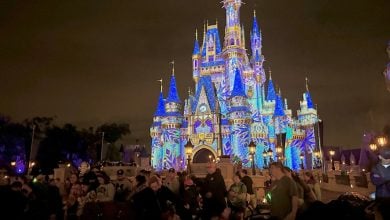
For more than 20 years, that's simply been how things work. Most guests never give it a second thought. They just enjoy fireworks, castles, and skylines without any aerial distractions.
That's why a quiet change to a government website is suddenly getting so much attention.
A Blank Spot on the FAA's Website

The Federal Aviation Administration maintains a public list of active temporary flight restrictions across the United States. The Walt Disney World restriction had long been part of that list, with an end date marked as permanent, alongside a matching entry for Disneyland.
When BlogMickey checked the list on November 10, both were missing.
What that actually means is still murky. The same report says pilots near Walt Disney World are still being told the restriction is in effect, which suggests nothing may have changed in the air. Without a public listing or any word from the FAA, there's no way to tell yet whether the restrictions were intentionally removed or if the list itself has a problem.
Neither Disney nor the FAA has said anything publicly about it that we've seen.
No-Fly Zone 101
If you've never looked into it, the Disney restrictions are more specific than many people realize.
The protected area covers a three-nautical-mile radius, from the ground up to 3,000 feet above ground level. It's treated as national defense airspace, which means pilots who violate it without permission can face serious consequences.
There are exceptions. Air ambulances, law enforcement, and Department of Defense aircraft can enter, as can certain flights cleared by air traffic control for operational or safety reasons. Commercial airliners can also pass over Disney property at higher altitudes.
What makes the arrangement stand out is how rare it is. Walt Disney World and Disneyland are the only U.S. theme parks with permanent flight protections like these. Other major parks don't have the same restrictions overhead.
Born in a Spending Bill

An Orlando Sentinel investigation that year reported that a Disney lobbyist pushed for the language. According to the newspaper, Disney's goals included keeping aerial banner ads and low-flying pilots away from the parks. Disney said at the time that its sole motivation was the safety and enjoyment of its guests.
The FAA has signaled its own doubts since then. Michael Huerta, who was FAA administrator at the time, told Congress in 2013 that he would eliminate the Disney no-fly zones if not for the law that required them, saying they didn't meet the agency's normal standards.
Capitol Hill Takes Aim
The no-fly zones moved from aviation circles into national politics in 2022.
That May, Republican Rep. Troy Nehls of Texas pushed to reverse the restrictions over the Disney parks. His move followed Disney's public opposition to Florida's Parental Rights in Education law, a measure its opponents called the “Don't Say Gay” law.
In May 2023, Nehls reintroduced the effort as the Airlines Independent of Restrictions Act, or AIR Act. Among the co-sponsors were Rep. Lauren Boebert of Colorado and Rep. Marjorie Taylor Greene of Georgia.
Nehls argued the issue was about treating theme parks equally. “Theme parks like Disney should not receive special treatment just because they are well-connected,” he said.
The bill landed in a House aviation subcommittee and went no further. Neither the 2022 nor the 2023 version became law, which is part of why this week's FAA list change is so puzzling.
Watching the Horizon
For now, there are more questions than answers. Was this intentional? Is it a mistake on the FAA's end? And if the restrictions really are gone, could banner planes eventually return to the skies over Orlando and Anaheim?
Until the FAA weighs in, we'll be keeping a close eye on this one and will share any updates as soon as we have them.
So, what's your take? Do you love the uninterrupted skies over the parks, or do you think Disney shouldn't have its own special airspace? Share your thoughts in the comments below, and keep it respectful. We know this one can spark strong opinions on all sides, and we want to hear them.