For generations, Walt Disney World has represented something rare in modern travel: a place where expectations are high, memories are fragile, and every detail feels carefully orchestrated. Guests arrive believing the magic will unfold exactly as promised — attractions will sparkle, parades will march on schedule, and the parks will remain timeless, untouched by the outside world.
Yet behind the scenes, the resort has always been more than castles and fireworks. It is also one of Central Florida’s largest employers, a sprawling corporate neighbor, and a powerful influence on the region’s future. And when Disney announces a major change that reaches beyond its gates, emotions tend to rise quickly.
Over the past several years, one such plan has quietly hovered in the background — rarely discussed by casual visitors, but closely watched by Cast Members, local residents, and housing advocates alike. It has sparked public hearings, heated community meetings, regulatory delays, and more than a little online debate. For many, it became a symbol of something larger: the tension between growth, affordability, and Disney’s responsibility to the community it has called home for more than half a century.
Now, after years of uncertainty, something important has finally shifted.

A Quiet Project That Carried Enormous Weight
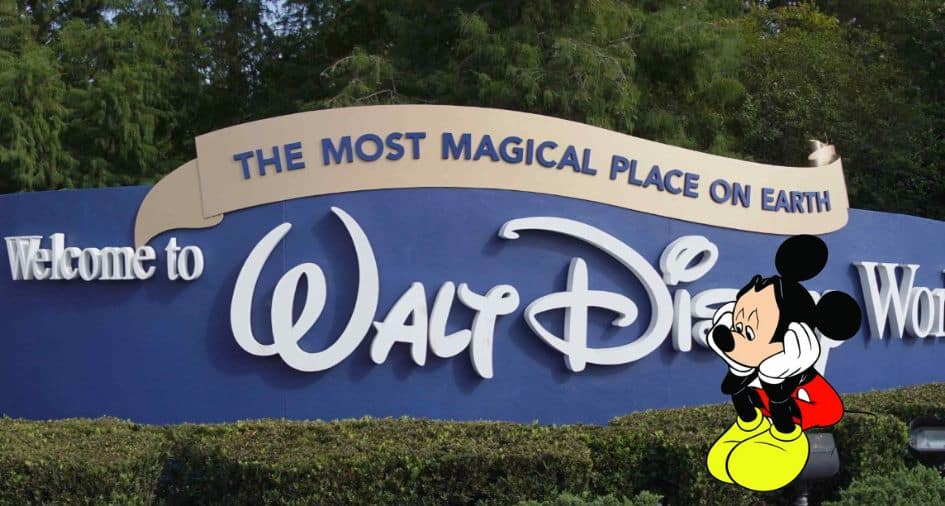
When Walt Disney World first revealed its intentions in April 2022, the announcement sounded almost deceptively simple: Disney would donate land north of Flamingo Crossings to help create an affordable housing community for Central Florida families.
At the time, the move was widely framed as a goodwill gesture — a rare example of the Walt Disney Company stepping directly into one of the region’s most urgent crises. Housing prices were surging. Rents were climbing. Cast Members and service workers were increasingly commuting long distances just to remain employed near the parks.
But from the beginning, the project was never destined to be simple.
Rezoning requests followed. Community engagement sessions grew tense. Nearby residents expressed fears about traffic, density, and changing neighborhood character. Even after new concept art and income eligibility details were released in early 2024, opposition remained strong. By the time the project reached Orange County’s Planning and Zoning Commission, it passed by the narrowest of margins.
And when the Board of County Commissioners took up the issue weeks later, the atmosphere in downtown Orlando was anything but calm.
Opposition, Delays, and a Growing Cloud of Uncertainty
Those who attended the March 2024 commission meeting still recall the intensity. Residents lined up to speak. Commissioners requested postponements. Emotions ran high as Disney’s future role in the community was debated in public view.
When the project ultimately passed 4–2, many assumed construction would soon follow. By October 2024, Disney had secured its final zoning approval from the state and county. Groundbreaking was tentatively set for late that year, then quietly shifted into 2025.
But as months passed, nothing happened.
By mid-2025, Inside the Magic noted that despite zoning clearance, construction had not yet been authorized. By fall, it was becoming increasingly clear that the long-promised project would miss yet another target date. Online, skepticism grew. Some questioned whether the plan would ever materialize at all.
On X (formerly Twitter) and Reddit, the conversation split into two camps. Housing advocates urged patience, calling the delays proof of how difficult affordable development had become in Central Florida. Critics, meanwhile, accused Disney of overpromising and underdelivering — or worse, quietly retreating from the project altogether.
For months, the site remained untouched. The official webpage still referenced a 2025 groundbreaking that now felt increasingly unrealistic.

A Final Regulatory Wall Finally Falls
And then, in January 2026, a long-awaited breakthrough quietly arrived.
The State of Florida’s water management district officially approved the project, clearing what insiders described as one of the final major regulatory hurdles. With that green light secured, Disney and its development partners are now legally cleared to begin construction on the long-stalled affordable housing community.
It may not look dramatic — no ribbon cutting, no press conference, no heavy machinery yet on site — but for those tracking the project closely, this moment represents a turning point years in the making.
The plans call for a 1,369-unit mixed-income community built in five phases. More than 1,000 of those units will be designated as affordable housing. Buildings will rise up to five stories tall, with a mix of one- through four-bedroom apartments designed to serve families of varying sizes.
Roughly 607 units will be one-bedroom residences, while the remaining 762 will accommodate larger households. The majority of affordable units will be reserved for families earning around 80% of the Area Median Income — a range that could stretch from approximately $49,000 to nearly $90,000 per year, depending on household size.
Only a small percentage will be allocated to families in the lowest income brackets, a detail that continues to draw scrutiny from housing advocates.

What This Really Means for Cast Members and Central Florida
Despite frequent assumptions, Disney itself will not directly profit from the development. The company’s role has focused on land donation and design support. The apartments will be open to any qualifying residents — including, but not limited to, Cast Members.
Even with approvals now in place, the timeline remains slow by theme park standards. If construction begins later this year, the first residents are unlikely to move in before 2027 or 2028. A full buildout is expected to take roughly five years.
Still, for many Central Florida families, even that distant timeline offers something rare: cautious optimism.
On social media, reactions have already begun to shift. Some Cast Members have expressed relief, calling the approval “long overdue.” Others remain wary, noting that regulatory clearance does not guarantee swift progress. A few critics continue to argue that the income thresholds leave out the workers who need help the most.
Yet there is little doubt about one thing — Disney has now crossed a point of no return.
A Turning Point That Could Redefine Disney’s Role Beyond the Parks
For decades, Walt Disney World has shaped Central Florida through tourism, infrastructure, and employment. This project, however, signals something different: an attempt to influence the region’s future well beyond vacation planning and attraction announcements.
Whether it ultimately succeeds may depend less on architectural renderings and more on execution — on whether the project truly delivers meaningful relief in a housing market that continues to strain under growth.
For travelers, the change may go largely unnoticed. For Cast Members and nearby residents, it could reshape daily life for generations.
And for Disney itself, the stakes are unmistakable.
As this long-delayed project finally moves forward, one question now hangs in the air: Is this the beginning of a new chapter in how Disney engages with its community — or simply the closing of one of the company’s most controversial local battles?