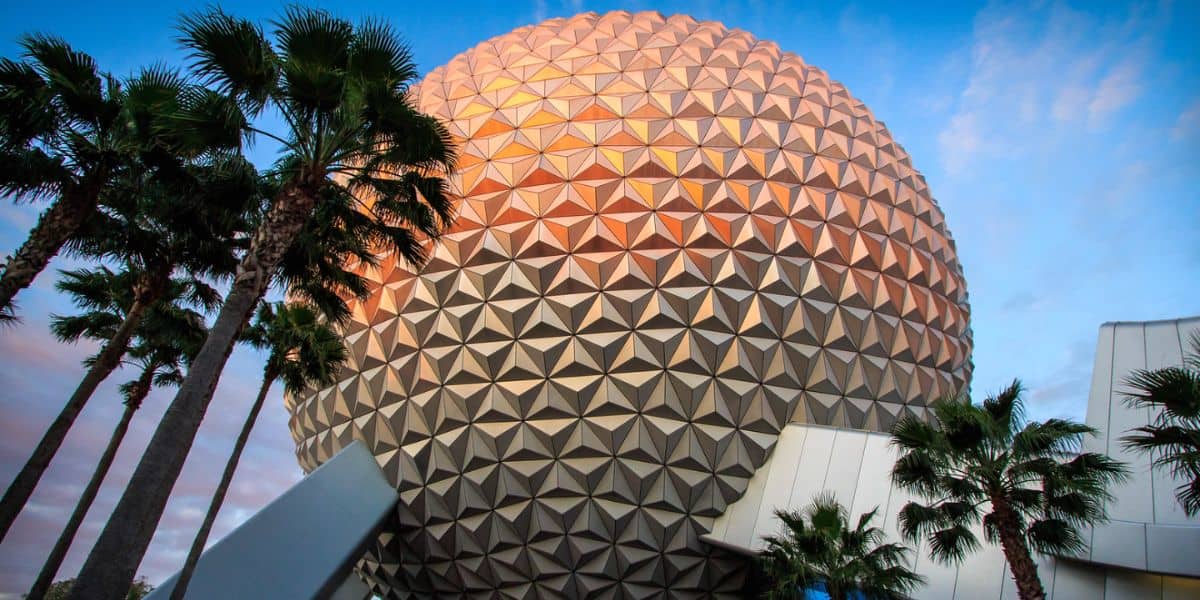
Disney World has spent more than four decades introducing visitors to cultures from around the world, but EPCOT's international lineup could have looked very different.
When Disney first developed World Showcase, the company had ambitious plans to expand beyond the countries guests know today.
Several additional nations were considered for permanent pavilions, complete with themed architecture, cultural experiences, and attractions.
However, international politics complicated some of those plans.
Government upheaval, diplomatic tensions, and economic uncertainty became part of the history surrounding three proposed additions that never opened.
And while Disney eventually expanded World Showcase, these particular countries never received permanent homes at EPCOT.
Disney World Originally Planned a Much Larger World Showcase
EPCOT officially opened on October 1, 1982, with nine national pavilions surrounding World Showcase Lagoon.
However, Disney viewed those destinations as the beginning of something much bigger.
The company wanted to introduce additional countries, giving guests opportunities to experience different traditions, restaurants, entertainment, and architectural styles.
Unlike many traditional theme park developments, World Showcase expansions often depended on agreements with foreign governments and financial support from international sponsors.
That meant Disney couldn't always move forward simply because Imagineers developed an exciting concept.
Political disagreements, government changes, and financial problems could interfere with negotiations before construction even started.
Three proposed countries eventually became associated with those challenges, although each followed a different path.
A Disney Expansion Collides With a Historic Collapse
One of Disney's more ambitious international proposals involved Russia.
During the late 1980s and early 1990s, Disney explored constructing a Russian pavilion near today's African Outpost.
The proposed destination featured architecture inspired by Moscow's famous St. Basil's Cathedral, including its recognizable onion-shaped domes.
Attraction concepts reportedly included an indoor experience based on Russian folklore and a sled journey through Russian environments.
However, the project developed during an especially uncertain period.
In December 1991, the Soviet Union dissolved, dramatically changing the political and economic landscape.
Disney continued exploring the Russian pavilion into 1992, so the collapse didn't immediately cancel its plans.
Nevertheless, the pavilion never reached the construction stage.
Although the precise reasons remain unclear, the instability surrounding the Soviet Union's dissolution became part of the project's history.
Another Country Faces an Unexpected Turning Point
Disney's plans for Iran encountered a different international crisis.
Before the Iranian Revolution in 1979, Disney considered an Iran pavilion that would introduce EPCOT visitors to Persian history, architecture, and culture.
Preliminary concepts reportedly featured a traditional Persian bazaar with shops and a dark ride exploring Persian civilization.
However, the project never advanced into a completed development.
The Iranian Revolution transformed the country's government, while relations between Iran and the United States deteriorated.
Those changes created complications for international partnerships.
Historical accounts have connected the abandoned pavilion to the revolution, although limited documentation makes it difficult to establish exactly when Disney stopped pursuing the proposal.
Ultimately, Iran never joined World Showcase.
Political Opposition Complicates Another Proposal
Israel was another country Disney considered during EPCOT's early development.
The proposed pavilion would have celebrated Israeli history and architecture, reportedly featuring a Jerusalem-inspired courtyard, a menorah, and historical exhibits.
The project reportedly progressed far enough for Israel to enter a participation agreement in 1980.
However, that agreement didn't guarantee the pavilion would open.
Political opposition, possible boycotts, and security concerns reportedly created complications, although the precise reasons Disney abandoned the permanent development remain uncertain.
Disney eventually moved forward without constructing the pavilion.
Israel did participate in EPCOT's temporary Millennium Village celebration in 1999, but that experience was separate from the original proposal.
The country never received a permanent World Showcase pavilion.
Disney World's International Lineup Remains Unchanged
Today, EPCOT features 11 permanent national pavilions: Mexico, Norway, China, Germany, Italy, the United States, Japan, Morocco, France, the United Kingdom, and Canada.
Morocco joined World Showcase in 1984, followed by Norway in 1988.
Since then, Disney has continued improving existing destinations without adding another permanent country.
That means nearly four decades have passed since World Showcase last expanded its national lineup.
Russia, Iran, and Israel remain examples of how Disney's international ambitions sometimes encountered circumstances beyond its control.
The company never announced one cancellation covering all three proposals, and their individual development histories differed.
Nevertheless, each represented an opportunity to expand EPCOT's celebration of world cultures.
For longtime Disney fans, these abandoned projects offer a fascinating reminder of just how different World Showcase might have become.