
For decades, walking into the western side of Walt Disney World’s Magic Kingdom meant stepping into a perfectly cohesive illusion. Frontierland was a love letter to the “Old West,” defined by its dusty trails, pioneer spirit, and the slow, romantic churn of riverboats. However, with the Rivers of America and Tom Sawyer Island having been closed for more than a year, that illusion is rapidly transforming. The highly anticipated arrival of Piston Peak National Park—a massive Cars-themed miniland—brings thrilling new attractions, but it also forces fans to ask a difficult question: Is the unified, traditional concept of Frontierland officially gone?
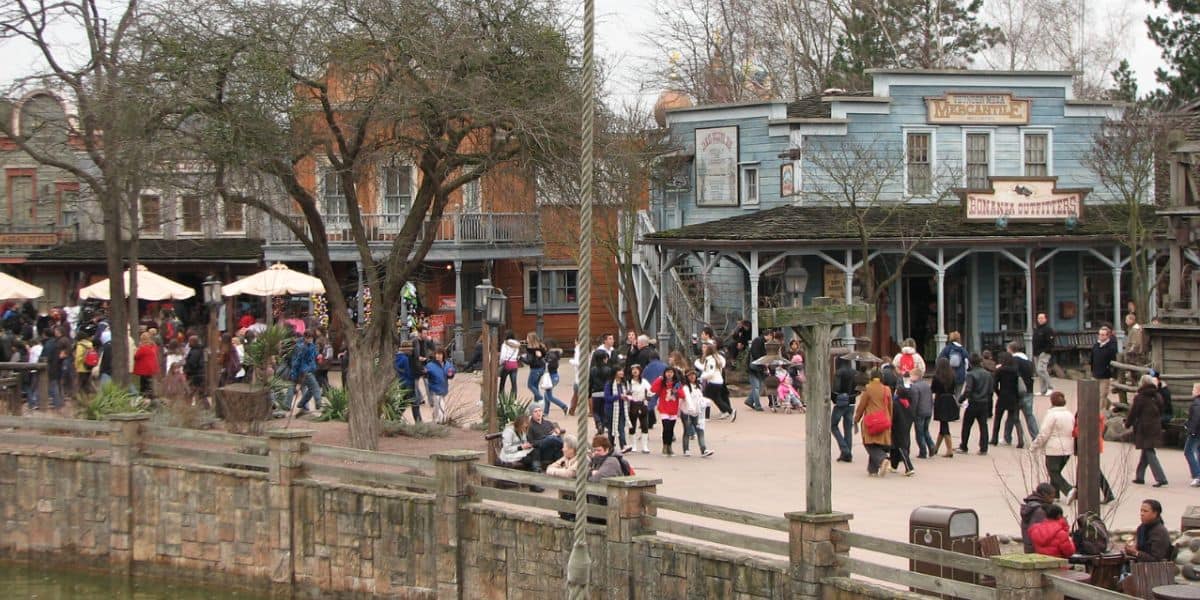
The reality is that the classic Old West has permanently ridden off into the sunset. What was once a seamless journey through a specific era of American history has evolved into a geographic and temporal mishmash, fundamentally altering how guests experience this side of the park.
A Colliding Map of North America
If you take a stroll through Magic Kingdom’s western pathways today, you are no longer experiencing a single, unified narrative. Instead, you are traversing an incredibly diverse, timeline-hopping map of North America.
Within a short walking distance, guests find themselves wandering through a vibrant 1920s New Orleans setting, thanks to Tiana’s Bayou Adventure, which has now been open for over two years. Just a stone's throw away sits the spooky, gothic charm of the Haunted Mansion estate. Next door to that is the brickwork and 18th-century revolutionary spirit of Colonial America in Liberty Square. Looming in the distance are the arid, red-rock mesas of Arizona, represented by Big Thunder Mountain Railroad. Wedged in between these distinct regions is whatever remains of the original American West.
Now, Disney is dropping Piston Peak National Park into the middle of this complex tapestry. Inspired by the Cars cinematic universe and drawing heavily from the breathtaking landscapes of America's National Parks, Piston Peak introduces cartoon-stylized, anthropomorphic vehicles into a space shared by colonial patriots and a 1920s bayou.
The Imagineering Challenge: Being a “Good Neighbor”
Finding thematic cohesion between a haunted estate, a colonial village, and a Pixar-themed national park is a monumental design challenge. Walt Disney Imagineering is acutely aware of the aesthetic jump they are asking guests to make.
Walt Disney World Executive Creative Director Jason Grandt addressed this exact conundrum when discussing the careful placement of the new expansion. Acknowledging the delicate balance required, Grandt noted:
“If we’re going to build in the middle of this What is a place that can touch the visual look of all of these places…? That same Frontierland story is still there…Liberty Square is still there, but we want to make sure we can be a good neighbor to these places as we start to design and invent this new environment.”
In theme park design, being a “good neighbor” relies on clever sightlines and curated soundscapes. To prevent cartoon cars from intruding on the solemn history of Liberty Square, the facing mountain range of Piston Peak is designed as a soft, lush, natural mound. Imagineers are installing cascading waterfalls down its side to provide natural white noise, deliberately placed to block sightlines and muffle the sounds of revving engines from reaching guests near the former Liberty Square Riverboat entrance.
What to Expect Inside Piston Peak
While the borders are handled with meticulous care, the interior of Piston Peak National Park boldly departs from the old pioneers. Massive models reveal an intricate environment that trades the muddy banks of the historic rivers for rushing mountain waterways.
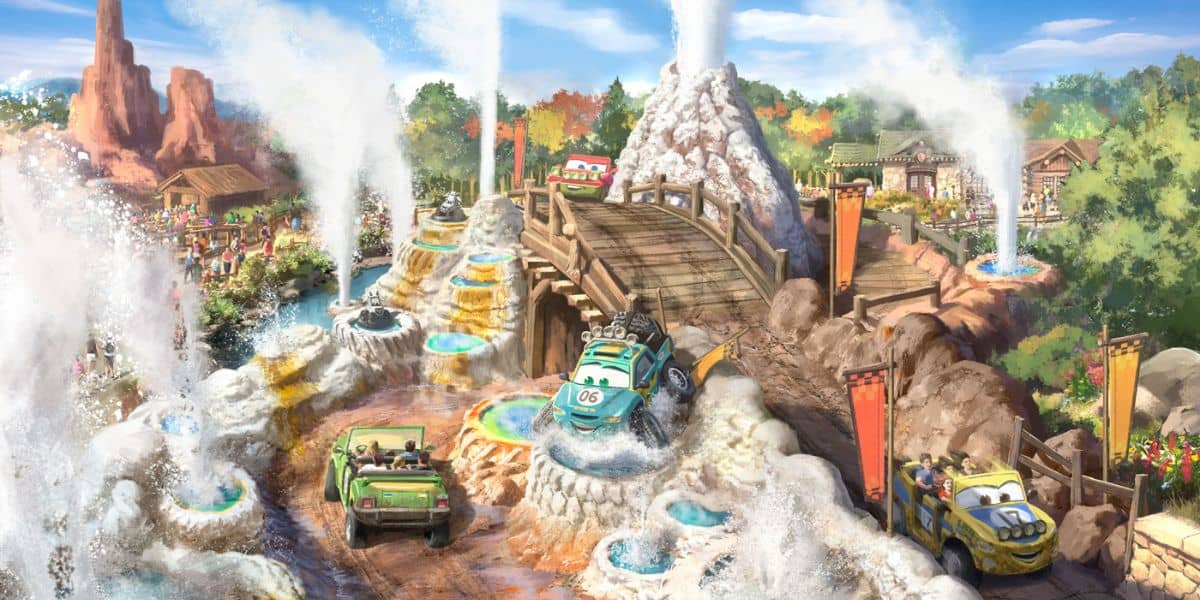
The attention to detail is staggering. The land features unique geological formations, including expanded geyser areas that visually tie into the nearby Big Thunder Mountain. Guests will discover rainbow-colored thermal pools with subtle tire-tread patterns woven into the rockwork, culminating in the land’s centerpiece geyser, affectionately dubbed “Old Tankful.” With whimsical touches like Ranger J. Autobahn Woodlore, the area blends the majestic beauty of America's National Parks with playful Pixar architecture.
The Future of Magic Kingdom's West Side
Despite the thrilling prospect of a new blockbuster attraction, long-time fans are left grappling with the loss of thematic purity. The intellectual justification is that Piston Peak represents the chronological progression of the American story—the pioneers of Big Thunder Mountain eventually gave way to the early 20th-century conservation movement and the great American road trip.
Yet the physical reality is that the Magic Kingdom is changing to meet modern audiences who crave high-octane thrills and recognizable intellectual properties rather than quiet, atmospheric spaces. Piston Peak is poised to be an architectural marvel, but it also stands as a permanent monument to the end of the cohesive Old West.
Do you feel the addition of modern, thrill-based IP is worth the sacrifice of the historically cohesive atmosphere of the original park lands?