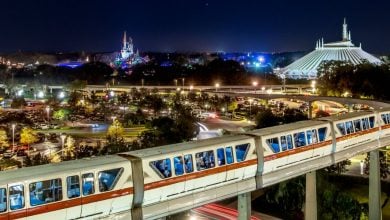
For decades, the “Fifth Gate” has been the white whale of Disney World enthusiasts. Whenever the competition gets too close, or the crowds get too thick, the cry goes out: Disney needs a fifth park. With the opening of Universal’s Epic Universe, that demand has reached a fever pitch.

But while fans scan satellite imagery for signs of clearing land, a darker story has emerged from the courtrooms of Tallahassee—a story suggesting that the political war with Governor Ron DeSantis didn’t just create headlines; it likely killed the very possibility of a fifth gate before it could ever leave the drawing board.
The “Untold Story” of Corporate Paralysis
A massive investigative report by Florida Politics, based on nearly 700 pages of unsealed court documents, reveals that the multi-year feud between the Governor and the House of Mouse created a climate of “extreme uncertainty.” To build a fifth theme park, a company needs more than imagination—it needs a 30-year roadmap for infrastructure, debt financing, and regulatory stability. When DeSantis moved to dissolve the Reedy Creek Improvement District, he essentially set that roadmap ablaze.

In unsealed depositions, high-ranking Disney executives, including Chief Counsel John McGowan and Master Planning expert Todd Rimmer, paint a picture of a company in a defensive crouch. Rimmer admitted under oath that the “uncertainty of what a new board might choose to do” made it impossible for Disney to proceed with major developments in a timely fashion. For Disney, a fifth gate isn't just a collection of rides; it’s a decades-long commitment to the state. The feud turned that commitment into a liability.
The Caper: Defense Over Offense
The documents detail a legal “caper” that would make a spy novelist blush. Disney secretly hired Holtzman Vogel, a powerhouse law firm with deep ties to the DeSantis administration, to craft the “King Charles Clause” agreements. The goal was simple: lock in development rights for the next 30 years—including the theoretical right to build a fifth park—before the Governor’s hand-picked board could take over.

However, this strategy was entirely defensive. While Universal was pouring billions into the concrete and steel of a brand-new theme park, Disney’s brain trust was preoccupied with hiding its legal maneuvers from a hostile state government. The “Fifth Gate” remained a ghost because Disney’s leadership was forced to prioritize survival over expansion. The political risk of announcing a new park while the Governor was threatening to build a state prison next door was simply too high for any board of directors to approve.
The $17 Billion Peace Treaty and the “Lost Years.”
In mid-2024, the two sides settled. Disney agreed to spend $17 billion over the next 20 years in exchange for the return of development stability. While this agreement explicitly permits a fifth theme park, the damage of the “Lost Years” (2022–2024) is significant. The momentum required to counter Epic Universe with a massive new gate was traded for the legal security of the existing four parks.

The “untold story” is that a single memo didn't necessarily cancel the fifth park—a thousand legal filings smothered it. For a company that thrives on “magic,” the reality revealed in these depositions is surprisingly clinical. When the cost of political retribution outweighs the potential profit of expansion, the expansion stops. The Fifth Gate may one day rise, but if it does, it will be a project born from the ashes of a corporate war that nearly erased Disney’s future in Florida.