
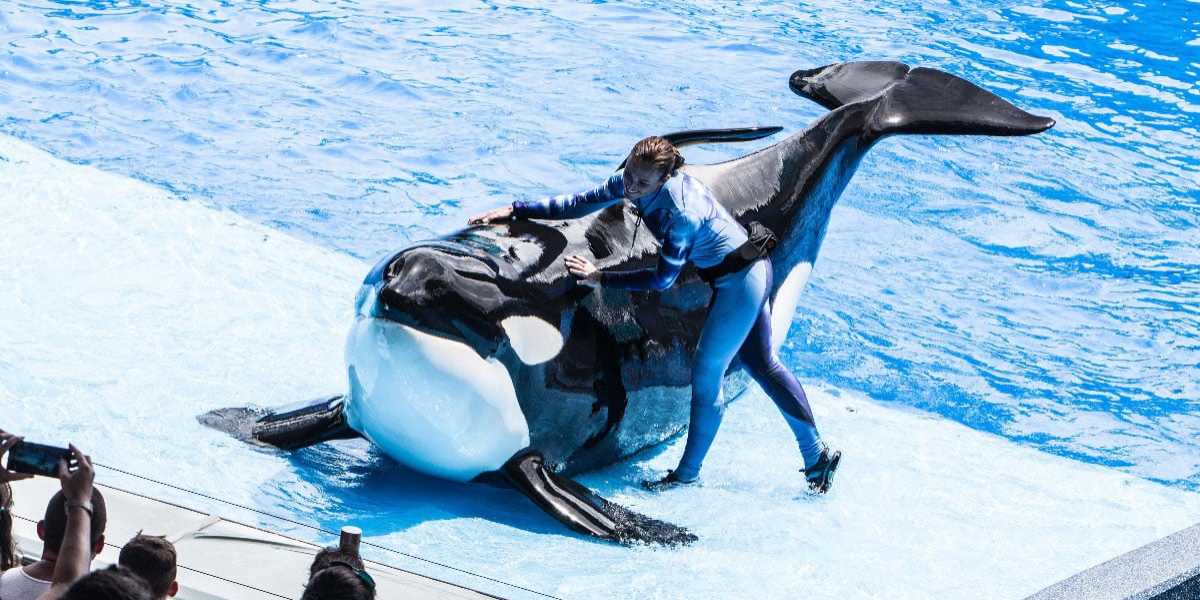
More than five decades after opening its gates in Central Florida, SeaWorld Orlando is marking a moment of reflection following the death of Katina, one of the park’s longest-residing killer whales. SeaWorld confirmed that Katina passed away at age 50 after a period of declining health, during which animal care and veterinary teams provided ongoing support.
“Over the last several weeks, our animal care and medical teams have worked around the clock to closely monitor her declining health,” SeaWorld shared on social media. As her condition worsened, the focus shifted to ensuring her comfort. She passed away surrounded by team members who had cared for her for nearly four decades.

SeaWorld also shared memories of Katina’s presence at the park, noting that she was recognized for a playful personality. According to the statement, Katina was often seen sticking her tongue out and enjoyed fast swims that created what the team described as a cyclone of water. “For many wonderful years, Katina awed and inspired millions of our guests to appreciate and learn more about this amazing species,” the post concluded, adding that the park appreciated the support of guests and fans as they grieve.
Katina’s story is closely tied to SeaWorld Orlando’s larger evolution. When the park opened on December 15, 1973, it entered a growing tourism market in Central Florida. With Walt Disney World still early in its development, SeaWorld helped establish Orlando as a destination with multiple major attractions. The park stood apart by focusing on marine animals, educational messaging, and large-scale shows.
That foundation expanded significantly after Anheuser-Busch acquired SeaWorld in 1989. Under new ownership, SeaWorld Orlando introduced a slate of attractions designed to appeal to a wider audience. Coasters and water rides such as Kraken, Journey to Atlantis, Manta, and later Mako brought a stronger thrill element to the park. Immersive environments, including Expedition Odyssey, Turtle Trek, and Antarctica Realm, have added layered storytelling and environmental themes over the years.
The 2010s marked another turning point. Following the release of Blackfish in 2013, SeaWorld faced increased public attention around its animal care practices. In response, the park ended its traditional theatrical orca shows, discontinued its orca breeding program, and redesigned presentations to focus on conservation and observed natural behaviors.

“In 2016, SeaWorld announced that we were ending our killer whale breeding program and that the orcas in our care are the last generation at our park,” SeaWorld explains on its website. “Our goal is to inspire and educate guests to take action by seeing these magnificent animals up-close to better understand why protecting wildlife and our environment is so critical today.”
Now operating under United Parks & Resorts, SeaWorld Orlando continues to redefine its identity. New additions, including Sesame Street Land, sit alongside long-standing exhibits as the park works to meet changing guest expectations while maintaining its marine life mission. Katina’s passing serves as a reminder of the animals and experiences that have shaped SeaWorld Orlando across generations.