

Walt Disney World’s governing district spent much of 2023 trying to put distance between itself and the company whose property it oversees. Employee theme park passes became one of the clearest symbols of that effort—and one of the benefits district leaders attacked most aggressively.
Now, that benefit is returning in a revised form.
The Central Florida Tourism Oversight District (CFTOD) has reinstated Disney theme park passes for eligible employees, according to exclusive reporting from BlogMickey.com. District spokesperson Chad Colby confirmed the decision to the outlet, saying CFTOD acted after “carefully considering employee input.”
The practical effect is straightforward: District employees will again have a path into Disney theme parks through their workplace. The larger significance is harder to miss. CFTOD is restoring a category of benefit its former leadership once condemned as an unethical arrangement designed to send public money back to Disney.

Disney World District Reverses Its 2023 Pass Decision
CFTOD eliminated the previous admission program after Florida replaced the former Reedy Creek Improvement District’s Disney-linked board with supervisors appointed by Gov. Ron DeSantis.
In an August 2023 referral to Florida’s inspector general, the newly installed district leadership called the program a “scheme to funnel millions of taxpayer dollars to Disney.” According to CFTOD, Reedy Creek spent more than $2.5 million on passes and related benefits in 2022.
The dispute was not merely about employees visiting Magic Kingdom after work. Former benefits reportedly included admission for employees and eligible guests, merchandise and dining discounts, cruise discounts, holiday tickets, and access to certain shopping opportunities normally reserved for Disney cast members.
Inside the Magic reported at the time on both Disney’s $2.5 million bill to the district and the district’s subsequent consideration of alternative employee compensation.
A December 2023 district-commissioned report went further, characterizing the former passes and discounts as benefits “akin to bribes.” The report argued that the arrangement blurred the separation between Disney and the government responsible for overseeing its property.
Florida officials repeated those objections in a February 2024 statement from DeSantis’ office, describing the old system as one in which district money flowed back to Disney.
That history makes the reinstatement more consequential than a routine update to an employee handbook.

The New Disney Pass Reportedly Has Different Rules
The new benefit does not appear to restore every feature of the former Reedy Creek program.
According to BlogMickey’s reporting, employees may opt into a pass providing admission to Walt Disney World and other participating Disney parks, along with a merchandise discount resembling one available to Disney Annual Passholders.
Colby told the outlet that the replacement is “similar to passes offered to others that operate within the District.” He also said the revised agreement corrects problems CFTOD identified in the earlier arrangement, including the tax treatment of the benefit.
Those distinctions matter. Reinstating a more limited, properly documented and taxable employee benefit is not necessarily equivalent to reviving the entire package criticized in 2023. Without the new agreement, however, the full differences cannot yet be measured.
CFTOD has not publicly disclosed the program’s total cost, the number of participating employees, its precise admission restrictions or when employees will receive access. It is also unclear what “participating” parks outside Florida are included.
For Disney World visitors, this does not change Annual Pass prices, park reservations or public admission rules. Its immediate effect falls on CFTOD employees. The news matters to guests more indirectly because the district controls infrastructure, planning and public services across Walt Disney World property.
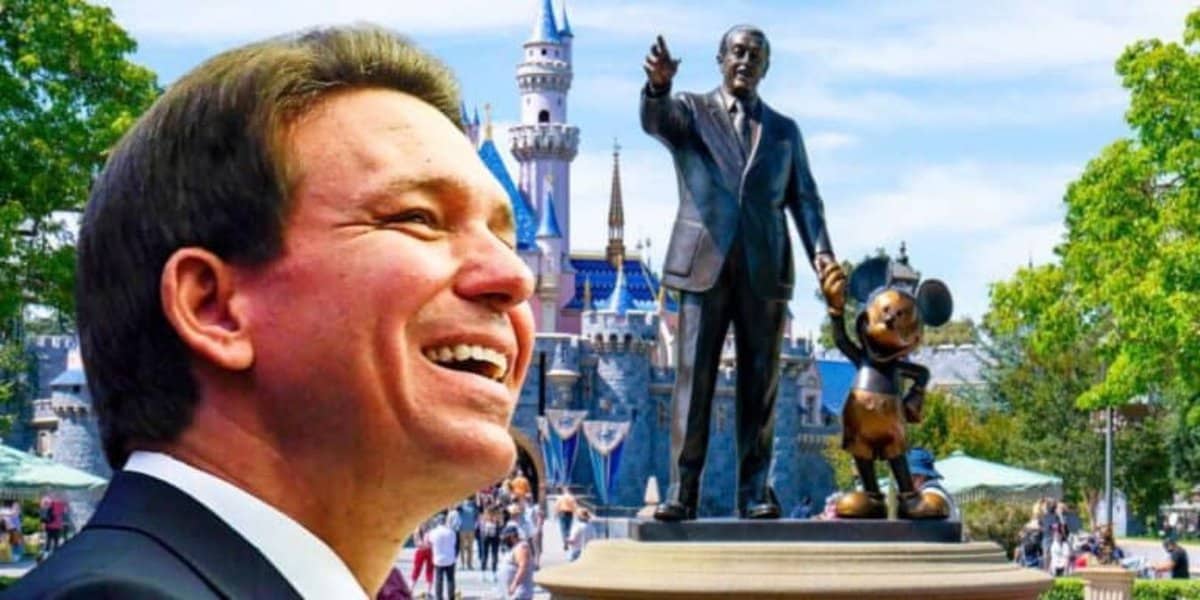
Employee Passes Reflect a Wider Disney–District Reset
The reversal follows a broader thaw that began when Disney and CFTOD settled their state-court dispute in March 2024. That settlement replaced open legal combat with what Disney described as constructive engagement.
The parties later adopted a 15-year development agreement covering Walt Disney World’s expansion. The framework permits substantial resort development but does not, by itself, confirm that every project contemplated within its limits will be built.
More recently, CFTOD has routinely advanced infrastructure work connected to Disney development, part of a less adversarial approach documented by Inside the Magic.
The pass decision therefore fits an established pattern: CFTOD remains a separate government body led by gubernatorial appointees, but its posture toward Disney no longer resembles the combative first year of the takeover.
Restoring the passes does not erase the arguments made in 2023. It does make them newly relevant. A benefit once presented as evidence of institutional capture is now considered acceptable under revised terms by the district that condemned it.
The unanswered question is no longer whether employees can return to Disney’s parks. It is how much CFTOD changed the arrangement—and whether its eventual public documentation can reconcile the new policy with its old accusations.