SeaWorld's long-running partnership with Sesame Workshop is now under legal threat.
The nonprofit organization behind Sesame Street has filed a lawsuit accusing SeaWorld’s parent company, United Parks & Resorts, of violating a licensing agreement and withholding royalties. The dispute could affect Sesame Street attractions operating across several SeaWorld parks.

The lawsuit arrives during a period of transformation for the company.
SeaWorld began as a marine park in San Diego in 1964, built around animal shows, aquariums, and educational exhibits. For decades, its orca performances defined the brand. That model came under intense scrutiny after the 2013 documentary Blackfish, which sparked global criticism of captive killer whale programs.
The backlash forced SeaWorld to increasingly step away from killer whales.
The company ended its orca breeding program in 2016 and began focusing more heavily on roller coasters and traditional theme park attractions. Many of its parks now combine marine life exhibits with thrill rides and family experiences.

Partnerships with established children’s brands have also played a role in that shift.
SeaWorld has worked with Sesame Workshop for more than four decades. The collaboration expanded in recent years through Sesame Street–themed lands inside several parks.
Sesame Workshop Files Lawsuit Against SeaWorld
Sesame Workshop officially sued SeaWorld on Thursday, accusing the theme park group of withholding royalties and undermining the Sesame Street brand.
SeaWorld and Sesame Workshop have worked together for over 40 years.
That partnership expanded in recent years with the launch of Sesame Street–themed lands at SeaWorld Orlando, SeaWorld San Diego, and SeaWorld San Antonio. These areas feature family rides, parades, play zones, and character meet-and-greets built around Elmo, Big Bird, and other characters.
SeaWorld also operates standalone Sesame Street theme parks.
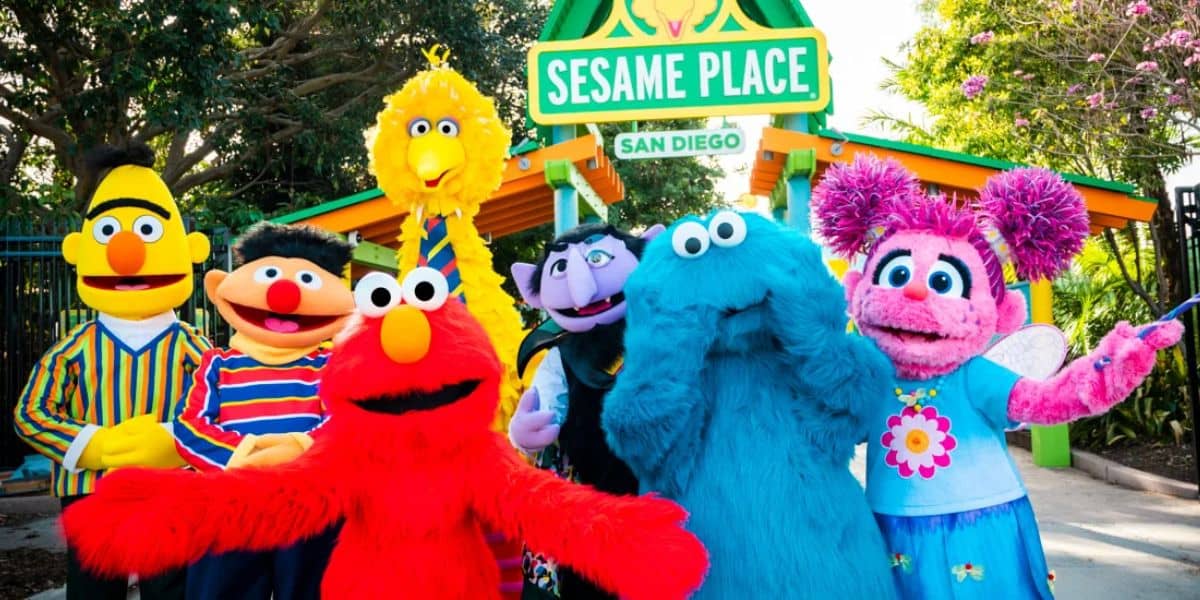
Sesame Place Philadelphia opened in 1980 and remains one of the brand’s most established attractions. Sesame Place San Diego opened in 2022 as the first Sesame Street theme park on the West Coast.
However, Sesame Workshop claims SeaWorld has not followed the terms of its licensing agreement.
The complaint alleges the company ignored elements of a 2017 agreement for several years. One example cited in the lawsuit is SeaWorld’s decision to shift Sesame Place San Diego to seasonal operations.
According to the filing, the situation escalated in September 2025 when SeaWorld stopped paying royalties.
The complaint also states that SeaWorld made the “preposterous” accusation that Sesame Workshop had failed to invest in its own brand.

It further alleges that “SeaWorld’s rogue, retaliatory actions pose an imminent threat” to Sesame Workshop.
The filing adds that the dispute is regularly “disappointing children and families” who want to visit the closed California park.
A spokesperson for Sesame Workshop said the organization had no choice but to pursue legal action.
“United Parks & Resorts has repeatedly failed to honor its contractual obligations, leaving Sesame Workshop no choice but to pursue litigation to protect our brand and the trust that families place in it,” the spokesperson said.
United Parks & Resorts has disputed those claims.
According to Reuters, a company spokesperson said it plans to “[set] the record straight in court.”

If the partnership collapses, SeaWorld could lose the rights to use Sesame Street across several parks.
That could force the company to retheme or remove Sesame Street rides, character meet-and-greets, and themed lands currently operating at SeaWorld locations.
Previous Disputes and Fan Concerns
This is not the first legal conflict between the two organizations.
In September 2024, a federal judge in Orlando upheld an arbitration ruling ordering SeaWorld to pay Sesame Workshop more than $11 million, including interest, for breaching their licensing agreement.
According to Sesame Workshop, SeaWorld did not make that payment until October 2025.
SeaWorld has also faced several other lawsuits in recent years.
The company has been involved in a dispute with the City of San Diego over unpaid rent.
Another complaint accused United Parks & Resorts of tricking guests into paying more for theme park tickets.
A separate lawsuit alleged that SeaWorld Orlando used a “deceptive and unlawful tactic” involving a 5% surcharge. SeaWorld Orlando was also sued in 2025 by a guest who claimed to have been disfigured by a bird while riding one of its roller coasters.
Fans have reacted with concern about the latest lawsuit.
“Sesame Street went from having a substantial amount of representation in the theme park world to having none in, what, two days?” wrote one Reddit user. “That’s insane.”
Others said they were worried about the future of Sesame Place Philadelphia.
“Joking aside I am admittedly worried for the original Sesame Place in PA if the agreement lapses,” one commenter wrote.
“It is a very small area for a theme park and is entirely dependent on being Sesame Street themed, it is a successful small cash cow because of that but without the IP I do not know if they would want to operate it as a local water/mini theme park, especially a company at this scale.”
Some fans believe the lawsuit could signal larger problems for the company.
“This is the first time I am now thinking it might be over for United Parks,” one commenter wrote.
What do you think of SeaWorld's latest legal drama?