

The Acolyte may have ended after one season, but new companion books and creative commentary reveal just how much groundwork the Disney+ series laid for future Star Wars storytelling–including deeper Sith lore and possible ties to the sequel trilogy.

Positioned decades before the Skywalker era, The Acolyte broke new live-action ground by stepping into the High Republic timeline. Under creator Leslye Headland, the show examined the Jedi Order at peak power while tracking hidden dark side activity building in the shadows. Its storytelling favored ethical complexity and philosophical clashes over simple hero-versus-villain structure.
That creative direction turned the series into one of the hottest debated Star Wars entries in years. Episode-by-episode reactions mirrored the divisive discourse once seen around Star Wars: Episode VIII—The Last Jedi (2017), with fans dissecting lore shifts and character choices in real time.

Although critics highlighted the cast and the show’s ambitious themes, Lucasfilm opted not to move forward with a second season. Industry reporting cited viewership softness as the core reason behind the decision.
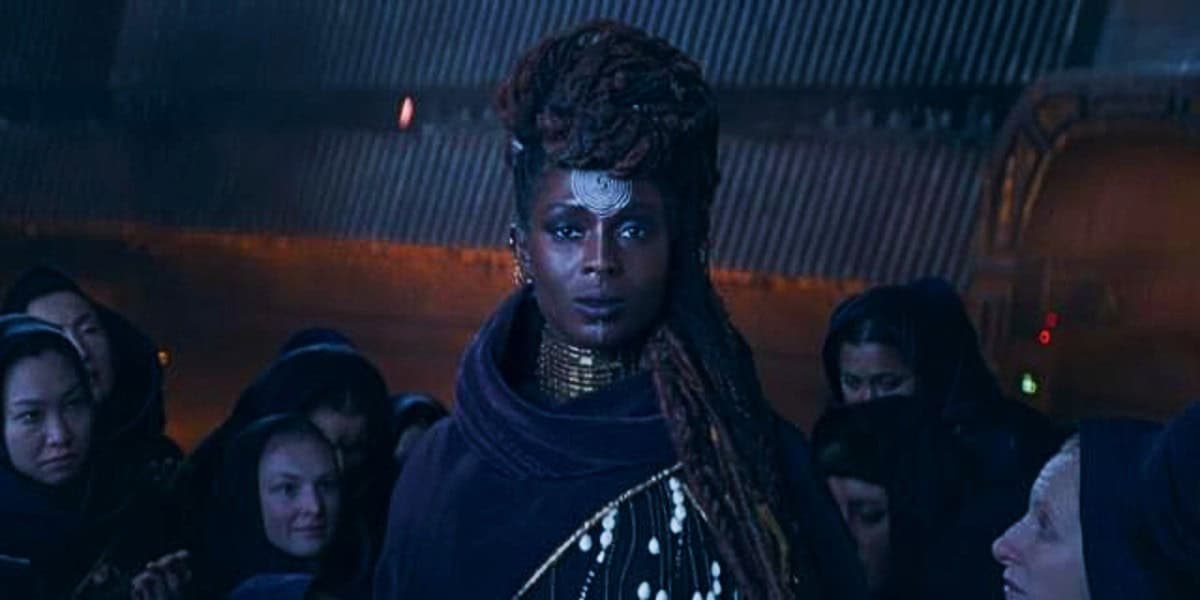
Others pushed back on that explanation, pointing to persistent online attacks directed at the show’s messaging and its cast–including Amandla Stenberg (Osha/Mae Aniseya), Lee Jung-jae (Jedi Master Sol), Manny Jacinto (Qimir/The Stranger), and Jodie Turner-Smith (Mother Aniseya).
The series stood apart within the franchise as a female-led story guided by a queer showrunner and driven by a broadly diverse ensemble. Admirers saw that as a meaningful evolution of perspective within Star Wars, while critics in some corners dismissed it as “woke” and agenda-driven.

Disney Entertainment co-chairman Alan Bergman later indicated that the show’s high production cost complicated renewal prospects. Yet third-party demand trackers reported that The Acolyte surpassed Obi-Wan Kenobi, The Book of Boba Fett, and Ahsoka in certain audience-interest metrics, suggesting the financial equation–not just reception–shaped the outcome.
What comes next for the story is now being pieced together through official print material. The reference book “Star Wars: The Acolyte Visual Guide” adds substantial detail about Qimir and the hidden Sith threads teased in the finale.
The season’s closing chapter included a fleeting reveal of Darth Plagueis on Qimir’s violent, oceanic homeworld. The guide describes that planet as containing “an intelligent reptilian species that lives far from the islands.”
Researchers and outlets such as The Holo Files (via The Direct) connect those traits to Bal’demnic from Star Wars Legends–the same location where Darth Plagueis once defeated Darth Tenebrous. The world’s known cortosis veins, a metal that can resist lightsabers, also match the properties implied by Qimir’s gear.
The guide also states Qimir “spent some time gunrunning in Hutt Space,” linking him directly to criminal networks under Hutt Clan control, including Jabba the Hutt. The added context shifts him from mysterious wanderer to seasoned underworld player.

His timeline remains a puzzle. Qimir’s age is recorded as “unknown,” and notes about his chemical knowledge reference “a rare nori-inkal from Boothi IV” and “an oily serum that revitalizes aged skin and eliminates wrinkles,” pointing to possible life-extension methods.
Even his Sith legitimacy is questioned in canon text. He is labeled “a pretender to [Sith] lineage… Whether he is the true heir to the Sith is a mystery no one will survive to solve.” His mask is described as entirely “cosmetic,” reinforcing that he relies on Force awareness in combat rather than physical vision.

The upcoming volume “The Art of Star Wars: The Acolyte (Season One)” (2026) pushes the implications further by outlining how Qimir’s conception may connect directly to sequel-era mythology.
“It was in the design of the character, as well as knowing that we were going to introduce Darth Plagueis, who has to end up with Palpatine as his apprentice,” Leslye Headland said in the book.
“Following the Rule of Two–a precept that limited the Sith to just two at any given time, a master and an apprentice–one way to keep it going is if the Stranger is the first Knight of Ren, part of a Sith-adjacent cult that we know eventually survives.”

Concept art commentary supports that possibility. As artist Nick Tyrel explains in Baver's book (via The Holo Files): “The slight frill at the back of the helmet–a design element that dates back to the franchise’s samurai influence and notably first seen in Vader’s design–hints at a link between the Stranger and the Star Wars sequel trilogy’s masked antagonist Kylo Ren, an idea storytellers took from the design,”
Headland also addressed the deliberate ambiguity around the character’s name and title, suggesting future plans aimed to clarify that link.
“And since we never name him,” Headland explains, “you don’t know: Does he have a first name, and then his last name is Ren? Is he the original Ren? It’s a good way to nod to it without having to give away too much information.”

The Knights of Ren occupy a strange corner of Star Wars canon. Mentioned in Star Wars: Episode VII—The Force Awakens (2015) and later appearing in Star Wars: Episode IX—The Rise of Skywalker (2019), they follow a destructive dark side creed separate from Sith tradition. The name “Ren” represents a philosophy centered on ruin and domination. Their original leader, Ren, carried a red blade built from a broken hilt and commanded the group before Ben Solo seized control.
Following the destruction of Luke Skywalker’s Jedi Temple, Ben Solo became Kylo Ren and led the Knights during the First Order’s rise. They ultimately fall on Exegol after turning against him when he returns to being Ben Solo. The comic run “Star Wars: The Rise of Kylo Ren” (2019–2020) by Charles Soule and Will Sliney expands their backstory and reinforces how dark side movements adapt across generations.

Though The Acolyte sparked divided reactions, it earned loyalty for its character focus, ethical tension, and expansion of Sith-era history–especially with the live-action arrival of Darth Plagueis. With no Season 2 moving forward, many of its long-term plans now live only in supplementary material.
Lucasfilm’s current live-action slate is lean. Ahsoka Season 2 is the only confirmed series in active production, targeting 2026, with Dave Filoni shaping it so it can serve as a concluding chapter if necessary. On the theatrical side, The Mandalorian and Grogu will mark Star Wars’ return to cinemas, followed by Shawn Levy’s Star Wars: Starfighter in May 2027. Simon Kinberg is also developing a new trilogy, while the Rey-centered “New Jedi Order” film remains delayed.
The Acolyte may be finished on screen, but its lore contributions continue to influence how Star Wars history–and its future–are being mapped.
Would you have liked to see the story continue in season 2? Let us know in the comments down below!