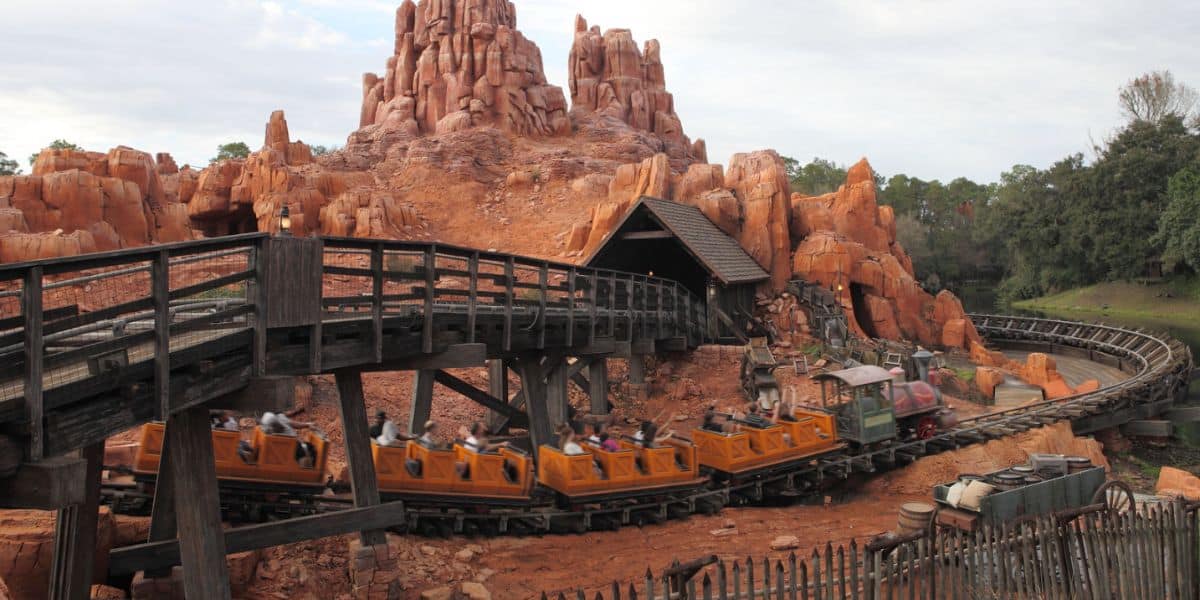
For nearly half a century, the phrase “the wildest ride in the wilderness” has been synonymous with the rattling, bone-shaking thrills of Big Thunder Mountain Railroad. It is the crown jewel of Frontierland, a masterpiece of themed design that is accessible to families while providing enough “whip” to satisfy seasoned coaster enthusiasts.

However, as the Magic Kingdom prepares to pull back the construction walls on its extensive 2026 refurbishment, a wave of anxiety has swept through the Disney fan community. The cause? A series of viral videos captured by guests from across the Rivers of America shows the iconic runaway mine trains navigating the track during their final testing phase.
The internet’s verdict was swift and worried: the ride looks slow.
Comment sections have been flooded with fears that Disney has “neutered” the attraction, perhaps installing extra braking systems or slowing the lift hills to reduce maintenance costs on the brand-new track. But before we mourn the loss of our favorite runaway train, it’s time to look at the cold, hard physics of Imagineering. As we count down to the official reopening on May 3, 2026, here is why those “slow” testing videos are actually a sign that everything is going exactly according to plan.
Physics 101: The Power of Mass and Momentum
The most important thing to remember when watching a testing video is that you are looking at an empty train. In the world of physics, the momentum of an object is determined by its mass and its velocity. The formula for momentum is:
p = mv
A Big Thunder Mountain train consists of six-10 cars. When that train is fully loaded with 30 to 40 excited guests, it is carrying an additional 4,500 to 6,000 pounds. Gravity is the only engine a coaster has once it leaves the lift hill. A train with an extra three tons of human mass has significantly more potential energy and momentum. This allows it to “plow” through friction—including wind resistance and the friction of the wheels against the steel—much more effectively than an empty train.
An empty train is light, making it far more susceptible to “drag.” Imagine the difference between rolling an empty soda can down a hill versus rolling a soda can full of lead weights. The weighted can will maintain its speed through curves far better than the empty one. What guests are seeing in the testing footage is a “featherweight” train navigating a course designed for a “heavyweight” load.
The “Stiffness” of New Steel
Another factor contributing to the perceived sluggishness is the “break-in” period. The 2026 refurbishment was no simple paint job; it involved a total track replacement for key high-stress sections of the ride.

The brand-new track is essentially “stiff.” The steel hasn't been worn smooth by thousands of cycles, and the grease on the bearings hasn't reached its optimal operating temperature. Imagineering lore often mentions that coasters run “slow” in the morning when the grease is cold and pick up significant speed by the afternoon.
During this testing phase, the trains are running on “cold” bearings and “virgin” steel. Once the ride opens on May 3 and begins running 16 hours a day with full passenger loads, friction will decrease, and the “wildness” will return.
The Smoothness Illusion
There is also a psychological component to how we perceive speed. Much of the “thrill” of the original Big Thunder Mountain came from the vibration. The old track was notorious for its “jerkiness,” which gave guests the sensation of speed through tactile feedback. When your body is being tossed around, your brain interprets that as high velocity.
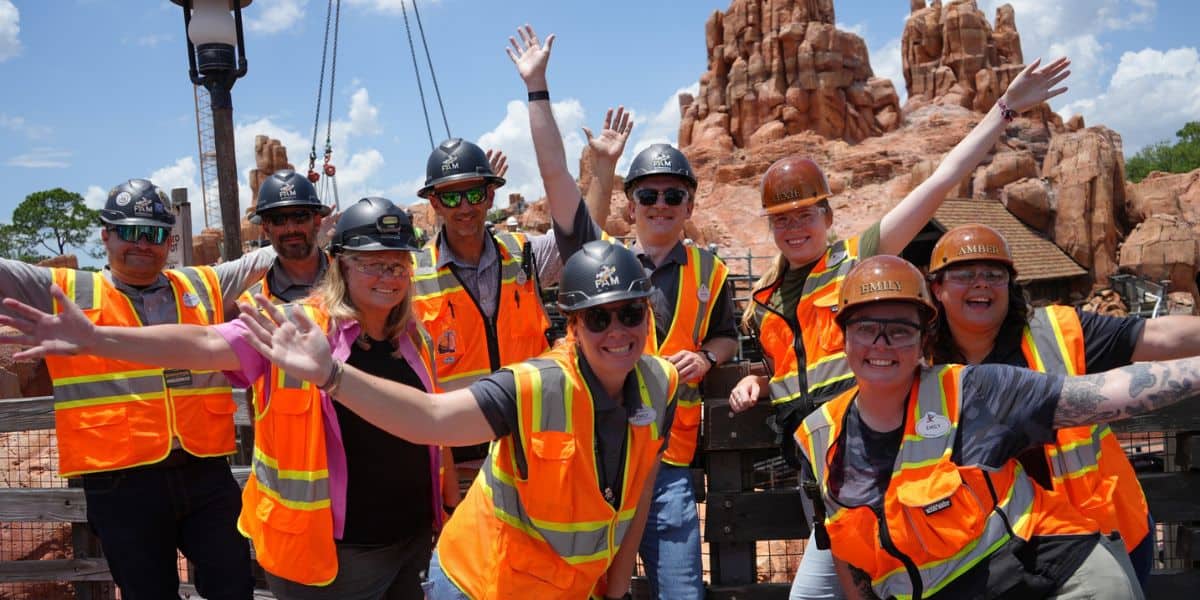
The 2026 refurbishment utilized advanced laser-guided track alignment to ensure a smoother ride. By removing the “rattle,” Disney has ironically made the ride feel slower to the casual observer. It’s a similar phenomenon to driving 70 MPH in an old Jeep versus 70 MPH in a modern luxury sedan; the Jeep feels like it’s flying, while the sedan feels like it’s cruising.
The Verdict: Wait for May 3
In the final weeks leading up to the May 3 reopening, Disney will begin the next phase of testing: Water Dummies. These are large, human-sized plastic containers filled with water to simulate the weight of a full train.

If you happen to be standing in Frontierland when the “weighted” testing begins, you will see a completely different ride. The train will whip through those helices with the familiar snap and roar that fans have loved since 1979.
Until then, take the viral videos with a grain of salt. Disney hasn't “neutered” the wilderness; they’ve simply given it a brand-new set of bones that are still waiting for some meat.
Are you planning to be at the Magic Kingdom for the grand reopening on May 3? Do you prefer the “rattle” of the old track or the smoothness of the new? Let us know in the comments below!