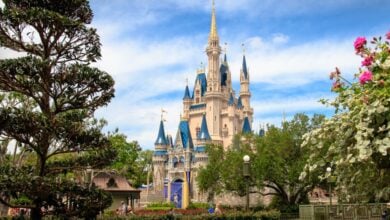
The palm-lined streets of the Walt Disney World Resort have long served as a sanctuary for families from every corner of the globe. From the United Kingdom to Brazil, the allure of the Most Magical Place on Earth has historically transcended borders, making Central Florida one of the most visited destinations in the world.

However, as 2025 comes to a close, a new set of logistical and financial hurdles is beginning to cast a long shadow over the vacation kingdom. The Trump Administration has recently moved forward with two sweeping policy changes slated to impact international travel to the United States in 2026, creating what many industry experts describe as a chilling effect on an already struggling tourism sector.
International visitation to the United States has already shown signs of significant strain this year, with overall numbers down approximately three percent compared to 2024. While a single-digit decline might appear manageable in isolation, the downward trend has accelerated as the year has progressed.
Current projections from the United States Travel Association suggest that the industry is on track to lose between $12 billion and $19 billion this year alone. This downturn strikes at the heart of the Central Florida economy, where international guests are not just a demographic statistic but a vital pillar of the region’s financial health.
The first of the two major policy shifts comes via a provision in the One Big Beautiful Bill, a massive legislative package signed into law this past summer. Among its hundreds of pages is a new requirement for a $250 non-refundable visa integrity fee. This fee must be paid by all international visitors who are not entering the country on a non-immigrant visa.

For a typical family of four traveling from a non-visa-waiver country, such as Brazil or Mexico, this represents an immediate $1,000 increase in the cost of their vacation before they have even purchased a flight or a park ticket. In a market where Disney is already facing criticism for the rising costs of Genie+ replacements and record-high hotel rates, this federal surcharge acts as a significant deterrent for middle-class families abroad.
The financial burden is only one half of the equation. The second policy, recently proposed by the administration, targets the traveler's very privacy. Under this new rule, individuals visiting the United States for less than 90 days would be required to provide a comprehensive list of all social media handles and sites they have utilized over the past five years.

Notably, this requirement would also extend to tourists from visa-waiver nations, such as the United Kingdom, Germany, France, and Japan. These countries represent Disney World’s most consistent international audience, and the prospect of such invasive vetting is already causing a stir among travel agencies in London and Tokyo.
The timing of these measures is particularly precarious for Orlando. While international tourists account for roughly 10 percent of the 75 million people who visit the city annually, they are responsible for a disproportionate share of the revenue. International guests typically stay longer than domestic visitors, often booking two-week stays at Disney-owned resorts and spending heavily at the Disney Springs dining and shopping district. Without this steady stream of long-term visitors, the economic math for Disney’s massive 2026 expansion plans begins to look much riskier.

Numbers from Tourism Economics highlight the depth of the current struggle. International travel to Orlando is projected to decline by another five percent in 2025, primarily driven by a significant drop in Canadian visitation. In the second quarter of 2025, travel from Canada to Central Florida dropped by 20 percent. This decline serves as a warning for the rest of the international market. If loyal neighbors to the north are staying home due to changing policy sentiments and increased border friction, the risk to overseas markets is even greater.
The United States Travel Association has been vocal in its opposition, warning that these policies risk sending a message that America is no longer a welcoming destination. They argue that if the government gets this policy wrong, millions of travelers may choose to take their business and their billions of dollars to competing global hubs, such as Disneyland Paris or the burgeoning theme park markets in Asia.

This sentiment is echoed by local leaders, such as Congressman Darren Soto, who represents the areas surrounding Disney World. Soto told the Tampa Bay Times that the policies do little to improve safety while potentially costing thousands of Central Florida jobs at a time when local families are already struggling with the cost of living.
For Walt Disney World, 2026 was supposed to be a year of celebration and growth. With the permanent closure of DinoLand U.S.A. at Animal Kingdom scheduled for February 2026 to make way for the Tropical Americas expansion, the resort requires high attendance to offset the disruption caused by major construction.

Furthermore, with Universal Orlando Resort preparing to debut Epic Universe, the competition for the international traveler’s dollar has never been more intense. If the federal government adds a $250 entry tax and invasive digital vetting to the mix, the hurdle for a Disney vacation may simply become too high for many.
As 2026 approaches, the tourism industry remains on high alert. While the administration maintains that these policies are necessary for national security and the integrity of the visa system, the economic cost is becoming increasingly difficult to ignore. For the families in the United Kingdom or Brazil who have spent years saving for a trip to see Mickey Mouse, the magic is starting to feel much further away.