When The Mandalorian and Grogu hits theaters on May 22, 2026, it won’t simply be another chapter in Star Wars canon, it will be the franchise’s first big-screen outing since Star Wars: Episode IX—The Rise of Skywalker closed out the Skywalker Saga in 2019.
In the years since, Lucasfilm has focused almost exclusively on Disney+ series. Now, the studio is testing whether characters who built their fan base at home can command the global box office. Directed by Jon Favreau, The Mandalorian and Grogu continues the story launched by 2019’s The Mandalorian, the series that redefined Star Wars television.
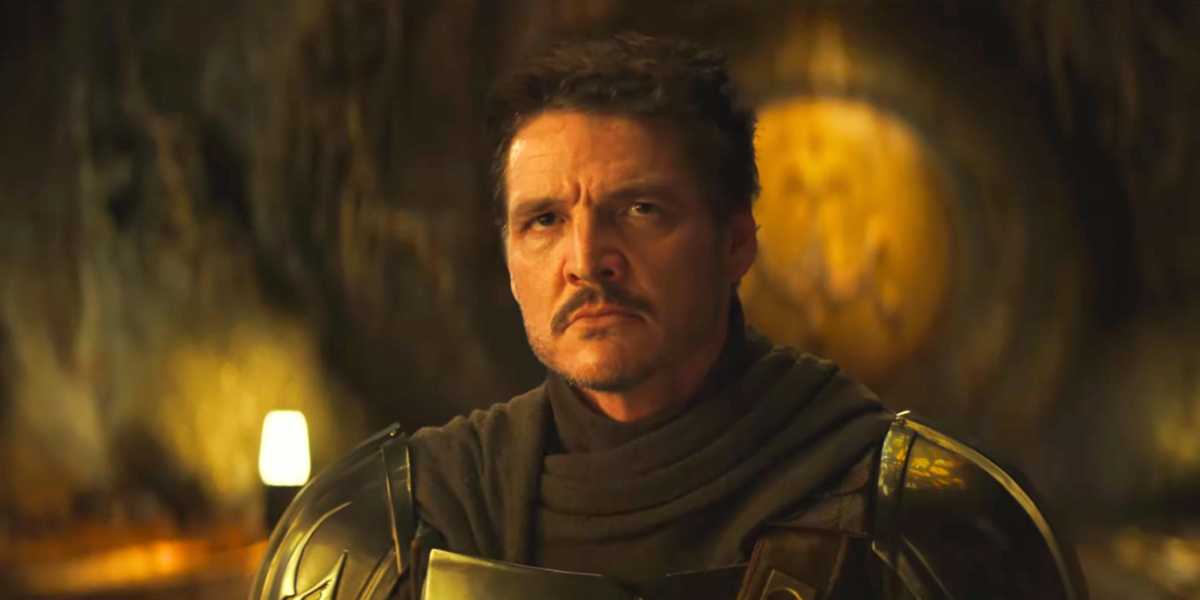
The film is set roughly five years after Star Wars: Episode VI—Return of the Jedi (1983), in the fragile early era of the New Republic. The Empire’s collapse has left behind scattered loyalists, and those remnants are poised to create instability throughout the galaxy. Din Djarin and Grogu find themselves pulled back into the fight, with Imperial holdouts expected to anchor the central conflict.
Over three seasons, Din’s arc has tracked a broader political awakening. Once a lone gun-for-hire, he has gradually shifted toward a more purposeful allegiance. His journey from detached bounty hunter to protective guardian has unfolded against the backdrop of a rebuilding galaxy, with Grogu’s future intertwined with that fragile new order.
The move to theaters comes with notable casting additions. Sigourney Weaver steps into the role of Admiral Ward, described as a high-ranking presence whose screen time may be limited but impactful. Jeremy Allen White provides the voice for Rotta the Hutt, Jabba’s son, who will reportedly share substantial scenes with Din and even join him for part of the mission.
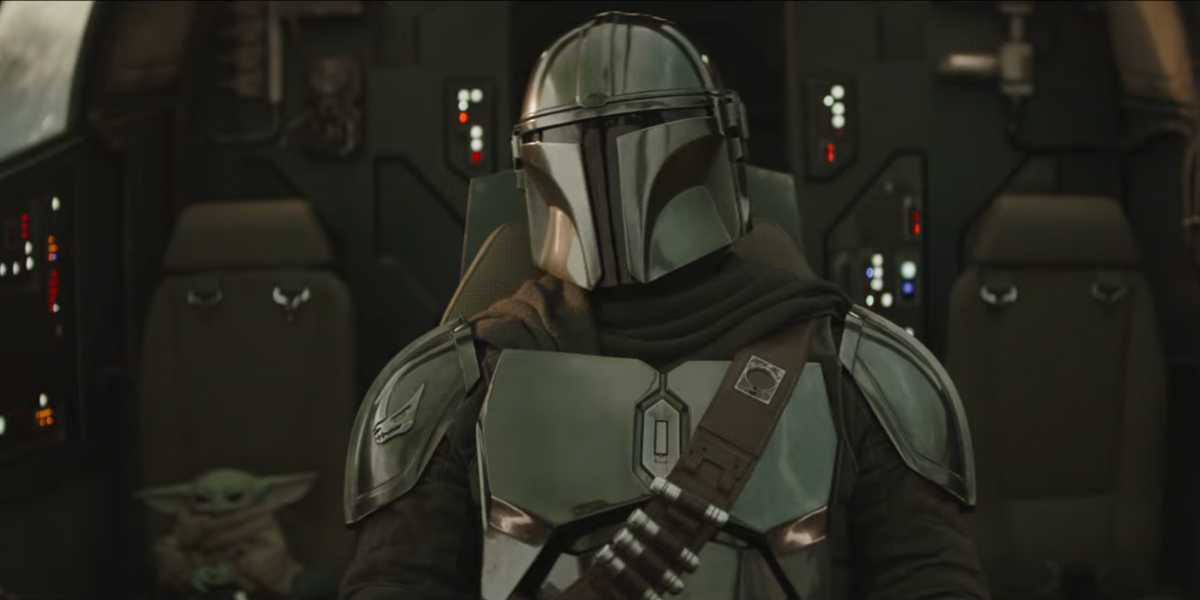
Returning players include Dave Filoni as New Republic pilot Trapper Wolf and Garazeb “Zeb” Orrelios from Star Wars Rebels. Members of the Anzellan species, first introduced in Star Wars: Episode IX—The Rise of Skywalker, will also appear. Interestingly, none of these supporting figures were spotlighted in the project’s first primetime teaser.
That teaser debuted during Super Bowl LX and clocked in at just 36 seconds. Rather than highlighting large-scale battles or major revelations, the footage emphasized warmth. Din and Grogu were shown riding through snow in a tauntaun-drawn carriage that evoked the tone of a Budweiser Clydesdales commercial.
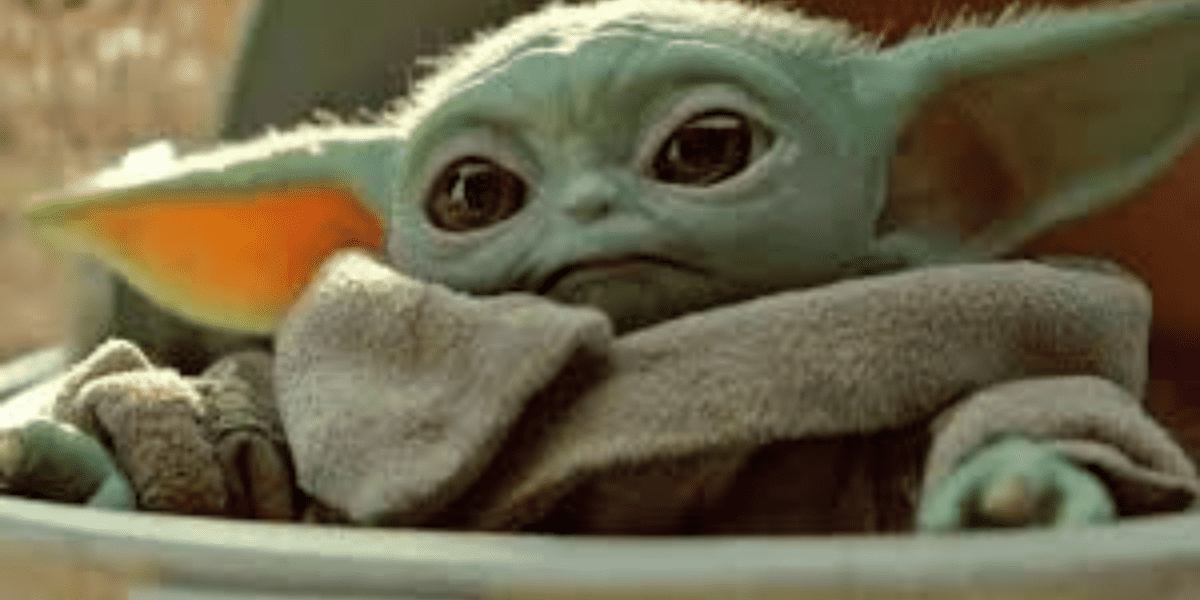
Disney executives defended the approach. Jackson George, Disney Executive VP of Creative Marketing, explained, via Variety, “Grogu is more than a character; he’s a pop culture phenomenon. Riding alongside the heroic Mandalorian, he brings lightness, humor, joy, and an instant emotional connection that transcends the moment.” The focus, George indicated, was to tap into the audience’s attachment to Grogu rather than outline the film’s stakes.
Still, with nearly seven years separating this release from the last theatrical Star Wars installment, some observers wondered whether nostalgia-driven marketing would be enough.
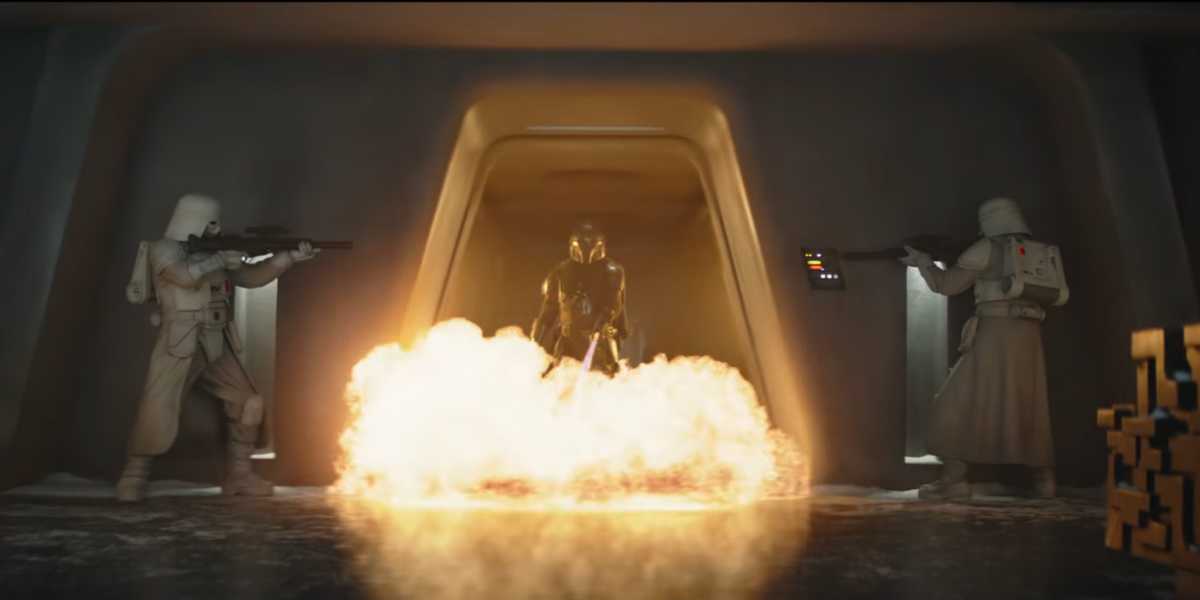
A subsequent full trailer offered expanded footage–but not all versions are identical. During screenings of Disney Pixar’s Hoppers (2026), audiences saw an altered cut.
The Direct reports that Lucasfilm and Disney have officially altered The Mandalorian and Grogu trailer for theatrical audiences, removing three sequences from the online version. A flamethrower moment involving snowtroopers was replaced by Din destroying an AT-AT and checking on Grogu, along with new dialogue. Running BX droids were swapped out for turret shots. A speeder-mounted stormtrooper scene was also cut, replaced by droids being eliminated by a flying object.
While the bulk of the trailer remains unchanged, the adjustments suggest an effort to temper more intense imagery for family-oriented theatrical settings. It is not yet known whether this revised version will become the standard across platforms.
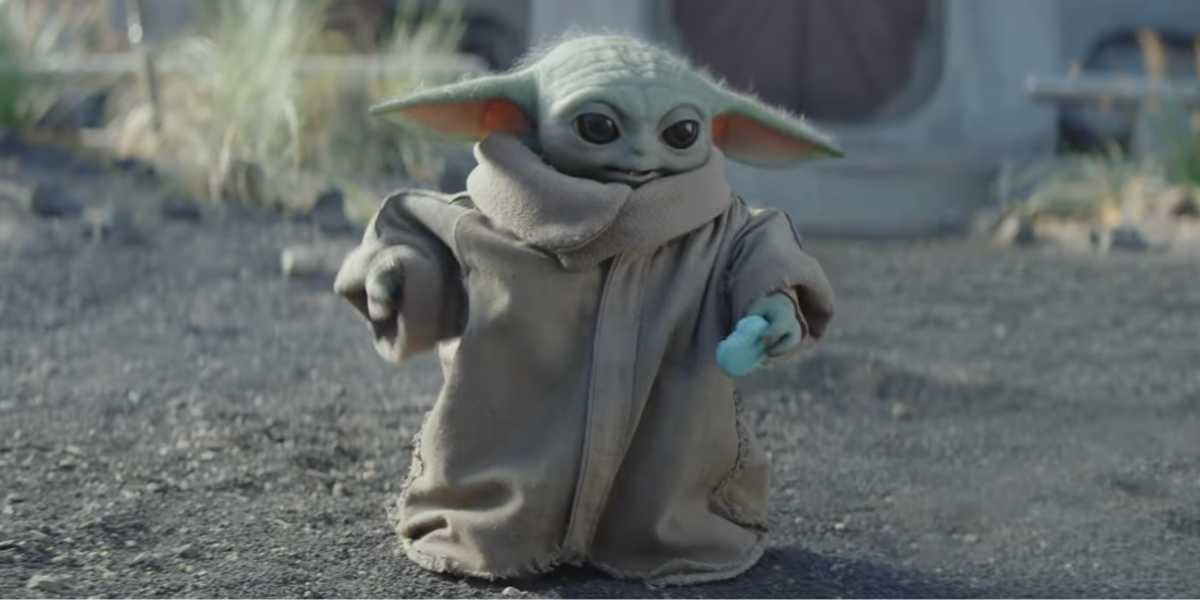
In parallel with the film’s buildup, Star Wars publishing has quietly reworked a key piece of lore. The Mandalorian Season 3 depicted Jedi Master Kelleran Beq, portrayed by Ahmed Best, rescuing Grogu from the Jedi Temple during Order 66.
However, the comic “Jar Jar #1” introduces an additional layer. The story reveals that Jar Jar Binks helped orchestrate the escape by coordinating with Naboo forces and ensuring Grogu’s safe departure from Coruscant. The update reframes Grogu’s survival as a collaborative effort and casts Jar Jar in a more consequential light within the saga’s history.
As Lucasfilm prepares to bring Star Wars back to theaters, The Mandalorian and Grogu stands as both continuation and experiment. Its performance could help determine how the franchise balances its streaming footprint with theatrical ambitions in the years ahead.
How do you feel The Mandalorian will play out in theaters? Let us know in the comments down below!