
The most visited theme park resort on earth is now running on sunlight during the day. That sentence deserves more attention than it has been getting.
Walt Disney World announced this week that its solar energy capacity has crossed a threshold that very few people expected to happen this soon. Four solar projects now operating across Florida can together produce up to 100 percent of the resort's daytime power needs. The announcement is not a projection or a goal. It is a current operational reality. On a typical sunny Florida day, which in Central Florida describes most days of the year, Magic Kingdom, EPCOT, Hollywood Studios, Animal Kingdom, Blizzard Beach, Typhoon Lagoon, dozens of resort hotels, and every other corner of the Walt Disney World property can be powered entirely by solar energy.
The piece that made this possible is a new 74,500-kilowatt solar installation spanning 484 acres in Levy County, Florida. Built and operated by Bronson Solar in collaboration with the Central Florida Tourism Oversight District, the Levy County facility is the newest addition to a solar portfolio Disney has been assembling for years. Its geographic separation from Disney's other installations was a deliberate choice. Rather than concentrating solar capacity in one area, Disney now draws from multiple sites across the state, which means local weather at any single location does not put the whole system at risk. It is resilient by design.
Did you know on a sunny day in spring or summer, together four solar projects now can produce up to 100% of the daytime power needs of all of @WaltDisneyWorld ☀️
Discover how renewable energy is helping power Disney Experiences around the world https://t.co/KCpUwbmwcr pic.twitter.com/sepdc5Rd5x
— Disney Parks (@DisneyParks) April 21, 2026
The Levy County facility joins what is arguably the most famous piece of utility infrastructure in the theme park industry. The Hidden Mickey solar array near EPCOT, a 5,000-kilowatt installation laid out in the shape of Mickey Mouse, has been generating both power and quiet delight since it was built. It is visible from certain vantage points near the park and from the air, and it has developed a small but devoted following among guests who know to look for it. It is a practical energy installation that also happens to be unmistakably Disney, which is about as on-brand as anything the company has ever built.
Together these projects represent something that would have seemed ambitious as a long-term goal not many years ago. They have made it a current operating condition.
The Scale of What Is Actually Being Generated

Numbers help here, and Disney has provided specific ones.
Across an average year, the combined solar output reduces greenhouse gas emissions by more than 140,000 metric tons. That is the equivalent of removing nearly 33,000 gasoline-powered cars from the road annually. The same annual generation could power 19,000 homes for a full year, charge 15 billion smartphones, or sustain the growth of 2 million tree seedlings for a decade. It is equivalent to recycling the contents of 7,000 garbage trucks rather than sending them to a landfill.
And then there is the one that lands differently for anyone who has grown up visiting Walt Disney World. The annual solar output could power the Walt Disney World monorail system for 34 years. Three and a half decades of the monorail gliding over Seven Seas Lagoon, past the Contemporary, through the Grand Floridian, into the Transportation and Ticket Center, all of it sustained by a single year of what the sun delivers to Disney's solar panels in Florida.
That number works because the monorail is specific. Everyone who has ridden it understands something visceral about what it takes to move that much infrastructure at that scale across that much distance. Translating solar output into monorail years is the kind of figure that makes the abstract feel concrete in a way that greenhouse gas percentages rarely do.
The resort covering 100 percent of its daytime needs through solar is the headline, but those equivalency figures are what give the milestone its actual weight.
What It Means to Visit a Solar-Powered Disney World

There is no new ticket category for sustainable travel at Walt Disney World. No guest-facing program was announced alongside this milestone. Visiting Disney World today looks the same from the inside as it always has.
What has changed is what is behind it.
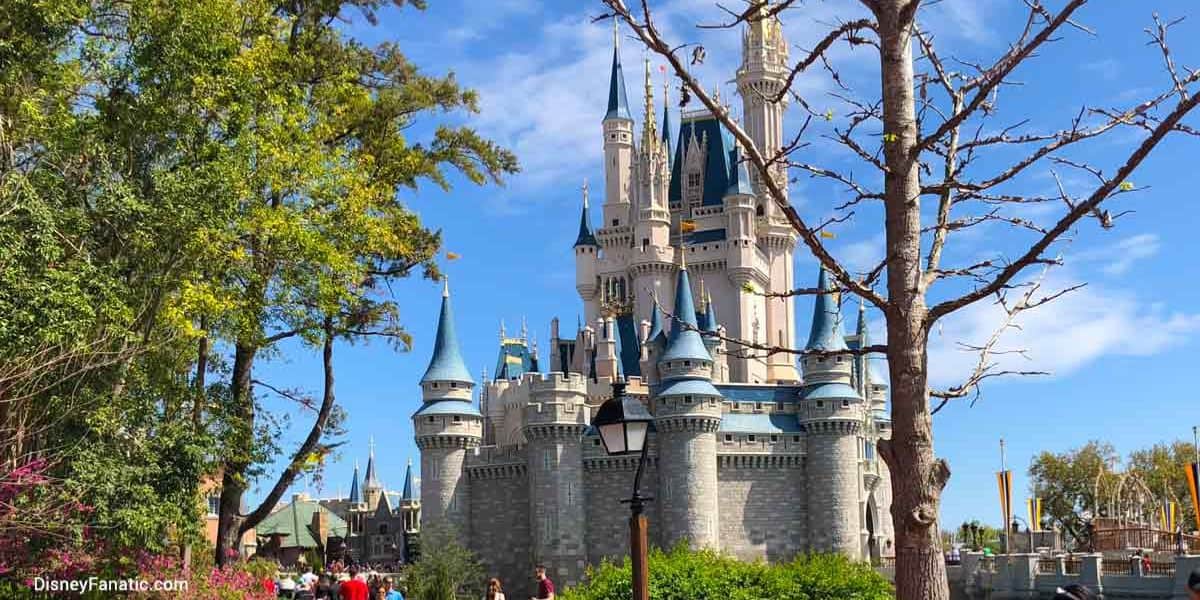
The lights on Cinderella Castle are running on solar energy during the day. The attractions at EPCOT are operating on power drawn from Florida sunlight. The monorail that carries guests from the parking structure to the Magic Kingdom entrance is running on clean electricity. The resort-wide infrastructure that makes a Walt Disney World visit possible, the air conditioning in every hotel room, the refrigeration in every restaurant kitchen, the systems running every ride and show, all of it is being supported by solar capacity that did not exist at this scale a short time ago.
For guests who factor sustainability into their travel decisions, this is meaningful. Walt Disney World is not a small operation. It is one of the largest, most energy-intensive resort destinations in the world. The fact that it can now cover its daytime power needs through renewable energy represents an enormous amount of infrastructure investment and operational commitment spread across many years and multiple facilities.
The investment is also structured for resilience in a way that matters for guests. Multiple facilities across different Florida counties mean the system is not dependent on weather conditions at a single location. The magic, as Disney put it in its announcement, does not rely on sunshine from just one place.
That is a more sophisticated piece of energy infrastructure than most guests will ever think about. It is also what is running quietly in the background every time someone rides Haunted Mansion or watches Fantasmic! on a sunny Florida afternoon.
If sustainable travel is part of how you think about planning a vacation, Walt Disney World's official sustainability pages have more detail on their environmental commitments and long-term goals beyond this announcement. And if you want to see part of the solar story in person, the Hidden Mickey array near EPCOT is one of the more charming pieces of clean energy infrastructure you are likely to encounter anywhere. It is worth knowing about before your next visit.