
For more than three decades, theme park enthusiasts have pored over development maps of Disneyland Paris in Marne-la-Vallée, France, waiting for the day The Walt Disney Company would break ground on a third theme park and a new wave of resort hotels. Under long-standing master agreements with the French government, vast stretches of open land across the Val d’Europe sector were originally reserved for future tourism corridors, hotel towers, and a third park gate.

Now, those long-rumored expansion plans are taking an unexpected turn. Rather than holding that prime acreage strictly for new theme park gates or hospitality development, Disneyland Paris is moving forward with plans to transform a large portion of its expansion territory into a ground-mounted solar farm.
While the move highlights Disney’s aggressive push toward European sustainability standards and clean power generation, it also delivers an unmistakable reality check to theme park fans: for the foreseeable future, Disneyland Paris is prioritizing renewable infrastructure and existing park upgrades over building a third theme park.
Why Disneyland Paris Is Pivoting Away From a Third Gate and Hotel Expansion
When Euro Disney first welcomed guests in 1992, its master development agreement with French authorities granted Disney exclusive rights over thousands of acres east of Paris—envisioned as a multi-decade tourism hub featuring multiple theme parks, golf courses, commercial districts, and thousands of hotel rooms.
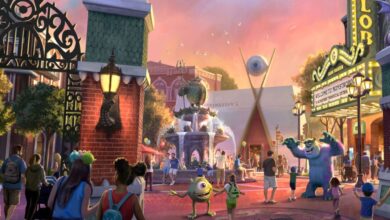
In reality, building a third gate has been repeatedly deferred as the resort focused billions of euros on transforming Walt Disney Studios Park into Disney Adventure World—complete with World of Frozen and a Lion King expansion—while refurbishing its existing hotel lineup.
Allocating reserved expansion land to a ground-mounted solar installation reflects a pragmatic shift in how Disneyland Paris manages its real estate:
- Immediate Productivity Over Decades of Waiting: Rather than letting prime acreage sit vacant for years or decades until attendance growth justifies the massive capital investment of a third gate, a solar farm puts the land to productive use immediately.
- Meeting French Land-Use Timelines: Under Disneyland Paris’s agreements with French public authorities, undeveloped parcels are subject to strict planning deadlines and public-interest obligations. Renewable energy infrastructure satisfies regional environmental goals while keeping the land actively utilized.
- Strengthening Existing Parks First: With Disney Adventure World substantially increasing resort capacity and guest appeal, leadership has signaled that perfecting its two-park lineup takes priority over opening a third gate that could dilute attendance.
Inside Disneyland Paris’s Existing 82,000-Panel Solar Canopy Array
Disneyland Paris’s upcoming ground-mounted solar farm builds directly upon a landmark renewable energy project the resort already operates above its guest parking lot.
As detailed in a report by Energies Media, Disneyland Paris is home to Europe’s largest solar parking canopy installation—an immense array of 82,000 photovoltaic panels mounted atop steel canopies shading 11,200 parking spaces across roughly 50 acres in Marne-la-Vallée. Built in phases between 2021 and 2024 in partnership with a Swiss energy developer, the canopy structures were engineered with extra-tall clearances to accommodate tour buses, recreational vehicles, and delivery trucks passing underneath.
The output of that existing parking lot array rivals a utility-scale power plant:
- 36 Gigawatt-Hours Annually: Once completed, the 82,000-panel canopy system began producing roughly 36 gigawatt-hours of clean electricity per year—enough to power tens of thousands of ordinary French households, or the equivalent of roughly 17 percent of Disneyland Paris’s total electricity consumption.
- Direct Grid Contribution: Under the long-term lease model outlined by Energies Media, the Swiss developer owns and operates the canopies and sells the generated electricity straight into the French national grid rather than wiring it into the park’s own meters, while Disneyland Paris earns steady lease revenue, cools its summer parking asphalt, and displaces regional fossil-fuel generation.
- Constructed Over Active Traffic: Completing the 50-acre overhead structure required operating up to 40 elevated work platforms simultaneously while thousands of vacationers, rental cars, and shuttle buses circulated beneath unfinished steel sections.
Why a Ground-Mounted Solar Farm Makes Strategic Sense
While the parking lot canopies demonstrated how effectively Disneyland Paris can turn underutilized space into clean energy, building a ground-mounted solar farm on open expansion land is significantly simpler, faster, and more economical per megawatt.

Without the heavy structural engineering needed to elevate steel canopies high above moving tour buses—or the logistical challenges of working above active tourist traffic—ground-mounted solar arrays require lower upfront steel costs and shorter construction timelines. In a European energy market shaped by fluctuating electricity costs and strict decarbonization rules, expanding solar generation provides Disneyland Paris with valuable financial and environmental resilience while advancing The Walt Disney Company’s 2030 net-zero emissions goals.
What This Means for Disneyland Paris Fans
For Disney fans holding out hope for a third theme park in France—or a new wave of resort hotels rising on that acreage—seeing expansion land earmarked for solar panels confirms that a third gate is off the table for the near and medium term.
Even so, Disneyland Paris retains substantial land reserves across the wider Val d’Europe sector if long-term demand ever warrants major new theme park or hospitality projects decades down the road. In the meantime, instead of sitting behind fences as empty fields, that land will actively support France’s clean energy transition—cementing Disneyland Paris as one of the most ambitious renewable-energy theme park resorts in the world.