Lucasfilm is preparing to execute its most consequential strategic pivot since Disney's 2012 acquisition of the studio, positioning Star Wars: Starfighter as proof that the franchise's commercial and creative viability no longer depends on the Skywalker lineage that has anchored nearly every prior installment.

The Shawn Levy-directed feature, starring Ryan Gosling, was formally unveiled at Star Wars Celebration 2025 in Tokyo and is scheduled for release on May 28, 2027 — a date that places it squarely within the 50th-anniversary window of 1977's Star Wars: Episode IV – A New Hope.
For nearly five decades, Star Wars theatrical storytelling has been structured around the Skywalker family, a throughline Lucasfilm maintained even in its most recent release. The Mandalorian and Grogu, which opened May 22, 2026, brought Din Djarin (Pedro Pascal) and Grogu to theaters on the strength of three prior seasons of Disney+ serialized storytelling. The film's modest global box office performance has intensified internal and external scrutiny of Lucasfilm's theatrical strategy, and Starfighter is emerging as the studio's answer to that pressure.
Unlike prior Disney-era releases, Starfighter is not designed to service existing continuity. According to StarWars.com, the film is set approximately five years after 2019's The Rise of Skywalker, but does not extend that narrative. Gosling's character is entirely original, with Lucasfilm describing the project as “an entirely original story set in a period of time never before explored” and “an all-new standalone adventure” — language that distinguishes it from 2016's Rogue One, which fed directly into A New Hope, and Solo (2018), which expanded backstory for an established character.

The supporting cast includes Mia Goth, Matt Smith, Aaron Pierre, Simon Bird, Jamael Westman, Daniel Ings, and Amy Adams, with Flynn Gray in a co-lead role opposite Gosling. Lucasfilm has framed Starfighter as one component of a broader theatrical pipeline that also includes upcoming films from Sharmeen Obaid-Chinoy, James Mangold, Taika Waititi, and a new trilogy helmed by Simon Kinberg — signaling a sustained, multi-title commitment to theatrical expansion beyond the Skywalker Saga.
Screenwriter Jonathan Tropper addressed the film's positioning during an appearance on the Bingeworthy podcast, emphasizing that accessibility for non-fans was a foundational creative priority rather than a marketing afterthought.
“The goal from the beginning, when Shawn and I first started talking about it, was to create the feeling in theaters that we had as kids seeing Star Wars back in 1977,” Tropper said (via The Playlist). “That sense of a swashbuckling adventure into new worlds. For us, that was really important. There are no barriers to entry. You don't have to have seen other Star Wars movies to step into this one.”
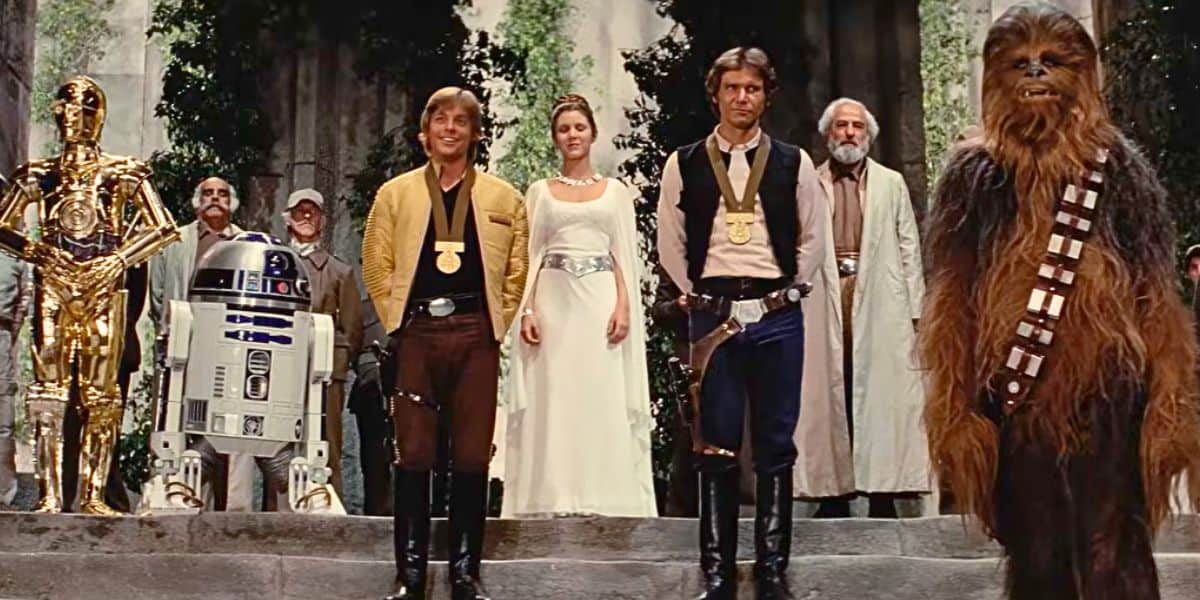
That framing directly references 1977, the year Lucas released the original film, reinforcing the 50th-anniversary positioning of the 2027 release. The timing also coincides with a separate legacy initiative: a new Welsh-language dub of A New Hope, featuring an entirely new voice cast, is currently in production and will introduce the original film to new audiences through a fresh linguistic and cultural lens.
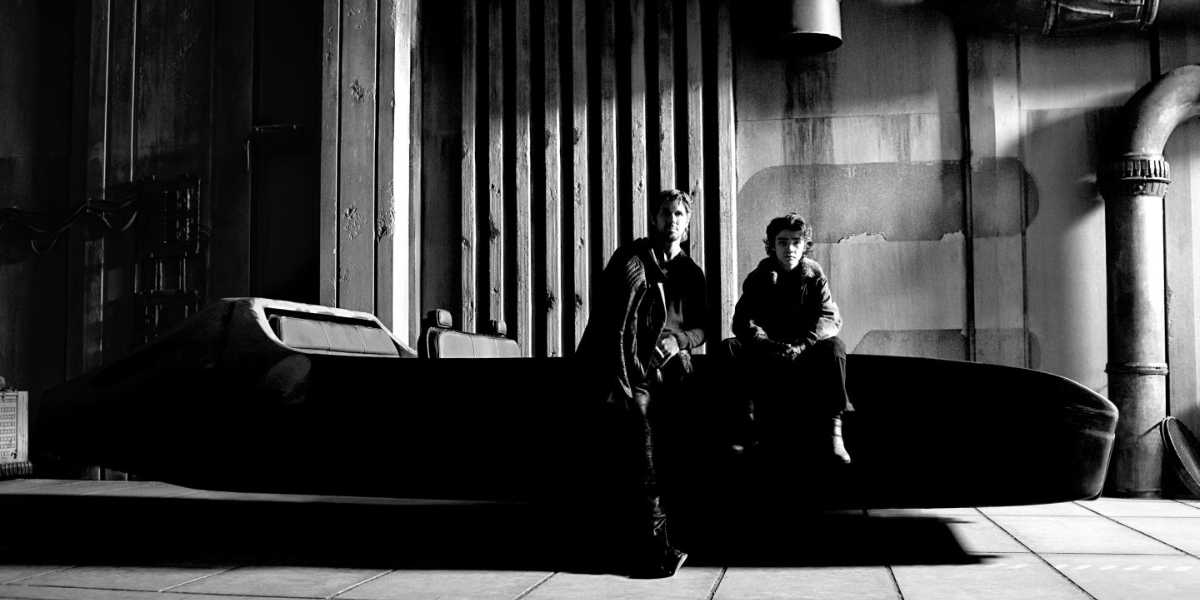
Limited official plot information has been released, though a series of reports from MakingStarWars.net have circulated claims about the film's narrative. Those reports suggest Gosling portrays a Han Solo-archetype character named Cade, who is said to share a close relationship with the father of Flynn Gray's character — reportedly named something close to “Rone” or “Ronin” — and is tasked with transporting the boy to a hidden Jedi refuge on a planet identified as Adaria.
The same unverified reports describe Adaria as a green, East Asian-influenced world characterized by fountains, dense vegetation, and tiki-style architecture supported by large mechanical struts, with resident Padawans depicted wearing beige robes comparable to those worn by Obi-Wan Kenobi (Ewan McGregor) and young Anakin Skywalker (Jake Lloyd) in Star Wars: Episode I – The Phantom Menace (1999).
Additional claims suggest Aaron Pierre's character is connected to the Jedi sanctuary and participates in a lightsaber confrontation with Mia Goth's character, while Eva Mendes is rumored to play Belle, a 650-year-old cantina proprietor. Lucasfilm has not verified any of these details, and earlier speculation linking Amy Adams' character to Daisy Ridley's Rey Skywalker and a potential New Jedi Order tie-in has largely been discounted.
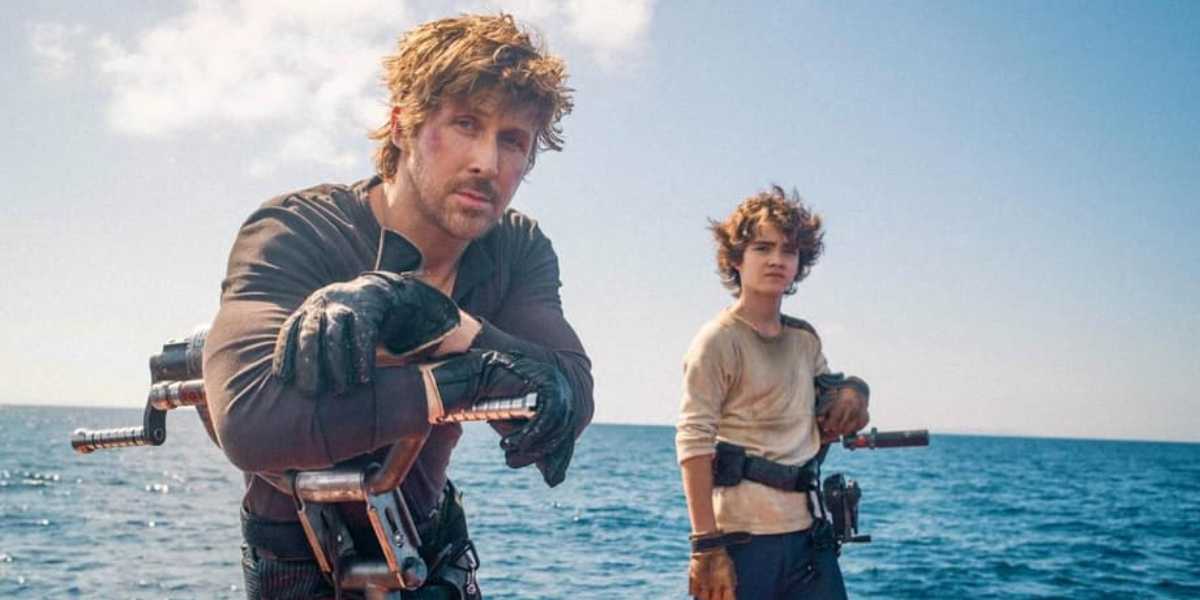
Levy has consistently emphasized that Starfighter was developed without pressure to reference or service prior installments. In an interview with Collider, he outlined the project's core distinction: “Well, for one thing, it is different in that it is an all-new non-sequel, non-prequel adventure. It's new characters, it's a new timeline. It inherits legacy themes, but it's really trying to give Star Wars [fans]—and just movie audiences—something fresh, something new.”
He added: “And with a spirit of play and big-hearted adventure with moments of real levity that, frankly, A New Hope had in a revolutionary way.”
Speaking separately with The Playlist, Levy characterized Lucasfilm's creative guidance as intentionally steering away from legacy callbacks: “Every time I've asked, ‘Should I use this character that was maybe in that movie?' Every time it's, ‘You know what? People have seen that. Do something new,'” he said. “There is no mandate or interference other than the constant encouragement, ‘Make this new.' And that's the truth.”
Levy also distinguished the project from Lucasfilm's more continuity-dependent releases: “Unlike Solo… unlike Rise of Skywalker, which was a sequel to two other movies and ultimately a ninth film in the Skywalker saga, Starfighter is all new characters based on new ideas that Jonathan and I cooked up alone and together.”
On his collaborators, Levy told Collider: “My crew, my DP, Claudio Miranda, Gosling is my kind of central collaborator in the lead role. It's certainly been a dream come true. My 10-year-old self is on set with me every day.” He characterized Lucasfilm's institutional support as enabling “a huge, invigorating opportunity,” noting that “there's no pressure to be derivative or limited by an obligation to what came before… there's just a love of what came before.”
Despite Lucasfilm's consistent standalone framing, speculation persists regarding whether Starfighter could eventually intersect with the broader Star Wars continuity — most notably through theories about a potential appearance by Rey Skywalker (Daisy Ridley) that could connect the film to the long-discussed New Jedi Order project. No evidence currently supports this theory, and Lucasfilm's public communications have consistently steered away from it.

Regardless of its long-term narrative implications, the symbolic weight of Starfighter‘s release date appears to be a deliberate part of Lucasfilm's positioning strategy. Arriving fifty years after A New Hope and alongside a newly produced Welsh-language dub of that original film, the studio is wagering that an entirely new ensemble can replicate the cultural impact of 1977 without relying on the Skywalker mythology that has defined the franchise since its inception.
Lucasfilm and the creative team behind Starfighter have been explicit that no familiarity with prior Star Wars films is required to engage with the new release, positioning it as a low-barrier entry point for lapsed or new viewers ahead of its May 2027 debut. Expect continued casting announcements, unverified plot leaks, and marketing tied to the 50th anniversary of A New Hope as the release date approaches.
What are your thoughts on the relaunch of Star Wars in 2027? Let us know in the comments down below!