Sunday evening at Walt Disney World ended with emergency responders called to one of the resort's most recognizable areas.
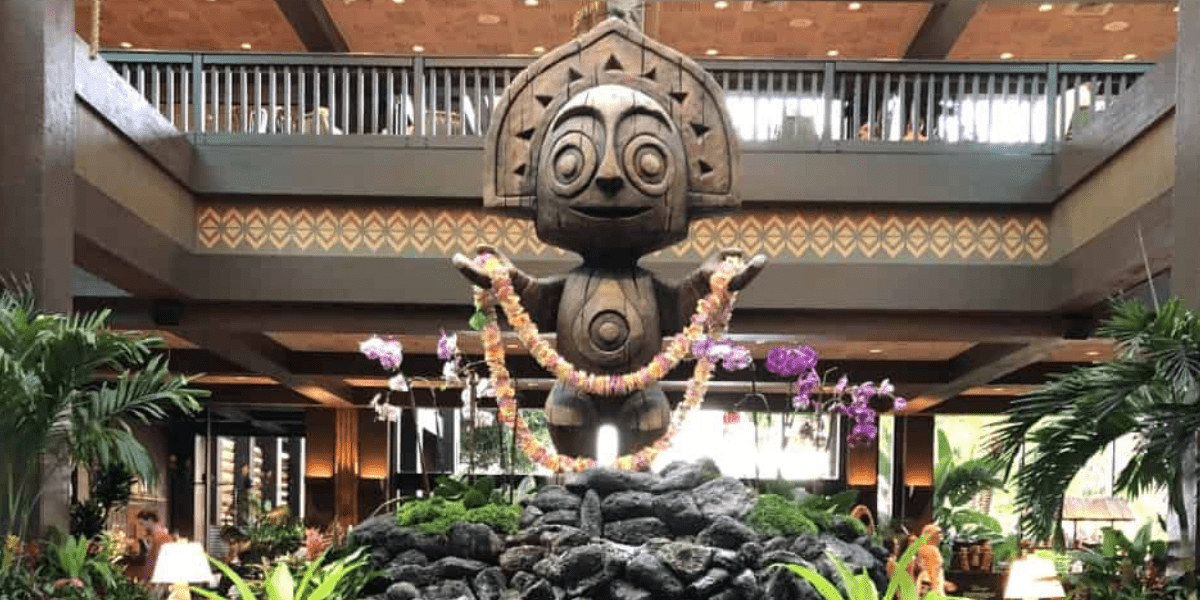
At 10:14 PM on June 7, 2026, law enforcement scanner monitoring account @WDWActiveCrime posted an alert reporting a near-drowning near the Transportation and Ticket Center and Disney's Polynesian Village Resort area. The full alert read: “Near Drowning at: Transportation and Ticket Center / Disney's Polynesian Village Resort Area.”
🚨 Police Alert 🚓 – 6/7/26 10:14 PM
🚨: Near Drowning at 📍: Transportation & Ticket Center / Disney's Polynesian Village Resort Area#WaltDisneyWorld #Disney pic.twitter.com/TfwbvPqFzb— Walt Disney World: Active Calls (@WDWActiveCrime) June 8, 2026
No official statement has been issued by Walt Disney World Resort. The condition of the guest involved has not been confirmed. Based on the description of the incident as a near-drowning rather than a drowning, it is reasonable to assume the guest was reached before the situation became fatal, though that should not be taken as confirmation of their current state or recovery.
When incidents of this severity occur, even at a resort with trained lifeguards and on-site emergency response, paramedics are called to assess and stabilize the patient. That is standard protocol regardless of the apparent severity of the situation. A near-drowning is a medical emergency that requires professional evaluation even when initial responders believe the victim is stable.
Disney has not commented and is unlikely to do so unless circumstances change significantly.
This Is the Second Near-Drowning at a Disney Resort Area Property This Year
On March 9, 2026, shortly before 2:30 PM, @WDWActiveCrime reported a near-drowning at an address on Bonnet Creek Resort Lane in Central Florida. That location corresponds to Signia by Hilton Orlando, a property designated as an Official Walt Disney World Hotel. Disney does not own the property, but it appears on the resort's list of official partner hotels.
The March incident drew a substantial emergency response. Multiple helicopters were reported above the scene, including a WESH news helicopter and a medical response aircraft. The R36 medical helicopter transported the patient to a local hospital. No update on the patient's condition was released publicly. Neither Walt Disney World Resort nor Signia by Hilton Orlando issued a statement.
The two incidents are unconnected as far as is publicly known. They occurred at different locations, involved different properties, and are separated by nearly three months. The reason both are worth noting together is that two near-drownings at resort area properties within a single year provides context that guests planning water-related activities at Walt Disney World should have.
How Disney Handles Water Safety and Emergency Response
Walt Disney World Resort operates pools at nearly every on-property hotel. Disney's Typhoon Lagoon and Disney's Blizzard Beach provide additional water-based recreation. The Seven Seas Lagoon, adjacent to both the Magic Kingdom and the Polynesian Village Resort, is one of the most prominent bodies of water on the entire property.
Lifeguards are stationed at resort pools and water park attractions throughout the resort. Water parks in particular run structured safety protocols with multiple lifeguard stations and regular staff rotations. Emergency medical response is available across the property and is deployed quickly when needed.
That infrastructure is real and it matters. It is also not a guarantee against incidents occurring. Water emergencies can develop rapidly. They can happen to guests of any age and any swimming ability. Children are particularly vulnerable, and parental supervision remains essential regardless of what professional staff are present nearby.
Disney does not typically release public statements about guest medical emergencies unless a fatality is involved or the situation has a criminal component. That is consistent with how the resort handled both the March and June incidents. Law enforcement agencies similarly do not release details about private medical situations unless the patient comes forward or a death occurs.
If the guest involved in Sunday's incident recovers, the public may never receive an official update. That is not unusual and does not indicate any lack of response or care on the resort's part.
What Guests Planning a Disney Trip Should Know
Two near-drowning incidents at resort area properties in the same year is information that belongs in any honest conversation about visiting Walt Disney World, particularly for families with young children or guests who plan to spend meaningful time at resort pools or water parks.
None of it suggests Walt Disney World is unsafe. The resort handles an extraordinary volume of guests every day and water-related incidents, while serious, remain rare relative to the number of people using pools and waterways across the property at any given time.
What it does reinforce is that water safety requires active participation from guests, not just reliance on lifeguards and resort staff.
Supervising children near any body of water is non-negotiable, regardless of how attentive the lifeguard on duty appears to be. Knowing your own swimming ability and the limits of anyone in your group before entering a pool or natural water area is important. Using appropriate flotation devices for young children who are not confident swimmers is a decision worth making before you arrive at the pool, not after.
Resort pools and water parks are genuinely enjoyable parts of a Walt Disney World vacation. The goal is not to discourage guests from using them. It is to encourage the kind of active supervision and personal awareness that makes those experiences safe.
We will update this story if any official information is released about the June 7 incident. If you have questions about water safety or resort amenities at Walt Disney World, drop them in the comments below.