
The battle lines between the State of Florida and The Walt Disney Company were supposed to be winding down. Following years of contentious courtroom challenges, public sparring, and legislative reorganizations, both sides had reached a fragile operational peace.
Then came the fallout from Florida’s gubernatorial election.
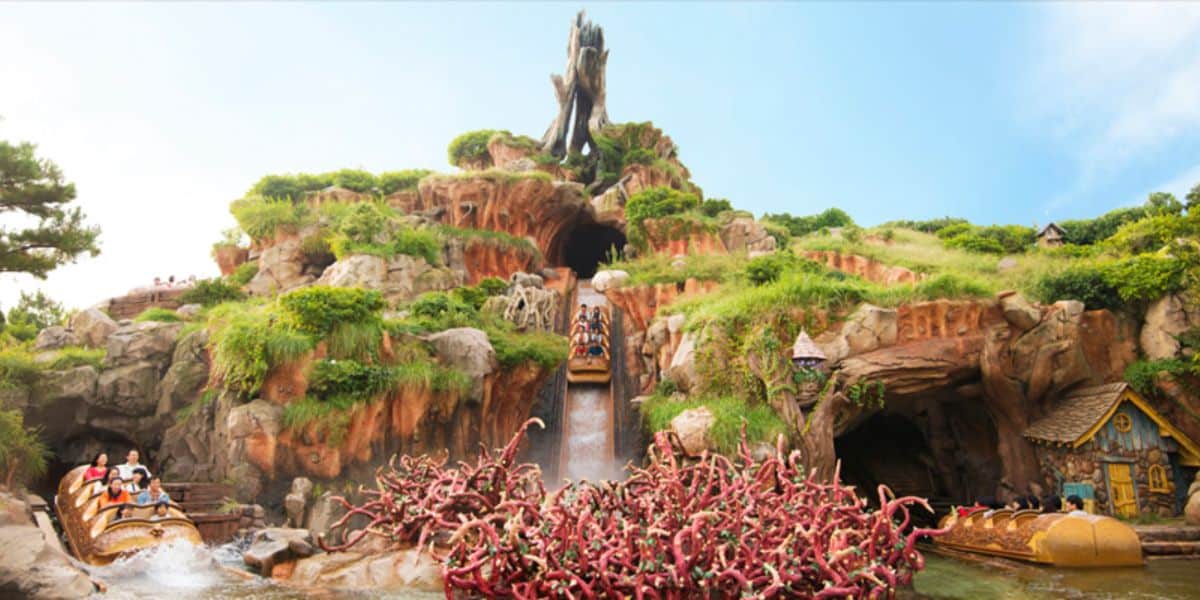
Shortly after clinching victory, Florida Governor-Elect Byron Donalds reignited one of the most polarizing debates in modern theme park history: the permanent closure and reimagining of Splash Mountain. During an appearance with Florida’s Voice, Donalds took direct aim at the corporate reasoning behind the ride’s retirement, sparking immediate viral traction across social media and re-energizing a passionate faction of theme park traditionalists known online as the “Save Splashers.”
With an outspoken critic of progressive corporate retheming preparing to enter the executive mansion in Tallahassee, some members of this dedicated fandom are asking an extraordinary question: could Florida’s incoming administration use state leverage to force Disney to undo its renovations and bring back the briar patch?

While property law and corporate realities render that outcome virtually impossible, Donalds’ comments have reopened a deep cultural wound, dragging Splash Mountain, The Princess and the Frog, and the fraught history of Disney’s 1946 film Song of the South back into the national spotlight.
“Disney Has Lost Their Minds”: Inside Donalds’ Critique
The catalyst for the renewed firestorm arrived during Donalds’ sit-down interview with Florida’s Voice.
Discussing corporate entertainment trends and the perception that legacy companies are alienating core audiences, Donalds pushed back against the claim that Splash Mountain was inherently offensive or that its folkloric roots justified demolition.
“Splash Mountain isn’t racist. Disney has lost their minds,” Donalds declared during the interview.
Donalds argued that the public experienced the attraction purely as an exhilarating, family-friendly thrill ride featuring catchy music and animated woodland animals—Br'er Rabbit, Br'er Fox, and Br'er Bear—rather than as an ideological statement. In Donalds' view, Disney’s decision to permanently retire the attraction was an unforced surrender to cultural pressure:
“Nobody looked at Splash Mountain and thought about race until activists forced the issue. It was about childhood fun, a giant drop, and classic folklore. Erasing that history doesn’t fix anything; it just alienates millions of ordinary people who grew up loving the parks.”
For Donalds, the ride’s decommissioning serves as a prime case study in corporate overcorrection—a talking point that resonated strongly with the voter base that helped deliver his electoral win.
The ‘Save Splashers’ Dream of a Political Lifeline
Donalds’ comments spread quickly across X, Reddit, and Facebook groups dedicated to preserving Disney history, giving the “Save Splash Mountain” movement its biggest boost in months.
When Disney announced in June 2020 that it would retheme the flume at both Walt Disney World and Disneyland to The Princess and the Frog, it sparked immediate resistance. Online petitions gathered hundreds of thousands of signatures, guests hoarded Br'er Rabbit merchandise before it was pulled from shelves, and some fans even bottled water from the splash-down pool on the Florida ride’s final operating day in January 2023, selling it on eBay for hundreds of dollars.
Even though the revamped ride, Tiana’s Bayou Adventure, has already opened to the public, the traditionalist community never disbanded. For months, critics have scrutinized the new attraction’s ride systems, spotlighted mechanical downtime, and lamented the loss of classic songs like “Zip-a-Dee-Doo-Dah.”

With Donalds heading to Tallahassee, social media erupted with speculative theories about state intervention:
- Could the Central Florida Tourism Oversight District (CFTOD) use safety inspections or building permits as leverage?
- Could the state threaten tax reassessments or tourism audits to pressure corporate leadership in Burbank?
- Could legislative pressure force Disney to restore classic animatronic figures?
Theme park analysts and legal experts emphasize that these ideas belong entirely to political theater. Disney is a publicly traded corporation with complete autonomy over its intellectual property and attraction design. Tiana’s Bayou Adventure is fully installed, mechanically overhauled, and open for daily operation. The State of Florida possesses no legal mechanism to dictate which fictional characters populate an indoor boat ride on private land.
Still, the viral reaction proved that the emotional attachment to the original ride remains potent years after the final log dropped into the briar patch.
The Unescapable Shadow of ‘Song of the South’
While defenders view Splash Mountain purely as a nostalgic musical flume ride, Disney’s decision to retheme the attraction was driven by the radioactive legacy of the film that inspired it: the 1946 hybrid musical Song of the South.
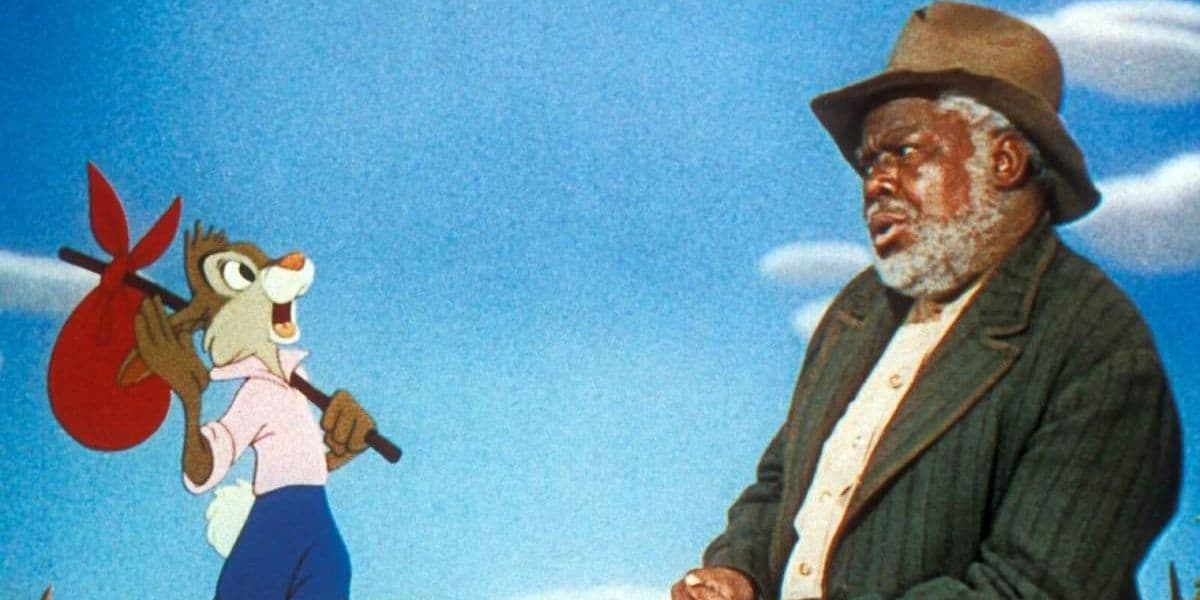
Adapted from the Reconstruction-era folktales collected by Joel Chandler Harris, Song of the South stars James Baskett as Uncle Remus, an elderly Black plantation worker who shares allegorical Br'er Rabbit stories with a young white boy. While Baskett’s magnetic performance earned an honorary Academy Award, the film drew immediate protests from the NAACP and Black cultural leaders upon its 1946 release.
Historians and film scholars cite several fundamental issues that make Song of the South widely condemned:
- Romanticizing the Plantation Era: The movie portrays an idyllic, pastoral version of the American South that glosses over the brutal realities of slavery, sharecropping exploitation, and Jim Crow oppression. Black workers are depicted as cheerful, carefree, and subservient, singing happily as they tend the fields for their former masters.
- The “Happy Slave” Trope: Although the film is technically set during Reconstruction, the narrative blurs historical lines so thoroughly that the social hierarchy mirrors chattel slavery. Uncle Remus and Aunt Tempy have no apparent personal lives or ambitions beyond nurturing the white plantation family.
- Minstrel Roots in Dialect: While the Br'er Rabbit folktales genuinely originated in African oral traditions brought to America by enslaved people, the scripted dialogue for the animated critters relied on exaggerated dialect features popularized in 19th-century white vaudeville minstrel shows.
Recognizing the reputational risk, former Disney CEO Michael Eisner placed the movie in the corporate vault in the mid-1980s. The film was never released on home video in the United States and remains barred from Disney+, with CEO Bob Iger stating it is not appropriate for the modern world.
The Irreconcilable Divide Over Park Nostalgia
The controversy sparked by Byron Donalds exposes a fundamental divide in how the public views theme park attractions.

For millions of guests who experienced Splash Mountain over its 34-year run, the ride existed in a vacuum. When Imagineering built the attraction in 1989, it intentionally stripped away Uncle Remus and live-action plantation elements, focusing purely on a whimsical cartoon critter chase. To fans who share Donalds' view, dismantling the ride felt like an unnecessary erasure of beloved family memories to placate cultural activists.
For Disney's corporate leadership, however, the attraction remained an untenable brand liability. As the company works to project a modern, inclusive image worldwide, maintaining a signature headliner based on a film too toxic to stream on Disney+ became an impossible contradiction. retheming the flume to The Princess and the Frog allowed the company to celebrate African-American culture, New Orleans jazz, and Louisiana culinary heritage through its first Black Disney Princess—all while permanently cutting ties with an antebellum fable.
While Governor-Elect Donalds has handed the “Save Splashers” a prominent political microphone, the physical reality inside the Magic Kingdom remains unchanged. As long as the logs keep floating down the bayou, the briar patch belongs to history.